At a Glance
- Eva Lu Damianos, a 90-year-old painter, created 18 portraits of caregivers who helped her after a fall.
- She spent 10 weeks unable to move her leg, turning to painting as a thank-you project.
- The portraits were displayed at Longwood at Oakmont’s Dec. 28 reception, giving caregivers a lasting memento.
Why it matters: The story shows how art can bridge gratitude and healing, giving both patient and caregiver a shared moment of appreciation.
Early Life and Education
Eva grew up in Pennsylvania and discovered painting at a young age. She earned a fine-arts degree from Carnegie Tech, now Carnegie Mellon University, where she focused on large acrylic abstracts. Her early work was characterized by bold colors and dynamic brushwork.
Career Highlights
- Sold most of her paintings to local Pittsburgh corporations.
- Showcased work at a one-woman show at the Carnegie Museum of Art.
- Participated in a jewelry exhibit at a gallery in New York City.
After retiring from the gallery scene, Damianos continued to paint watercolors from her home, sharing a studio with her husband, Sylvester, a 92-year-old artist and architect.
The Fall and Recovery
Damianos fell in June and broke her leg. Doctors suggested the injury might have been linked to some of her medications, but she insisted she “didn’t trip over anything.” The injury kept her off her feet for 10 weeks, preventing her from painting at her desk in Longwood at Oakmont, a retirement community in Plum, Pennsylvania.
The Portrait Project
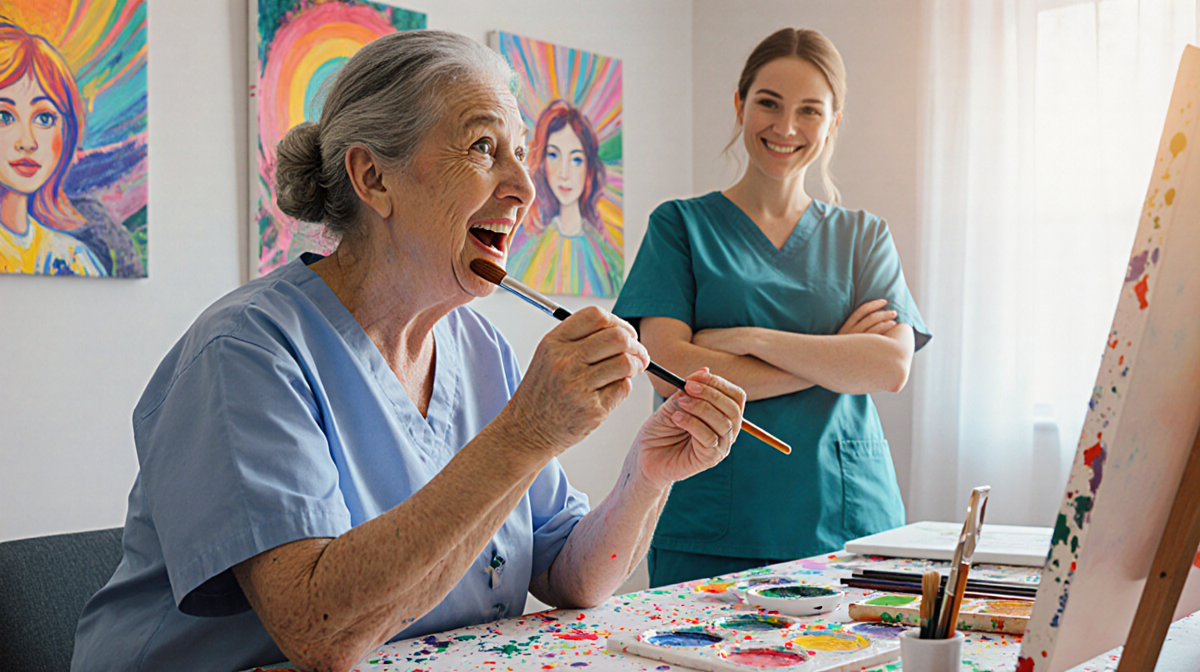
After her recovery at the nearby Hanna Healthcare Center, Damianos decided to honor the aides, nurses, and therapists who had cared for her. She photographed each caregiver, then returned home to paint their portraits once she could lift a brush again. “They all said yes,” she says, noting that many of the caregivers moved on after a few days, so the portraits were a timely thank-you.
The project resulted in 18 finished portraits, completed in just two months. Damianos explained that the speed was important because “some of these caregivers would be with me maybe five days out of a week, and then they would move on to another caregiving unit.” The portraits captured the essence of each caregiver, a detail many said they had never seen in a painting before.
The Portrait Process
- Photograph subject for reference.
- Sketch outline on canvas.
- Layer acrylics for depth.
- Finish with fine details in oils.
- Sign and date each piece.
Each portrait took about three to four hours to complete, allowing Damianos to capture the personality of the caregiver quickly.
The Caregivers
- Aides who assisted with daily living activities.
- Nurses who monitored her health and medication.
- Physical and occupational therapists who guided her rehabilitation.
“Most days, you don’t even get so much as a thank you from the ones you are caring for,” nurse supervisor Diane Dudek told News Of Los Angeles. “To receive this extraordinary gift of Eva painting a portrait of you, no words can truly express how privileged I feel.”
The caregivers’ reactions were overwhelmingly positive. “They were all excited,” Damianos recalls. “They all were thankful. They said they couldn’t believe I did it, that I caught the look of them.”
Reception Highlights
Longwood at Oakmont displayed Damianos’s work at the end of the year, hosting a reception on Dec. 28. About thirty caregivers attended, and each received a portrait to take home, a tangible reminder of their impact. The event featured light refreshments and a short speech by the community director, emphasizing the value of compassionate care.
Timeline of Events
| Date | Event |
|---|---|
| June | Damianos falls and breaks leg |
| July-August | 10-week recovery at Hanna Healthcare Center |
| September-October | Portraits painted and finalized |
| Dec. 28 | Reception and distribution of portraits |
Impact on Well-Being

Painting has been more than a hobby for Damianos; it has been a therapeutic tool. “It takes your mind off anything else when you’re working creatively,” she says. “When you’re painting, you forget all your aches and pains. And that’s a good thing.” The portraits not only thanked her caregivers but also accelerated her own recovery by providing a creative outlet during a physically challenging time.
Future Projects
Damianos now has a commission she is working on-a mural for a local school-and plans to return to abstract work. Her story underscores how creativity can heal, inspire gratitude, and strengthen community bonds.