At a Glance
- Peter Steinberger claims he never issued a token, calling any project that lists him a scam.
- His GitHub and X accounts were hijacked during a forced rename, sparking a debate over meme-coin speculation.
- The incident follows a trend of open-source projects being linked to unauthorized crypto tokens.
- Why it matters: Developers face new risks as viral tech projects attract speculative trading without consent.
Peter Steinberger, the creator of the open-source AI assistant ClawdBot, has publicly denied any involvement in a Solana-based meme coin that has been promoted under his name. The dispute began after his GitHub and X accounts were taken over during a forced rename of the project.
Account Takeover and Forced Rename
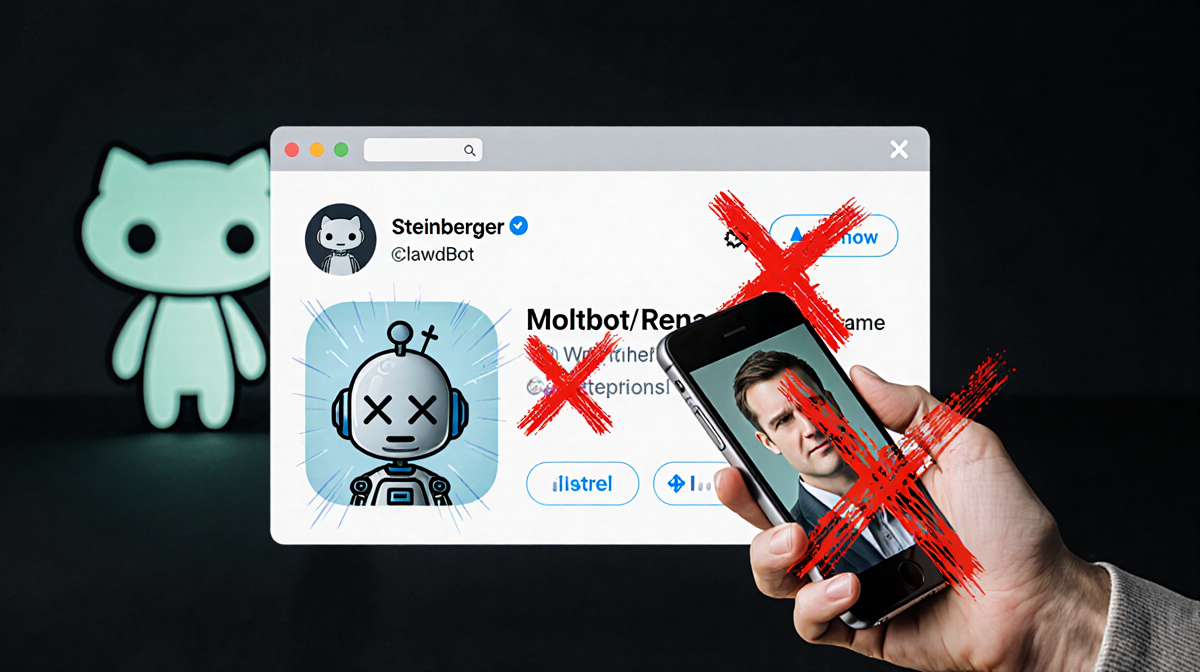
During a rename from ClawdBot to Moltbot, an error allowed scammers to claim Steinberger’s online identities. He posted on X, asking users to stop harassing him and saying he is working with GitHub to regain control.
> “I will never do a coin,” he wrote. “Any project that lists me as coin owner is a SCAM.”
He also added that he will not accept token-related fees and that such claims are damaging the project.
Key Points
- The rename was triggered by trademark concerns.
- Scammers exploited the glitch to squat Steinberger’s accounts.
- Steinberger is actively restoring access with GitHub.
The CLAWD Token and Market Reaction
The token, named CLAWD, is a Solana-based meme coin launched via pump.fun. Traders loosely tied it to ClawdBot, leading to a surge in speculative interest.
| Date | Event | Comment |
|---|---|---|
| January 25, 2025 | Researcher Stitchdegen confirms CLAWD is not official | Reinforces Steinberger’s denial |
| January 27, 2025 | Developer Ozmen warns of similar scams | Advises clear non-involvement statements |
| January 27, 2025 | Crypto trader Kotonono Tsumugi criticizes Steinberger’s anti-crypto stance | Sparks debate |
> “CLAWD is not an official token,” said Stitchdegen.
> “Similar scams hit many open-source projects once they gain visibility,” wrote Ozmen.
The token’s price movement mirrored other meme-coin volatility. Earlier this month, the AI-themed coin RALPH fell about 80% after a wallet linked to its developer sold roughly $300,000 in tokens.
Industry Reactions
Tech commentator Robert Scoble also declined token requests, noting there are other ways to fund projects without issuing coins.
> “I have turned down token requests,” said Scoble.
Former Binance CEO Changpeng Zhao criticized traders on January 13, 2025 for treating casual posts as investment signals, warning that buying meme coins inspired by jokes could lead to losses.
Patterns in Meme-Coin Speculation
Steinberger’s dispute illustrates a recurring pattern: viral ideas or public figures become fodder for fast-moving tokens. The rapid rise and fall of RALPH and the current CLAWD token demonstrate how quickly speculation can outpace developer consent.
Lessons for Developers
- Clearly state non-involvement in any token.
- Monitor online identities closely, especially during rebranding.
- Engage with platform support (e.g., GitHub) promptly to recover access.
Conclusion
For Steinberger, the focus remains on software, not speculation. He describes ClawdBot as a young hobby project with “sharp edges” meant to inspire builders, not generate financial pressure.
The incident underscores the need for open-source developers to protect their brand and clarify their stance on cryptocurrency projects that may arise around their work.
Key Takeaways
- Steinberger denies issuing any token.
- Account takeover was due to a forced rename error.
- The CLAWD token sparked a broader debate on meme-coin scams.
- Developers should proactively communicate non-involvement.
—