At a Glance
- A Belgian rower, Benoit Bourguet, was rescued by the U.S. Coast Guard and a Liberian-flagged tanker after his boat capsized east of Puerto Rico.
- The incident occurred on January 21, 2026, in 13-15-foot seas, after two rogue waves struck the vessel.
- No other race participants were reported in distress.
- Why it matters: The swift, coordinated effort showcases the effectiveness of international maritime safety programs and highlights the dangers of long-distance rowing competitions.
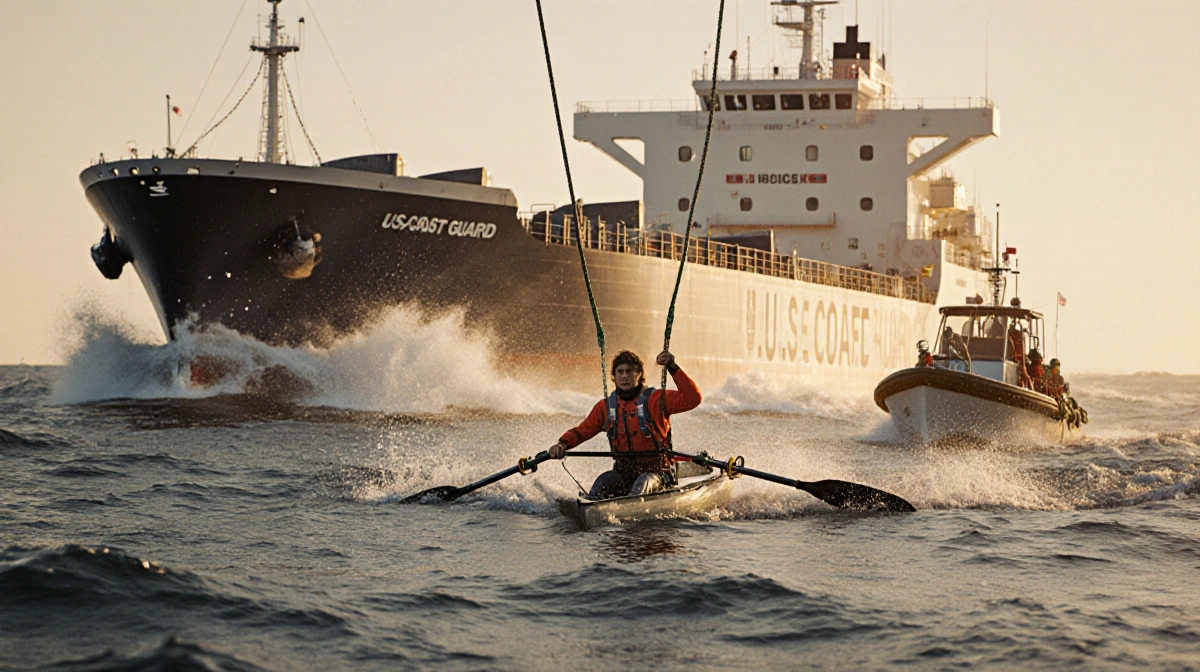
A Belgian rower was pulled from the Atlantic Ocean after his vessel capsized during the World’s Toughest Row Race. The rescue, carried out by the U.S. Coast Guard and the Horten tanker, unfolded on January 21, 2026, near Puerto Rico.
Rescue Operation Details
- Benoit Bourguet, 47, was aboard the City of Liverpool when two rogue waves hit the boat, causing it to flip in 13-15-foot seas.
- The rower deployed a life raft and remained afloat for roughly 24 hours before being spotted.
- The Coast Guard’s San Juan Command Center received a 406 MHz Emergency Positioning Indicating Radio Beacon (EPIRB) signal from the rowboat at approximately 2 a.m. Wednesday.
- A second distress signal from a personal locating beacon was confirmed later.
- An Automated Mutual-Assistance Vessel Rescue (AMVER) callout was issued, prompting the 1,092-foot Horten tanker to divert.
- The tanker traveled about 110 miles over 12 hours to reach the distress location, 1,100 nautical miles east of Puerto Rico.
- Upon arrival, the Horten crew spotted Bourguet on a life raft and used a life ring to pull him aboard.
- Bourguet was dehydrated but in overall good condition.
Race Context and Conditions
The World’s Toughest Row Race spans 3,000 miles from San Sebastián de la Gómera, Spain, to Nelson’s Dockyard, Antigua.
| Aspect | Detail |
|---|---|
| Start | San Sebastián de la Gómera, Spain |
| Finish | Nelson’s Dockyard, Antigua |
| Distance | 3,000 miles |
| Sea State | 13-15-foot seas during incident |
| Participants | Solo rowers and teams across multiple vessels |
No other vessels in the race were reported in distress. The Old Sea Dogs, another participant, made VHF calls to Bourguet but received no response.
Coast Guard Coordination
The rescue showcased seamless coordination between Coast Guard watchstanders and the Horten crew. Lt. Kenneth Snyder, Coast Guard Sector San Juan mission coordinator, praised the effort:
> “We are very proud of the seamless coordination between our Sector San Juan Command Center watchstanders and the courageous crew and captain of the motor tanker Horten, which resulted in the successful rescue of a mariner,” Snyder said. He added that the Horten’s participation in the AMVER program was critical and that the crew’s swift response embodied the spirit of voluntary maritime assistance.
Bourguet’s rescue was also aided by the race’s safety coordinator, who confirmed that no contact had been made after numerous unanswered messages.
Aftermath and Next Steps
- The Horten tanker will coordinate Bourguet’s transfer from the ship at a later time.
- The U.S. Coast Guard will continue to monitor the race for any additional distress signals.
- The incident highlights the importance of robust safety protocols in extreme endurance events.
Key Takeaways
- Rogue waves can pose severe risks even to experienced rowers.
- International cooperation and rapid response are essential for maritime rescues.
- AMVER and EPIRB systems proved vital in locating and rescuing Bourguet.
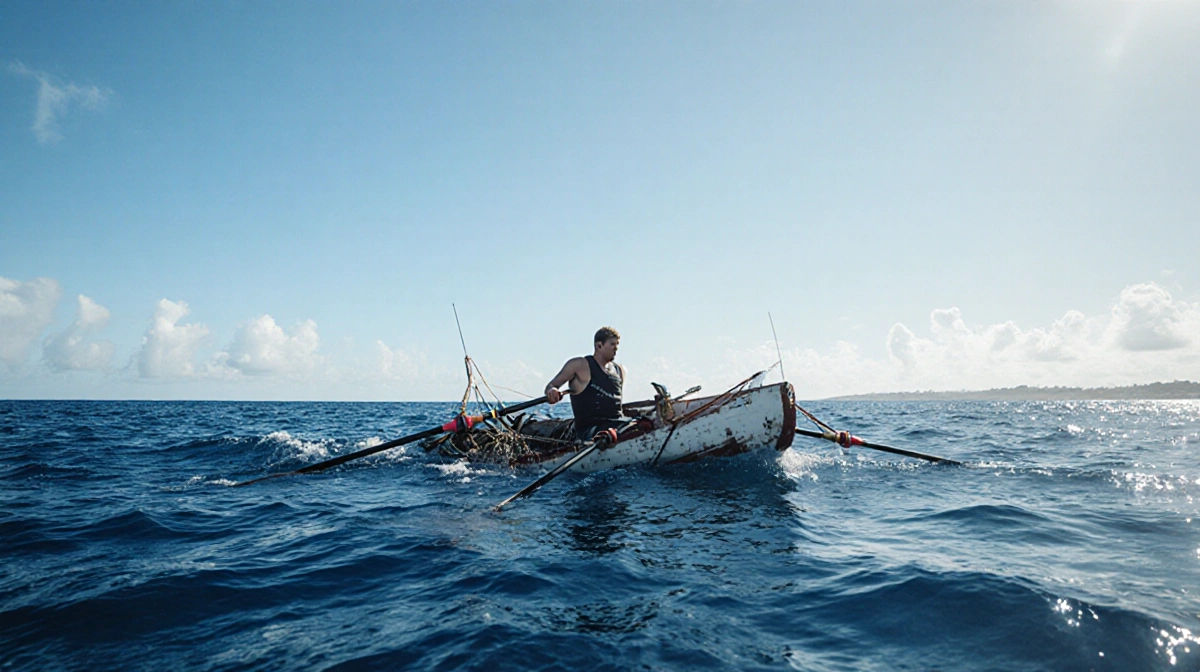
The incident serves as a reminder of the unpredictable nature of the Atlantic and the need for vigilant safety measures in long-distance rowing competitions.