
At a Glance
- Drake files an appeal after a federal judge dismissed his lawsuit against Universal Music Group over Kendrick Lamar’s diss track.
- The judge ruled that rap lyrics cannot be deemed defamatory, citing the context of a heated rap battle.
- Drake’s lawyers argue the ruling sets a dangerous precedent that could protect defamatory statements in rap.
- Why it matters: The case questions the legal limits of artistic expression and the protection of artists’ reputations.
Drake’s appeal comes after a federal judge in New York City dismissed his lawsuit in October 2025. The case centers on Kendrick Lamar’s song Not Like Us, released in May 2024, in which Lamar labeled Drake a “certified pedophile” and urged him to be “placed on neighborhood watch.”
The Original Dispute
In January 2024, Drake sued Universal Music Group (UMG) for releasing and promoting Not Like Us. He claimed the label “approved, published and launched a campaign to create a viral hit out of a rap track that falsely accuses Drake of being a pedophile and calls for violent retribution against him.”
UMG countered that the lyrics were mere opinion and hyperbole, not factual statements. In March 2024, the label filed a motion to dismiss, arguing that Drake “lost a rap battle he provoked” and that the lawsuit was a misguided attempt to “salve his wounds.”
Judge’s Ruling
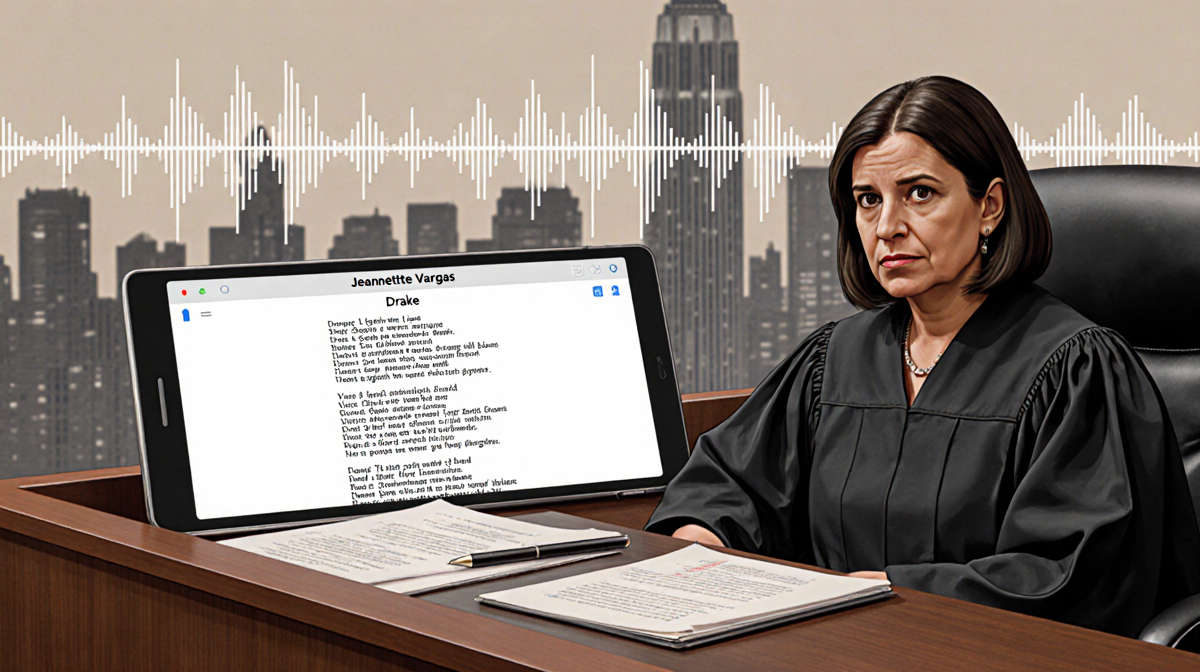
Judge Jeannette Vargas dismissed the case, stating that the “vitriolic war of words” in Lamar’s track was not defamatory. She noted:
> “Although the accusation that [Drake] is a pedophile is certainly a serious one, the broader context of a heated rap battle, with incendiary language and offensive accusations hurled by both participants, would not incline the reasonable listener to believe that Not Like Us imparts verifiable facts about Drake.”
The judge’s decision effectively created an “unprecedented and overbroad categorical rule” that statements in rap diss tracks can never constitute facts.
Drake’s Appeal
On Wednesday, Jan. 21, Drake’s attorneys filed an appeal, describing the dismissal as “dangerous.” They argue that millions of listeners understood the song as a factual claim, causing reputational harm and potential violence.
Michael J. Gottlieb, one of Drake’s lawyers, wrote:
> “If rap diss tracks cannot contain statements of fact, then they are inoculated from any liability for defamation-no matter how direct and damaging the defamatory statements they contain.”
He added that labeling Drake a “certified pedophile” is “hard to imagine a statement more damaging to one’s reputation and safety.”
UMG’s Counterarguments
UMG maintains that the song was hyperbolic. In a March 2024 filing, the label highlighted that Drake’s own music contains similar accusations, citing his diss track “Family Matters.”
The label also pointed out that the song was part of a “heated public feud” where both artists exchanged “progressively caustic, inflammatory insults.” They argued that listeners expect such rhetoric in rap battles.
UMG has until March 27 to file a response to Drake’s appeal.
Legal Timeline
| Date | Event |
|---|---|
| May 2024 | Kendrick Lamar releases Not Like Us |
| January 2024 | Drake files lawsuit against UMG |
| March 2024 | UMG files motion to dismiss |
| October 2025 | Judge Vargas dismisses the case |
| Jan. 21, 2024 | Drake files appeal |
| March 27, 2024 | Deadline for UMG response |
Key Takeaways
- The case highlights the tension between artistic freedom and defamation law.
- A federal ruling could set a precedent protecting potentially defamatory rap lyrics.
- Drake’s appeal hinges on the argument that listeners interpreted the track as factual.
- UMG’s response will determine whether the appellate court will revisit the precedent.
Why it matters: The outcome could influence how artists navigate lyrical content and how courts assess defamation in musical contexts.