

At a Glance
- Gladys West died at 95.
- She was the mathematician who helped create the modern Global Positioning System.
- Her career spanned from the 1950s to 1998, with honors including the Air Force Hall of Fame.
- Why it matters: Her legacy shows how perseverance and talent can break barriers for Black women in STEM.
Gladys West, the mathematician whose work underpinned the Global Positioning System, passed away on Jan. 20 at the age of 95. Dinwiddie County officials in Virginia honored her as a pillar of the local community and a trailblazer in mathematics and technology. Her death marks the loss of a pioneering figure whose contributions shaped modern navigation and satellite science.
Early Life and Education
Gladys Mae Brown was born in Dinwiddie County, Virginia. She graduated at the top of her high-school class and earned a bachelor’s degree in mathematics. After teaching in public schools, she completed a master’s degree in 1955. Her academic excellence opened doors that were rarely available to African American women at the time.
Career at the Navy
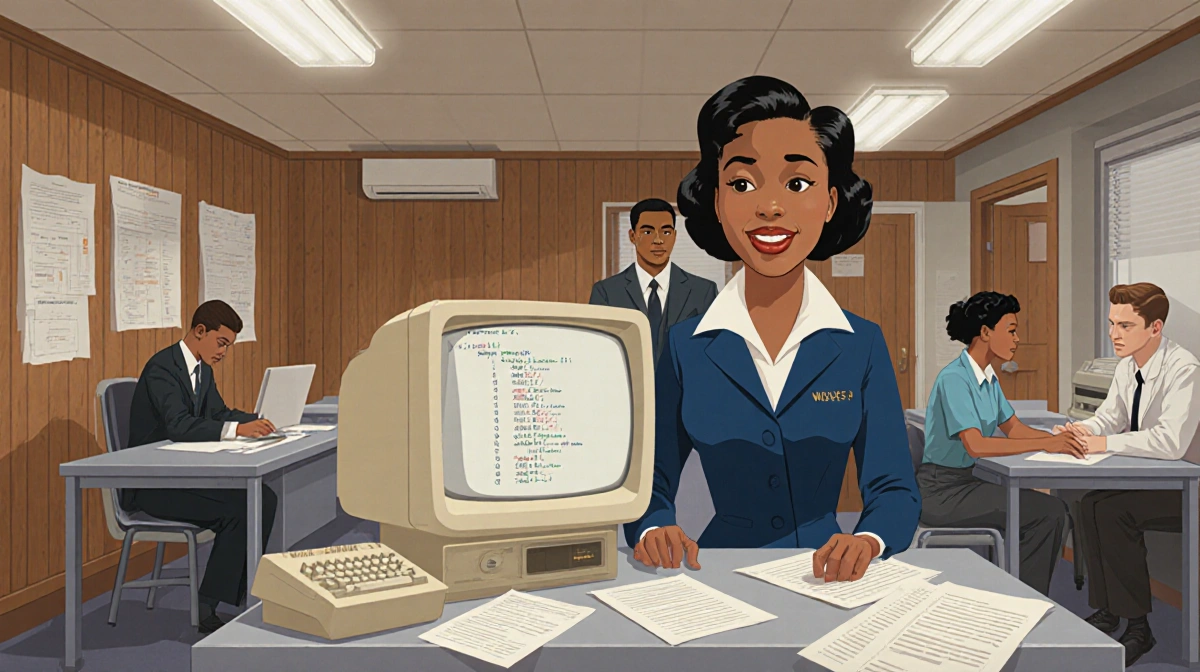
In 1956, West joined the U.S. Navy’s Naval Proving Ground in Dahlgren, Virginia, as a computer programmer and coder. She was the second African American woman hired there and the fourth African American employee overall. Her expertise in applied mathematics quickly earned her respect among colleagues and set the stage for her most influential work.
Contributions to GPS and Other Projects
West’s most celebrated achievement was her role in developing the modern Global Positioning System. By compiling data from orbiting satellites and crafting algorithms to compute precise surface elevations, she helped correct distortions in the Earth’s shape-an essential step for accurate GPS navigation.
Beyond GPS, West spearheaded the Seasat project, the first satellite capable of remotely sensing the oceans. In the early 1960s, she also contributed to a study that determined Pluto’s regular motion relative to Neptune, showcasing her versatility across planetary science and Earth observation.
Throughout her career, West published several papers and presented at prestigious conferences. She retired in 1998 after more than four decades of groundbreaking work.
Legacy and Honors
Two decades after her retirement, West was inducted into the United States Air Force Hall of Fame in 2018. Dinwiddie County celebrated her achievements, and the county’s statement highlighted her as a source of pride:
> “Dr. Gladys West’s life is a powerful reminder that talent, perseverance, and education can transcend circumstances and inspire generations,” the county said.
West is often called one of history’s “hidden figures,” a term used by Britannica to describe individuals whose scientific contributions were overlooked because of race or gender.
Tributes
On LinkedIn, Marvin Jackson, author of It Began With a Dream, paid tribute to West on January 19:
> “We became the best of friends, and her family became my family,” Jackson wrote. “If you don’t know of this hidden figure, check out her incredible legacy and life history. A humble, scholar, mother, and family woman who helped change the world.”
Her colleagues and friends remember her not only for her intellect but also for her humility and dedication to family. West’s legacy continues to inspire new generations of mathematicians, engineers, and scientists.
Key Takeaways
- Gladys West was a pivotal figure in the creation of GPS, a technology that now powers everyday navigation.
- She broke racial and gender barriers as one of the first African American women in the Navy’s technical workforce.
- Her work extended beyond GPS to satellite oceanography and planetary studies.
- West’s life exemplifies how perseverance and education can overcome societal obstacles.
- She is remembered as a “hidden figure” whose contributions were essential yet historically under-recognized.
Final Thoughts
The passing of Gladys West reminds us that the foundations of modern technology were laid by individuals who often went unseen. Her story urges us to celebrate those who, through skill and determination, have reshaped the world in ways we rely on daily.