At a Glance
- William McKinnis was identified five years after his skull washed ashore on Lake Okeechobee.
- The discovery, made on June 12, 2021, led to a breakthrough only after a partnership with DNA-genealogy firm Othram in 2025.
- Law-enforcement officials are now seeking anyone who may have seen McKinnis between 2019 and 2021 to help determine the cause of his death.
Why it matters: The case shows how modern forensic genetics can solve cold cases that were once considered hopeless.
A Grim Find on the Shoreline
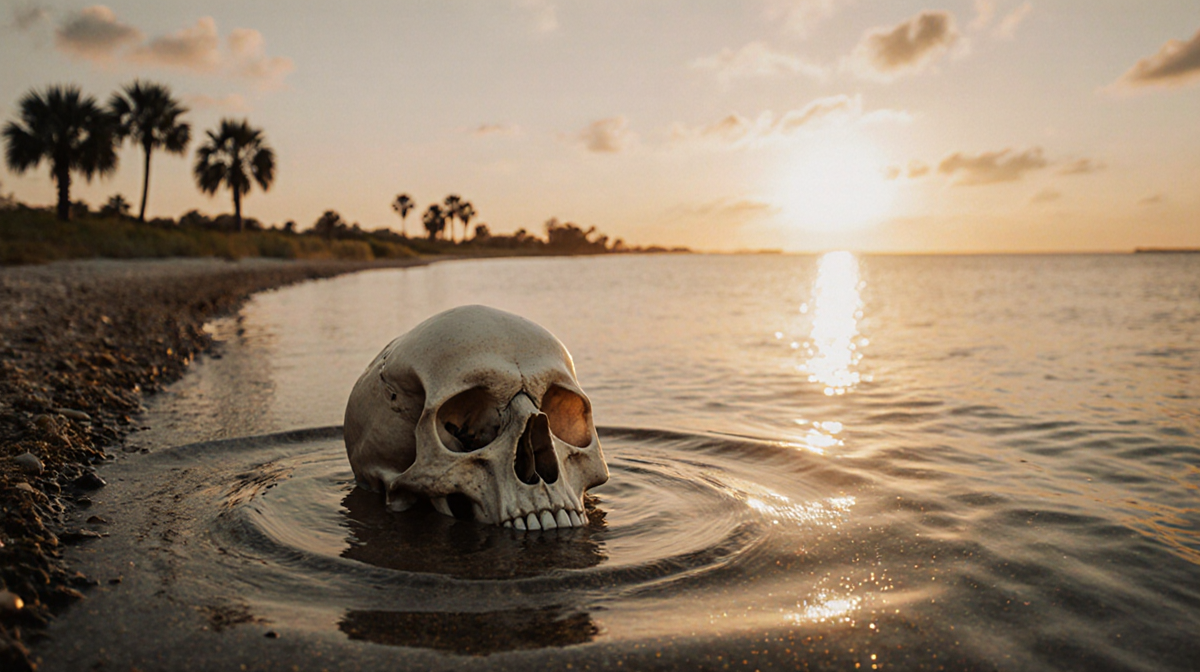
On June 12, 2021, a couple walking along a trail in the Canal Point Recreation Area, near the eastern shore of Lake Okeechobee in Palm Beach County, stumbled upon a lone skull. The skull was the only remains recovered from the site, and it was initially undetermined to whom it belonged.
The Palm Beach County Sheriff’s Office began an investigation, but early on there were no leads that could explain the circumstances of the man’s death. The remains remained unidentified for nearly five years.
Who Was the Man?
A press release from Othram Inc., a private Texas-based DNA laboratory, stated that forensic genetic analysis determined the skull belonged to a white or Hispanic adult male aged between 39 and 69. The laboratory used advanced forensic genetic genealogy to search for relatives who could provide DNA matches.
By the end of 2025, the sheriff’s office had partnered with scientists at Othram. The collaboration produced a series of genealogical leads, which detectives followed up on through September of the same year. DNA samples were collected from several potential relatives, and the matches ultimately led to the identification of the skull as belonging to William McKinnis.
The Life of William McKinnis
McKinnis was a veteran from Boston who had led a somewhat transient lifestyle. He was estranged from his family and had been traveling between Cocoa, Fla., and Hollywood, Fla., during the summer of 2019. According to the sheriff’s office, no one in the community had reported a missing person matching McKinnis’s description during that period.
The discovery of his remains prompted the sheriff’s office to seek information from anyone who may have known or encountered McKinnis from 2019 to 2021. The goal is to determine what may have caused his death and whether any foul play was involved.
The Role of Forensic Genetic Genealogy
The technology that enabled this identification is a relatively new field in forensic science. Kristen Mittelman, chief development officer at Othram, explained:
“When only a skull has been found, the case may seem hopeless. But now the technology exists to identify people in cases like this that were once unsolvable.”
Mittelman’s statement underscores how DNA-genealogy can bridge the gap between a single fragmentary remains and a full identity, especially when traditional forensic methods fail.
Public Appeal and Next Steps
The Palm Beach County Sheriff’s Office has not yet released details about the nature of the death investigation. However, they are actively seeking any information that could shed light on McKinnis’s final days.
Anyone with knowledge about McKinnis’s death is encouraged to contact Crime Stoppers at 1-800-458-TIPS. The agency hopes that public tips will help piece together the circumstances surrounding his disappearance and eventual death.
Timeline of Key Events
| Date | Event |
|---|---|
| June 12, 2021 | Skull found by couple in Canal Point Recreation Area |
| 2025 | Partnership formed between sheriff’s office and Othram |
| September 2025 | DNA samples collected from potential relatives |
| Jan 23, 2026 | Official announcement of identification as William McKinnis |
What This Means for Cold Cases
The McKinnis case illustrates the growing power of forensic genetics to bring closure to families and communities. It also highlights the importance of preserving and re-examining evidence as technology advances.
Law-enforcement agencies across the country are now more likely to revisit unsolved cases when new DNA-analysis techniques become available. The collaboration between the sheriff’s office and Othram sets a precedent for future investigations.
Key Takeaways
- A skull found on Lake Okeechobee in 2021 was identified as belonging to William McKinnis after a partnership with Othram in 2025.
- McKinnis was a Boston-born veteran who traveled between Cocoa and Hollywood, Fla., in 2019 and was estranged from his family.
- Forensic genetic genealogy proved essential in identifying the remains, showing the technology’s potential to solve cold cases.
- The sheriff’s office is still investigating the cause of death and is asking the public for any information that could help.
The case serves as a reminder that advances in science can turn seemingly hopeless investigations into solvable mysteries, offering hope to families and communities affected by unresolved deaths.