At a Glance
- Paul Winchell, original voice of Tigger, also a Grammy-winning ventriloquist and inventor.
- His bipolar disorder and strained relationship with daughter April surfaced after his 2005 death.
- April’s attempts to reconnect were blocked by Paul’s insistence that his mother not be part of the family narrative.
**Why it matters: The story shows how a beloved entertainer’s hidden struggles shaped both his legacy and his family’s path.
Paul Winchell’s voice of Tigger was familiar to generations, yet the man behind the character faced a life of complexity. A Grammy-winning ventriloquist and inventor, he also struggled with bipolar disorder, a fact that only emerged after his death in 2005. His daughter, April Winchell, recounts a turbulent relationship that spanned decades.
Early Life and Career
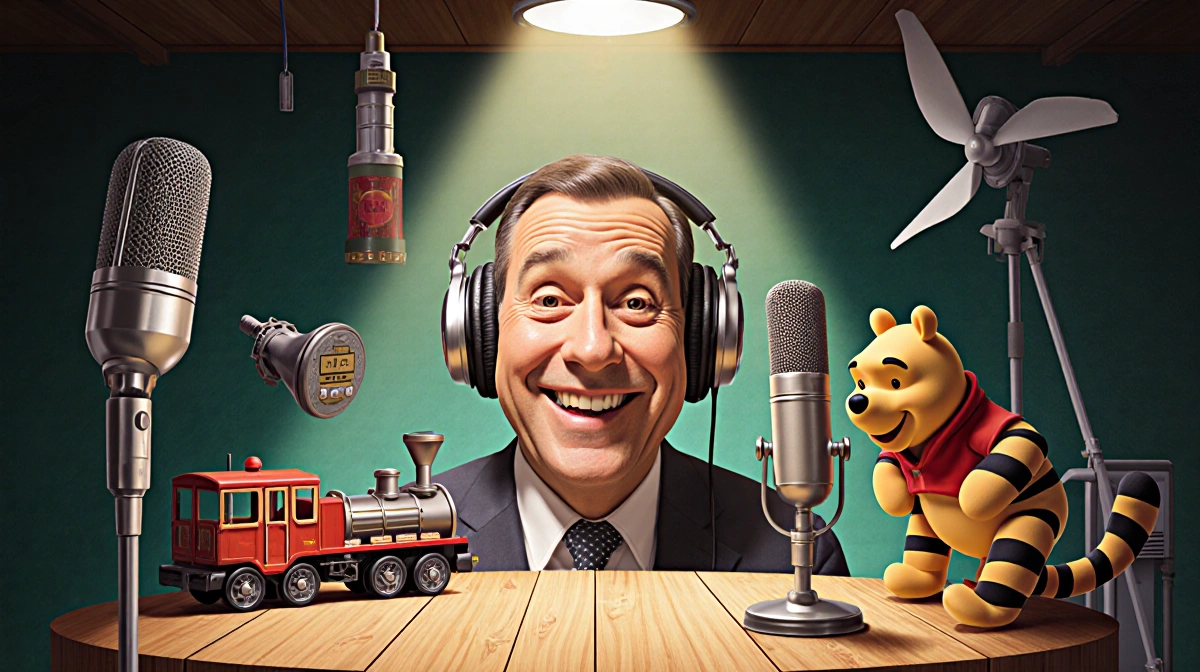
Paul Winchell began his career as a ventriloquist before becoming the original voice of Disney’s Tigger. His performance earned him a Grammy Award for Winnie the Pooh and Tigger Too. In addition to voice work, Winchell was an inventor, creating devices such as a motorized toy train and a wind-powered radio.
Winchell’s talent made him a household name, but his personal life was far less public. He married writer Nina Russell, and the couple had a daughter, April. The marriage ended in divorce, creating a rift that would later affect family dynamics.
Family Tensions
After the divorce, Paul and April’s relationship deteriorated. April recalls, “My dad got to a point where he didn’t really want to be around me because he said I reminded him of my mother and he thought I looked too much like her.” The estrangement intensified when April was 13, and communication ceased entirely.
The split was not only emotional; it involved a boundary that Paul set regarding his mother. April’s mother, Nina, was seen by Paul as a constant reminder of the divorce, which contributed to the cooling of the father-daughter bond.
Attempts at Reconnection
In 1982, after marrying her first husband, April decided to reach out to her estranged father. She hoped the reunion would spark new family gatherings. Paul hosted a barbecue, complete with a joystick-controlled video camera, and interviewed April. He even told her, “God, you look just like your mother,” which sparked a tense moment.
April’s attempts to rebuild the relationship were encouraged by Jim Cummings, a voice actor who had shared the role of Tigger with Paul. Cummings told April, “I saw your dad. He wants to see you. He’s always talking about you.” However, when April finally reached out, Paul reacted angrily.
Bipolar Diagnosis and Boundary Setting
During this period, Paul disclosed his bipolar diagnosis. He explained, “I’m medicated now. I’m on this bipolar medication and I’m doing much better.” Despite this, April set a clear boundary: she told Paul that any future relationship must exclude her mother. Paul could not accept this condition.
The boundary led to a permanent halt in communication. April learned of Paul’s death from the radio, along with her siblings Stacy Paul and Stephanie Winchell. He had requested that none of his children be told he died, preferring the news to be public.
Legacy and Tribute
Despite the pain, April has chosen to honor her father’s contributions. She cleans his star on the Hollywood Walk of Fame twice a year, explaining that it is not an award for Father of the Year but an acknowledgment of his impact. “He left the world better than he found it – which is not something we can all say,” she says.
Paul’s legacy remains a blend of creative triumphs and personal challenges. His work in voice acting, ventriloquism, and invention continues to influence new generations. The story of his family, however, reminds us that public personas often hide private battles.
Key Events Timeline
| Year | Event |
|---|---|
| 1982 | April marries and reaches out to Paul |
| 1992 | April works on Goof Troop; Jim Cummings encourages reconnection |
| 2005 | Paul Winchell passes away |
Takeaway
Paul Winchell’s public achievements were matched by private struggles that shaped his family relationships. April’s story illustrates the lasting impact of unresolved familial boundaries and the importance of addressing mental health openly.