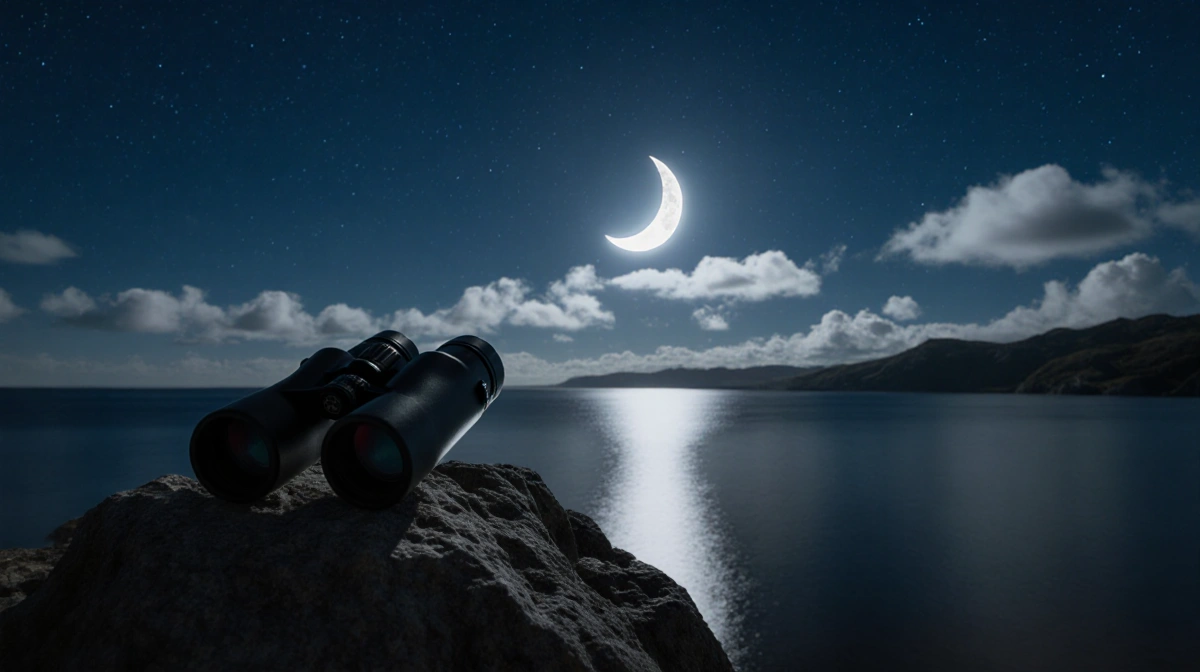
At a Glance
- Saturn will glide past a crescent moon on Jan 22 for a brief twilight alignment.
- The best viewing window is about 30-60 minutes after sunset.
- The moon’s disk is 22 % illuminated and will set before midnight.
- Why it matters: This is one of the last chances to see Saturn before it fades into the sun’s glare.
Saturn will glide past a crescent moon on Jan 22, creating a striking alignment low in the western sky. The event lasts only a short time, giving stargazers a fleeting opportunity to witness the gas giant before it disappears from evening view.
Timing & Visibility
The alignment begins shortly after sunset, when twilight deepens enough for Saturn to stand out against the night sky. Observers across most of North America can spot the pair with the naked eye if the western horizon is clear.
- 30-60 minutes after sunset offers the most balanced view.
- The moon’s 22 % lit disk appears roughly 30 degrees above the horizon.
- Saturn shines like a bright star less than 7 degrees to the moon’s upper left.
- The crescent will dip below the horizon before midnight.
| Time after Sunset | Visibility |
|---|---|
| 30 min | Moon and Saturn both clearly visible |
| 45 min | Moon brighter, Saturn still prominent |
| 60 min | Moon approaching first quarter, Saturn dimming |
By the following evening, the moon will have moved noticeably past Saturn and will appear thicker as it approaches its first quarter phase on Jan 25.
How to Watch
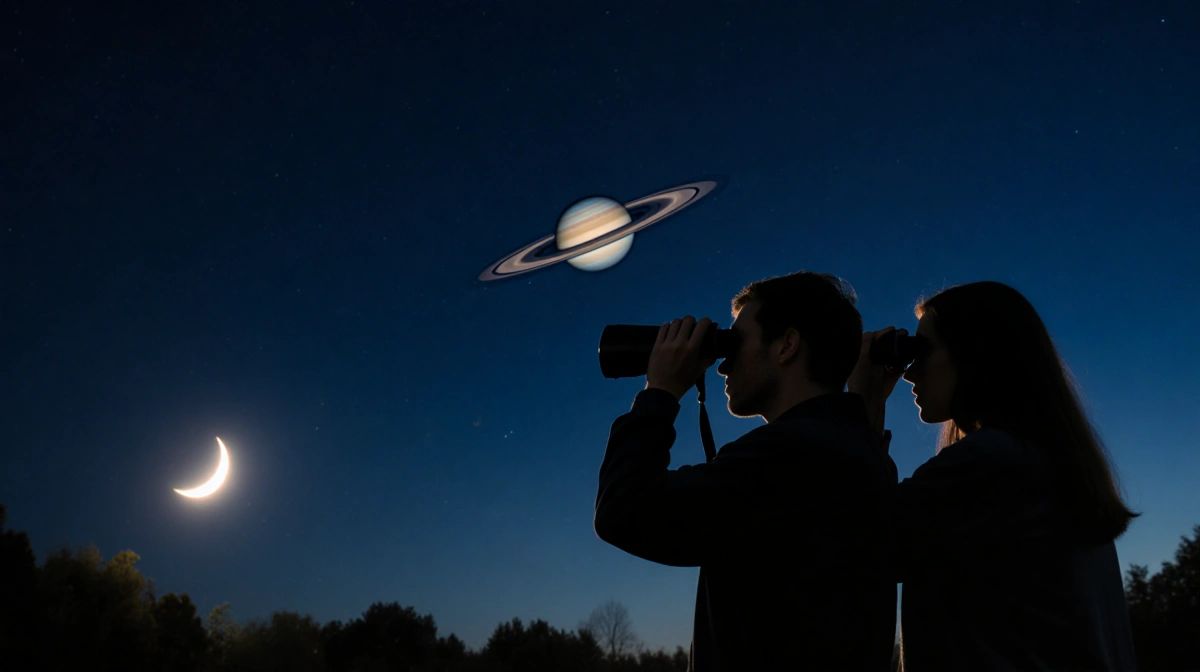
No special equipment is required, but binoculars or a small telescope can enhance the experience. A telescope can reveal Saturn’s rings, though their clarity will fade as the planet sits lower in the sky.
- Binoculars: Spot Earthshine – sunlight reflected from Earth onto the moon’s night side.
- Small telescope: View Saturn’s rings; use a low-magnification eyepiece for the best view.
- Camera: Capture the alignment; use a tripod for stability.
- Timing: Set an alarm for 30-60 minutes after sunset to catch the peak.
This alignment is the most visually striking of three consecutive nights when the moon passes Saturn, with tonight offering the most photogenic backdrop before the moon moves ahead.
Why It Matters
Saturn has been a steady presence after sunset for months, but it is approaching a seasonal transition that will soon move it out of prime evening views. Tonight’s celestial pairing marks one of the last opportunities to catch the planet before it fades into the sun’s glare in the coming weeks.
The event also provides a rare chance to observe Earthshine, a subtle glow on the moon’s dark side caused by sunlight reflecting off Earth. This phenomenon is most visible when the moon is a thin crescent, as it is tonight.
For stargazers, catching Saturn before it disappears from view for a while is a meaningful moment, especially for those hoping to document the planet’s final evening appearance.
Key Takeaways
- Saturn will align with a crescent moon on Jan 22.
- Best viewing window: 30-60 minutes after sunset.
- Moon’s disk is 22 % illuminated; sets before midnight.
- No special equipment needed; binoculars or a small telescope can enhance the view.
- This is one of the last chances to see Saturn in the evening sky before it fades.