At a Glance
- Spain’s train-crane collision left six people with minor injuries on Jan. 22.
- The crash is the fourth rail incident in Spain in under a week.
- No derailment happened, but the country is still mourning a derailment that killed 45.
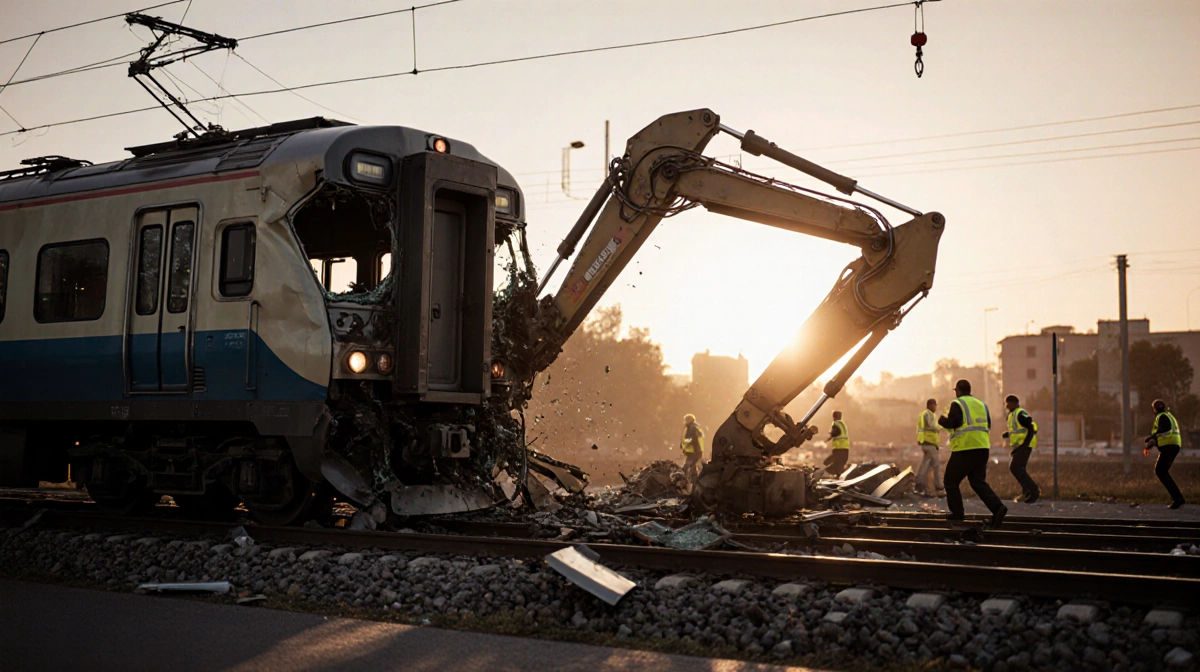
A commuter train in Murcia collided with a crane arm on Jan. 22, injuring six passengers and marking the fourth rail mishap in Spain in less than a week. Authorities say the train did not derail, but the event underscores growing safety concerns on the nation’s rail network.
Collision Details
The collision occurred as a narrow-gauge FEVE train was traveling along the line when a crane arm extended into the track, striking the windows of the moving train. Transport Minister Óscar Puente posted a translated social media message confirming the crane’s intrusion. Emergency services and regional president Fernando López Miras reported that the train remained on the rails and that all injuries were minor.
- Crane arm struck windows of passing train
- Six passengers injured, all minor
- No derailment
- Incident took place near Cartagena, Murcia
- Authorities confirmed injuries and no derailment
“A small collision between a crane arm and a FEVE train is what caused the incident in Cartagena. The important thing is that there was no derailment, and the six people with minor injuries – to whom I wish a speedy recovery – have already been treated,” Miras said in the translated caption.
Spain’s Rail Incident Week
Spain has experienced four separate rail incidents in a span of just eight days, each raising questions about infrastructure safety and emergency response.
| Date | Incident | Location | Outcome |
|---|---|---|---|
| Jan. 18 | Iryo high-speed derailment | Adamuz, Murcia | 45 deaths, 29 serious injuries, 123 minor injuries |
| Jan. 20 | Rodalies train struck collapsed wall | Gelida, Catalonia | 1 conductor died, 37 injured |
| Jan. 22 | Crane arm collision | Cartagena, Murcia | 6 minor injuries |
| Jan. 22 | Falling rock derailment | Barcelona, Catalonia | No injuries |
On Jan. 18, at 7:45 p.m. local time, the Iryo train heading to Madrid from Málaga was approaching the Adamuz station when its last two cars derailed. The derailed cars then collided with the opposite-direction Renfe Alvia train, sending its front cars down a 13-foot embankment. At the time, the Iryo carried 289 passengers and the Alvia had 184 on board.
Construction and Rail Coordination
The crane involved in the Cartagena incident was operating as part of a port expansion project. Officials said the arm had extended beyond its designated clearance area, violating railway safety protocols. The incident highlights the need for stricter coordination between construction sites and rail operators.
- Clearances must be strictly observed
- Construction sites must notify rail operators in advance
- Safety inspections should be mandatory before work begins
Emergency Response
First responders arrived within minutes of the collision, treating the injured and securing the area. Medical teams used portable oxygen and pain medication to care for the six passengers. The train’s crew reported no structural damage to the carriages.
- Rapid arrival of emergency services
- Immediate medical care for passengers
- Area secured and monitored for further incidents
National Safety Review
Following the Adamuz derailment, the Ministry of Transport announced a comprehensive audit of high-speed lines. The audit will examine track integrity, signaling systems, and emergency communication procedures. The review aims to prevent future incidents and restore public confidence.
- Track integrity checks
- Signaling system evaluations
- Emergency communication protocols
Public Reaction
Social media users expressed concern over the repeated rail incidents, calling for accountability and better safety measures. Some urged the government to prioritize rail over road transport. The public reaction underscores growing scrutiny of Spain’s transportation infrastructure.
- Calls for accountability
- Demand for improved safety standards
- Public pressure on government transport policies
Key Takeaways
- Six passengers injured in Cartagena collision, no derailment.
- The crash is part of a series of four rail incidents in a week.
- The high-speed derailment on Jan. 18 remains the deadliest rail accident in Spain since 2010.
- Authorities are reviewing coordination between rail operators and construction projects.
- Spain is in national mourning, with ongoing investigations and safety reviews.