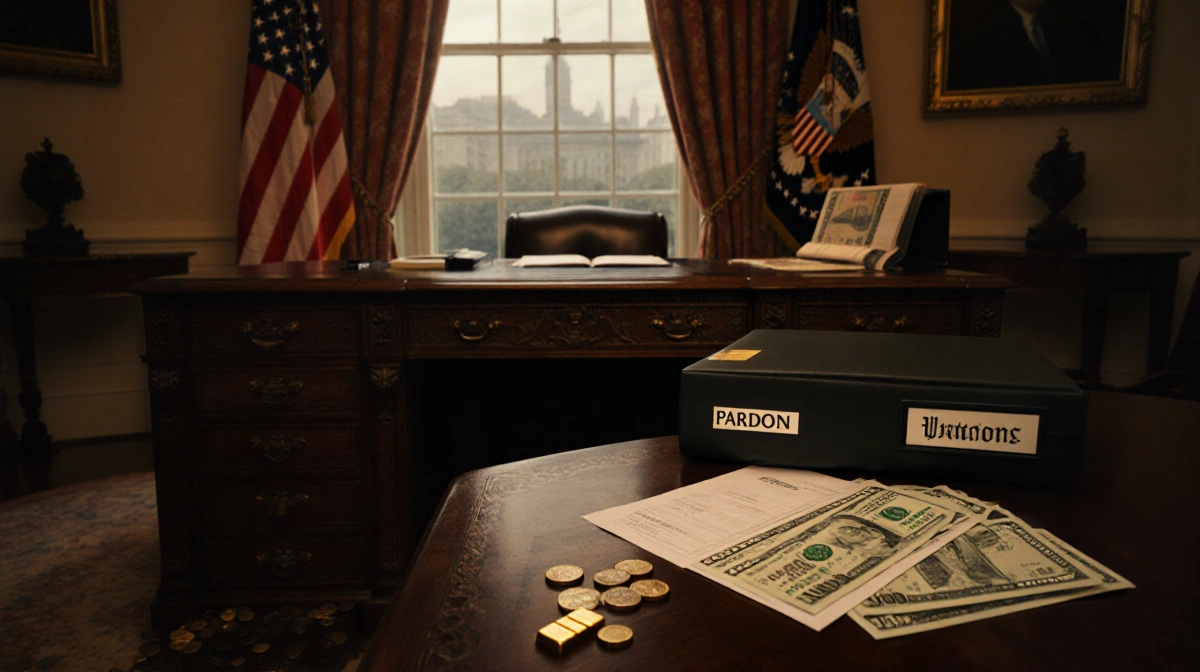
- $298 million in fines and restitution had been ordered against 88 pardoned individuals.
- Half of the pardons were for white-collar crimes, including money laundering and bank fraud.
- A record 1,500 Jan. 6 rioters were pardoned on the president’s first day back in office.

Why it matters: The clemency trend shows a focus on wealthy business and political figures, raising questions about influence and fairness.
Introduction
Trump has issued 88 individual pardons in his second term, more than half for white-collar offenses. The latest batch, announced Thursday and Friday, included a former health-care CEO, a former Puerto Rico governor, and siblings convicted of fraud. The list also features billionaires such as Binance founder Changpeng Zhao, soccer-club owner Joe Lewis, and banker Julio M. Herrera Velutini.
White-Collar Focus
Over $298 million in fines and restitution had been imposed on the 88 pardoned individuals and one corporation. The offenses most often cited were money laundering, bank fraud, and wire fraud. About half of the recipients are business executives or politicians.
- Money laundering: 25 cases
- Bank fraud: 18 cases
- Wire fraud: 15 cases
High-Net-Worth Recipients
The pardon list contains several billionaires:
- Changpeng Zhao – Binance founder, pleaded guilty to enabling money laundering, owed $50 million.
- Joe Lewis – Owner of an English soccer club, pleaded guilty to insider trading.
- Julio M. Herrera Velutini – Venezuelan-Italian banker, pardoned while awaiting sentencing on campaign-finance violations.
Other notable figures include a former health-care CEO and a former Puerto Rico governor. The siblings Adriana Isabel and Andres Enrique Camberos, convicted in a counterfeit-energy-bottle scheme, were added to the top of the financial-impact list with $49 million in restitution.
Financial Impact
In the last year, 23 people owed more than $100 000 each in fines or restitution, with the total exceeding $298 million. The largest amounts were:
| Recipient | Fine/Restitution | Notes |
|---|---|---|
| HDR Global Trading Limited | $100 million | Anti-money-laundering violation |
| Changpeng Zhao | $50 million | Crypto-platform laundering |
| Devon Archer | $60 million | Fraud against the Oglala Sioux Tribe |
The 1,500 Jan. 6 rioters were pardoned on Trump’s first day back in office, a symbolic move that added to the broader clemency agenda.
Political Context and Criticism
White House press secretary Karoline Leavitt said the review process involves the Department of Justice and the White House counsel’s office. She added, “We have a very thorough review process here that moves with the Department of Justice and the White House counsel’s office. And he was very clear when he came into office that he was most interested in looking at pardoning individuals who were abused and used by the Biden Department of Justice and were overprosecuted by a weaponized DOJ.”
Trump defended a pardon for Zhao by stating, “I have no idea who he is. I was told that he was a victim, just like I was and just like many other people, of a vicious, horrible group of people in the Biden administration. I’m not concerned about the appearance of corruption. I’d rather not have you ask the question. I only care about one thing: Will we be No. 1 in crypto?”
A House Judiciary Committee memo criticized the president for potentially depriving victims of compensation and depleting the Victims of Crime Act funding. The memo accused Trump’s pardons of “undermining public safety at every turn.”
Comparisons with Past Presidents
| President | Total Fines/Restitution | Number of Recipients Owed >$100 k |
|---|---|---|
| Trump (first term) | $276 million | 12 |
| Obama (first term) | $2.5 million | 3 |
| Biden | $700 k | 2 |
Trump pardoned more people in one year than Biden did in four, and the financial penalties of his recipients were vastly higher than those of the two Democratic presidents.
Conclusion
Trump’s use of the pardon power has been rapid and concentrated on high-profile, high-net-worth individuals. The pattern raises questions about the balance between correcting perceived injustices and ensuring that the clemency process remains free from undue influence.