
> At a Glance
> – 93% of Americans are postponing big appliance buys because of inflation
> – Most fridge “disasters” are solved with a $0 coil clean or temperature tweak
> – Reddit threads show newer models failing faster than vintage units
> – Why it matters: A 30-minute fix can save you from a $500-$3,000 repair-or-replace trap
Before you panic about a leaking, humming or too-warm refrigerator, know this: most glitches can be cured in under an hour with no special tools, according to News Of Los Angeles tests. From dust-choked coils to mis-set thermostats, simple DIY steps can silence the noise and keep groceries cold without a service call.
Why Your Fridge Runs Nonstop
A refrigerator that never shuts off drains both your patience and your wallet.
Check the coils first. Dust and pet hair blanket the condenser coils on the back or base, forcing the compressor to overwork.
- Unplug the unit
- Pop off the grille
- Vacuum the coils, then brush away residue
- Snap the grille back and restore power
Dial back the cold. Anything below 37°F makes the compressor sprint and can freeze produce. Park a thermometer in a glass of water on the middle shelf for 8 hours, nudging the setting until it lands between 37°F and 40°F.
Water on the Floor? Two Likely Culprits
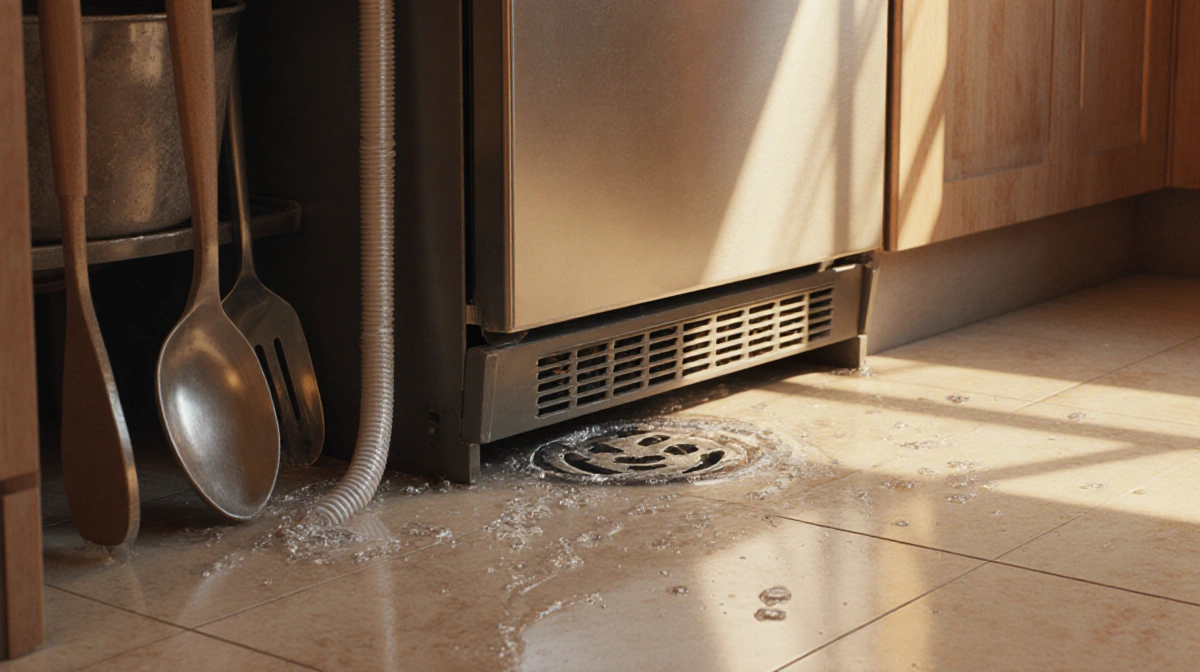
Puddles usually mean a blocked defrost drain or a kinked supply line.
Clear the drain from inside using warm water, a turkey baster and a pipe cleaner. If water still escapes, pull the fridge out and clean the rubber check valve on the drain hose.
Inspect the plastic water line for kinks or ice plugs. Shut off the saddle valve first. Replace cracked nylon tubing with a DIY kit-no torque wrench required.
Arctic-Shelf Ice Overload
Frost buildup screams door-seal failure or airflow choke.
- Wipe the gasket with soapy water; if that fails, order an OEM replacement
- Tilt the fridge slightly back so doors self-close
- Keep food 2 inches away from the rear wall so vents stay clear
Ice Maker on Strike
No cubes, tiny cubes or hollow shells? The water line is probably frozen.
Shut the supply valve, unplug for a few hours, or speed things up with a hair-dryer on low. Also confirm the shut-off arm isn’t wedged in the “full” position and that the bin sensor isn’t iced over.
Quick Reference: Fix vs. Symptom
| Symptom | First DIY Step | Part Cost | Time |
|---|---|---|---|
| Runs nonstop | Vacuum coils | $0 | 15 min |
| Water leak | Flush drain | $0 | 10 min |
| Sheet of frost | Test door seal | $0-$40 | 20 min |
| No ice | Thaw line | $0 | 2 hrs (mostly wait) |
Key Takeaways
- Dirty coils cause the majority of cooling complaints; clean them every six months
- Keep temperature between 37°F and 40°F for efficiency and food safety
- Most leaks stem from a clogged defrost drain-a $0 fix
- Newer fridges may fail sooner, but their problems are still mostly low-tech
- Call a pro only if these steps don’t stop the symptom
Run through these quick checks before shopping for a replacement and you could keep that fridge humming-quietly-for years to come.