At a Glance
- NordicTrack Commercial 2450 is the top smart treadmill for runners.
- Tonal 2 offers a wall-mounted strength system for serious lifters.
- The Tempo Studio blends a mirror and weights into one space-saving unit.
Why it matters: These systems let you train at home with the guidance of virtual instructors, saving time and money compared to a gym membership.
The idea of a home gym has grown popular as people look for ways to stay fit without leaving the house. Smart home gyms combine exercise equipment with digital coaching, making workouts more engaging and customizable. In this guide we’ll look at the best models for 2026, what they offer, and how to decide which one fits your space and budget.
Choosing a Smart Home Gym
The first step is to decide what type of training you want. Smart gyms come in several categories:
- Treadmills for running and walking.
- Strength systems like Tonal or Tempo for weight training.
- Mirrors that stream classes and track form.
Each type has its own set of features and price points. Consider these factors before you buy:
- Budget – Most units start around $1,000 and can exceed $4,000.
- Space – Treadmills often need 70-plus inches of floor area; wall-mounted systems need a sturdy wall and clearance.
- Membership – Many devices require a monthly subscription for classes or coaching.
- Versatility – Look for units that offer multiple workout styles and the ability to customize routines.
When you narrow down the category, read reviews that test the equipment under real-world conditions. Look for feedback on durability, ease of setup, and the quality of the digital experience.
Top Picks for 2026
1. NordicTrack Commercial 2450 – The Runner’s Choice
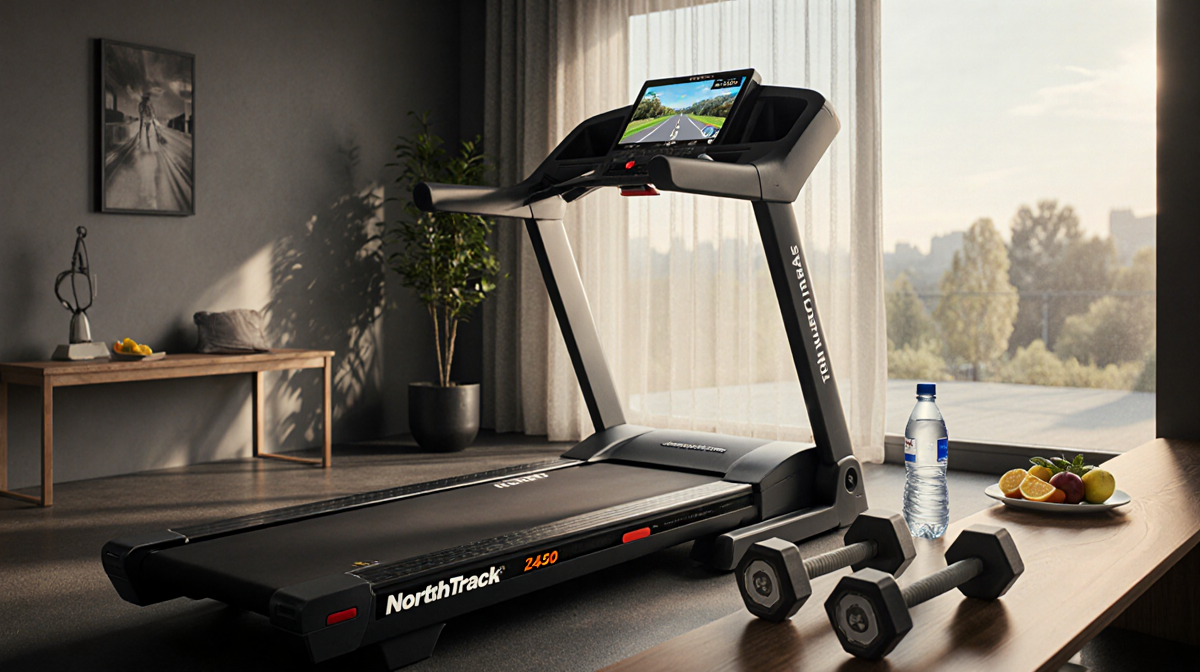
NordicTrack Commercial 2450 is a high-end treadmill that can handle runners and walkers of all heights. The machine features:
- A 22-inch HD touchscreen that tilts for floor-level classes.
- Incline from 0% to 15% and decline to -3%.
- Speed up to 12 mph.
- AutoAdjust technology that syncs with iFit to change incline and speed during a virtual class.
- Google Maps integration lets you “run” anywhere in the world.
Pros
- Versatile for tall and short users.
- Quick-touch console for easy speed changes.
- Fold-away design saves space when not in use.
Cons
- $2,499 price tag.
- Requires a large footprint (77.3 x 37 x 63.4 inches).
- Needs an iFit membership: $39 a month for a family plan.
Who it’s best for
- Serious runners wanting a realistic outdoor feel.
- Users who appreciate high-tech features.
2. Tonal 2 – The Wall-Mounted Strength System
Tonal 2 replaces traditional dumbbells and barbells with a cable-based machine that fits against a wall. Highlights include:
- 13 sensors track form and technique.
- Smart handles with gyroscope sensors for accurate rep counting.
- 250-pound total resistance.
- Smart View shows your live footage during a workout.
- Aero mode adds cardio or HIIT classes.
Pros
- Saves floor space.
- Functions like a personal trainer.
- Customizable workouts based on fatigue analysis.
Cons
- Requires a 7-foot wall and floor clearance.
- $4,295 price without accessories.
- Additional professional installation may be needed.
Who it’s best for
- Serious weightlifters seeking guided training.
- Homeowners with enough wall space.
3. Tempo Studio – The All-In-One Mirror Gym
The Tempo Studio looks like a wardrobe but houses a full strength-training setup. Key features:
- Two dumbbell bars and five sets of plates from 1.25 to 25 pounds.
- 3D sensors and AI provide real-time form feedback.
- Live and on-demand classes: HIIT, yoga, boxing, and more.
- Membership starts at $139 a month with a 12-month commitment.
- After 12 months, the equipment stays yours and the monthly fee drops to $39.
Pros
- Neatly stores weights and accessories.
- Personal trainer feel with AI coaching.
- Supports up to six user profiles.
Cons
- Large: 6 ft x 2 ft 2 in x 1 ft 4 in.
- Requires 6 feet of space in front for sensor detection.
- $1,668 base price.
Who it’s best for
- Homeowners wanting a compact strength system.
- Families who want shared access.
Practical Tips and Considerations
| Factor | What to Look For | Why It Matters |
|---|---|---|
| Budget | Minimum $1,000 for basic models. | Determines if you need a subscription or can buy outright. |
| Space | Measure floor and wall area before buying. | Avoids costly relocation or storage solutions. |
| Membership | Check if multiple user profiles are included. | Affects long-term cost and family use. |
| Versatility | Look for multiple workout types. | Keeps training interesting and balanced. |

When setting up a treadmill, keep a warm-up, maintain proper form, and avoid gripping the handrails. For rowing machines, focus on the four-step catch-drive-finish-recovery technique. Ellipticals benefit from a stable core and upright posture. Mirrors should have a clear view and sufficient space for movement.
Maintenance is simple: use a microfiber cloth to wipe down surfaces, avoid harsh chemicals, and follow the manufacturer’s cleaning instructions. Regularly update firmware and app versions to keep digital features smooth.
Key Takeaways
- Smart home gyms let you train anywhere with virtual coaching.
- Choose a category that matches your fitness goals.
- Budget, space, and membership plans are critical decision points.
- The NordicTrack Commercial 2450, Tonal 2, and Tempo Studio are the top picks for 2026.
- Proper setup and maintenance extend the life of your investment.
—
Updated: Aug. 1, 2025 – The list reflects current availability and product updates.