At a Glance
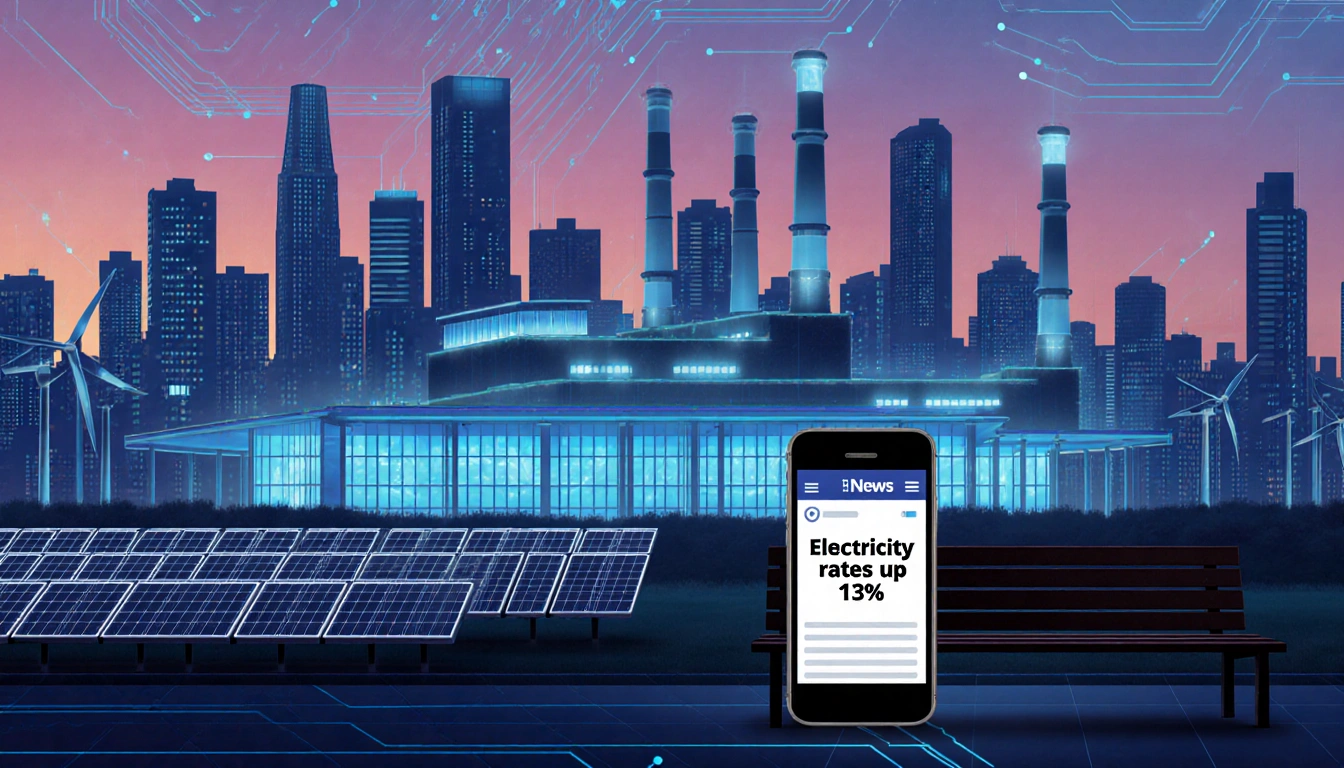
- Electricity rates up 13% in 2025 amid AI data-center boom.
- Grid upgrades and new power plants under pressure.
- Software firms claim unused capacity can power the surge.
- Why it matters: Consumers face higher bills, utilities risk outages, and startups could reshape grid resilience.
Electricity rates surged 13% in the United States this year, driven by an AI boom that has pushed data centers to consume more power than ever. The surge has sparked consumer frustration and environmental backlash.
Utilities, long accustomed to working behind the scenes, are now scrambling to upgrade the grid and build new power plants that can meet the growing load.
At the same time, a wave of software startups claims the grid already has spare capacity that can be unlocked with data-driven tools.
These companies argue that by mapping transmission lines, fiber optics, weather patterns, and community sentiment, they can identify overlooked sites and convince utilities to tap into hidden resources.
Other firms are turning distributed batteries into virtual power plants, selling aggregated capacity to the grid while offering homeowners backup power.
Meanwhile, larger tech players are partnering with industry bodies to develop AI models that improve grid efficiency and help regulators process connection requests.
Although the grid’s modernization will take time, analysts say 2026 could be the year when software solutions start to gain traction.
If these tools prove reliable, they could accelerate the deployment of new infrastructure and reduce costs for ratepayers.
The stakes are high: the electrification of transportation, heating, and the planned boom in data centers will demand more power.
Software’s speed and flexibility make it a compelling complement to physical upgrades.
- Gridcare – Grid capacity mapping
- Yottar – Medium-size user connection
- Base Power – Home battery leasing
- Terralayr – Distributed storage bundling
- Texture – Energy source integration
- Uplight – Energy source integration
- Camus – Energy source integration
- Nvidia – AI models with EPRI
- Google – AI for connection backlog
| Startup | Focus | Region |
|---|---|---|
| Gridcare | Grid capacity mapping | U.S. |
| Yottar | Medium-size user connection | U.S. |
| Base Power | Home battery leasing | Texas |
| Terralayr | Distributed storage bundling | Germany |
| Texture | Energy source integration | U.S. |
| Uplight | Energy source integration | U.S. |
| Camus | Energy source integration | U.S. |
| Nvidia | AI models with EPRI | U.S. |
| AI for connection backlog | PJM region |
Key Takeaways
- The U.S. electricity rate hike of 13% in 2025 highlights growing demand from AI data centers.
- Software startups claim the grid has hidden capacity that can be unlocked to meet this demand.
- By 2026, software solutions could accelerate grid upgrades and reduce costs for consumers.
As the grid faces unprecedented demand, software startups may hold the key to a resilient, affordable future.