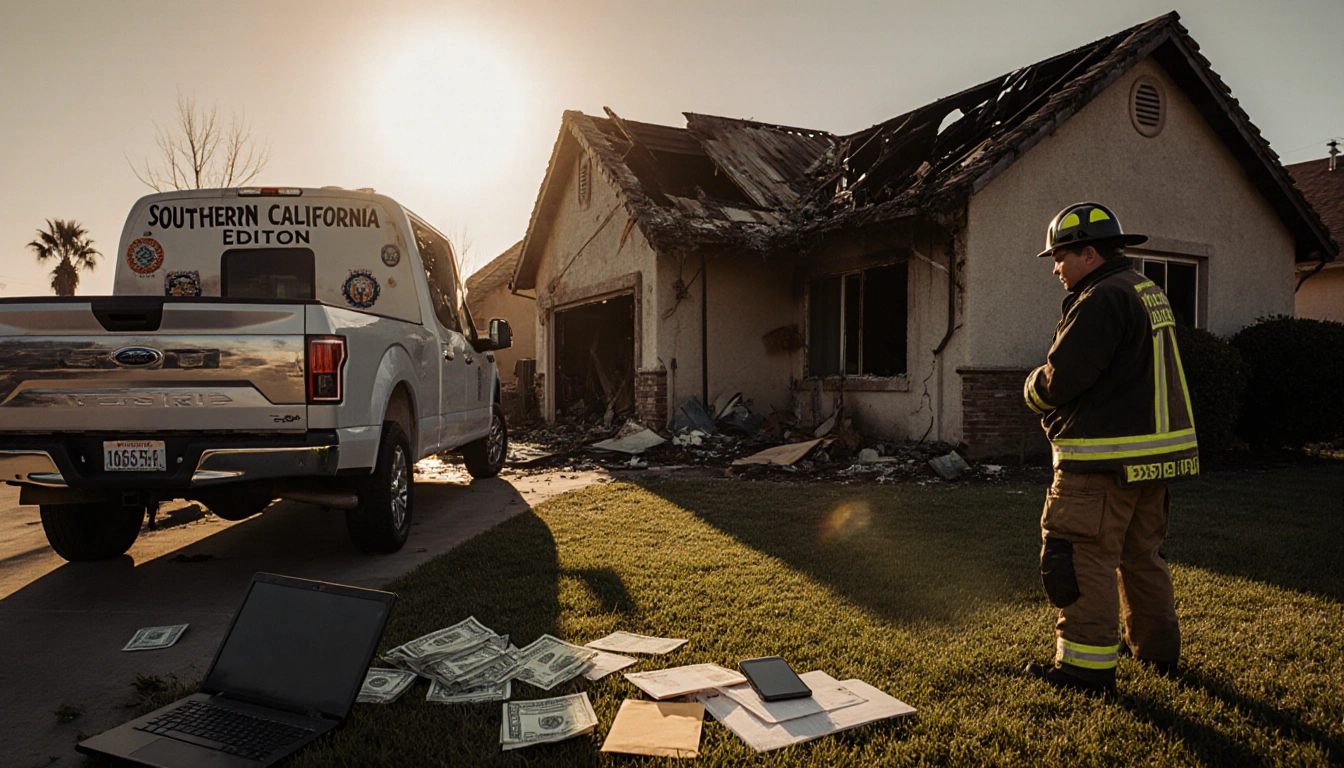
Southern California Edison made its first compensation payment to an Eaton Fire survivor amid lawsuits claiming the utility caused the deadly blaze.
Compensation Program Overview
In September, Southern California Edison launched the Wildlife Recovery Compensation Program, promising expedited payments for damages or destruction caused by the January wildfire. The program was designed to address a range of losses, from structural damage to environmental impacts, and was intended to streamline the claims process.
Claims and Payments
Since the program’s inception, 1,551 claims have been filed by 3,293 families and households seeking compensation. To date, the utility has extended 27 offers, with a statement that “more payments will be made by year-end.” The first payment, announced on Tuesday, marks a milestone for the program, though the company did not disclose the recipient’s identity or the amount.
Types of Loss and Payment Structure
Claimants most frequently reported non-burn damage, including smoke and water damage, as well as total and partial losses. Those who agree to a settlement must “resolve all claims against the utility,” effectively relinquishing future rights to sue.
Compensation rates vary. The utility indicated that payouts could range from $550 to $750 per square foot. For example, a 1,500-square-foot house valued at $1.2 million before the fire and now estimated at $600,000 would receive a payment equal to the $600,000 difference.
If a property remains intact but sustains damage, SoCal Edison offers flat payments: $50,000 for major damage and $30,000 for minor damage.
Legal Context
Los Angeles County filed a lawsuit in March against Southern California Edison and Edison International over the Eaton Fire, which occurred in the Altadena area northeast of Los Angeles. The suit alleges that witnesses, photos, and videos show the fire started directly under SCE transmission lines in Eaton Canyon.
Edison International responded in early February, stating that it was reviewing video, photos, and other evidence to determine the fire’s origin and that it was “exploring every possibility, including the possibility that SCE’s equipment was involved.”
The lawsuit seeks to recover costs and damages from the second-most destructive wildfire on record in California. Attorney Douglas Boxer remarked, “I guess the question is — why would you be compensating people if you weren’t responsible for the fire.”
In September, the U.S. Justice Department announced a lawsuit against SoCal Edison, alleging the utility’s negligence caused the Eaton and Fairview fires. The federal government sought $37 million in damages.
The Eaton Fire broke out on January 7 during a Santa Ana windstorm. According to CalFire, the blaze destroyed 9,400 structures and resulted in 17 deaths.
Key Takeaways
- SoCal Edison has issued its first compensation payment to an Eaton Fire survivor.
- The Wildlife Recovery Compensation Program has received 1,551 claims from 3,293 households.
- Multiple lawsuits, including those from Los Angeles County and the U.S. Justice Department, allege the utility’s equipment contributed to the fire.
Southern California Edison’s recent payment reflects the utility’s ongoing efforts to address the extensive damage caused by the Eaton Fire, even as legal battles continue to unfold. The company’s compensation strategy, combined with the pending litigation, underscores the complex relationship between utility operations and wildfire risk management in California.