At a Glance
- Four astronauts from Crew-11 splashed down off San Diego County at 12:41 a.m. Thursday after a medical issue forced an early end to their mission
- This is the first medical evacuation in the 25-year history of the International Space Station
- The affected astronaut remains stable; NASA has not released identity details due to privacy rules
- Why it matters: Southern California becomes the new Pacific hub for human spaceflight recoveries, replacing Florida after last year’s operational shift
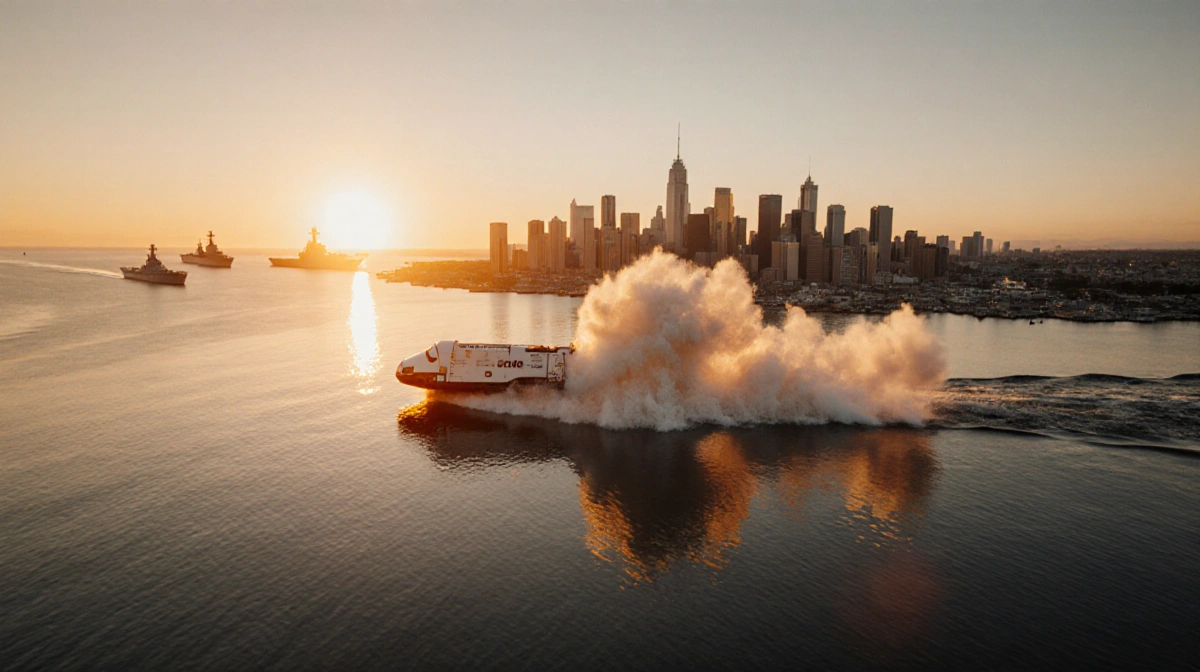
A SpaceX Dragon capsule carrying four astronauts splashed down in the Pacific Ocean off San Diego County early Thursday, marking the first time the International Space Station has cut a mission short because of an in-flight medical emergency.
NASA and SpaceX targeted the splashdown for 12:41 a.m., though final timing hinged on weather, spacecraft readiness, and recovery-team positioning. The capsule carried NASA astronauts Mike Fincke and Zena Cardman, Japan’s Kimiya Yui, and Russia’s Oleg Platonov, who had spent 167 days aboard the orbiting laboratory after launching last August.
The medical event that changed everything
Officials confirmed only that one astronaut experienced a health issue stable enough to allow the standard descent profile. NASA cited medical privacy and declined to name the crew member or specify the condition. Computer models had predicted a medical evacuation every three years, yet the agency had never executed one during 65 years of human spaceflight.
The quartet was originally scheduled to leave the station in late February. Instead, flight controllers accelerated the departure timeline Tuesday, clearing the capsule to undock and begin the 10.5-hour trek home.
West-Coast splashdowns become the norm
SpaceX recovery teams based in San Diego now handle Pacific Ocean touchdowns, a change instituted last April. NASA shifted operations from Florida to take advantage of a larger recovery zone and to ensure that jettisoned spacecraft parts fall harmlessly into the ocean.
David Neville, communications director at the San Diego Air and Space Museum, outlined the sequence:
- A de-orbit burn begins about 51 minutes before touchdown
- Drogue chutes deploy high in the atmosphere
- Main chutes open lower, slowing the capsule to roughly 25 mph at water impact
- A primary recovery ship hoists the spacecraft aboard while a second vessel provides security
San Diegans will not see the capsule overhead; visibility is poor in darkness, so NASA and SpaceX stream the event live on YouTube starting at 11:15 p.m. PT.
Why San Diego matters for future missions
The landing sets the stage for next month’s Artemis II launch, the first crewed flight to the moon since 1972. That mission will carry four astronauts farther from Earth than any humans have traveled, and Southern California’s recovery infrastructure will again play a supporting role.
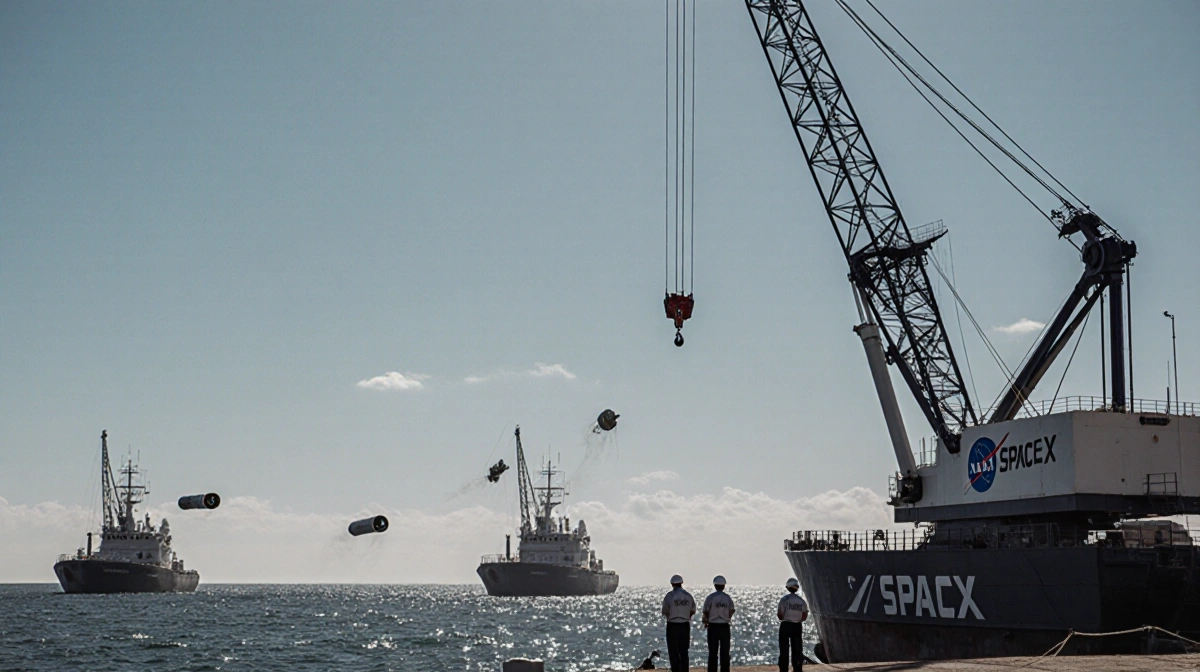
The last Pacific splashdown before Thursday occurred in 1975, when the three NASA astronauts of the Apollo-Soyuz Test Project returned west of Hawaii. Since then, every U.S. human-spaceflight mission has ended in the Atlantic-until last year’s policy flip.
Local teams, many stationed at Naval Base San Diego, now train regularly for capsule recoveries, turning the region into a critical node in NASA’s expanding commercial-space network.
Mission by the numbers
| Metric | Value |
|---|---|
| Days on station | 167 |
| Splashdown time | 12:41 a.m. PT Thursday |
| Descent duration | 10.5 hrs |
| Impact speed | ~25 mph |
| Last Pacific return | 1975 Apollo-Soyuz |
Key takeaways
- NASA completed its first station-side medical evacuation without compromising crew safety
- San Diego’s new role as Pacific recovery hub reduces risk to populated areas and broadens landing windows
- The Crew-11 return keeps Artemis II preparations on track for its planned lunar fly-by
- Southern California residents gain a front-row seat-virtually-to humanity’s next era of deep-space exploration