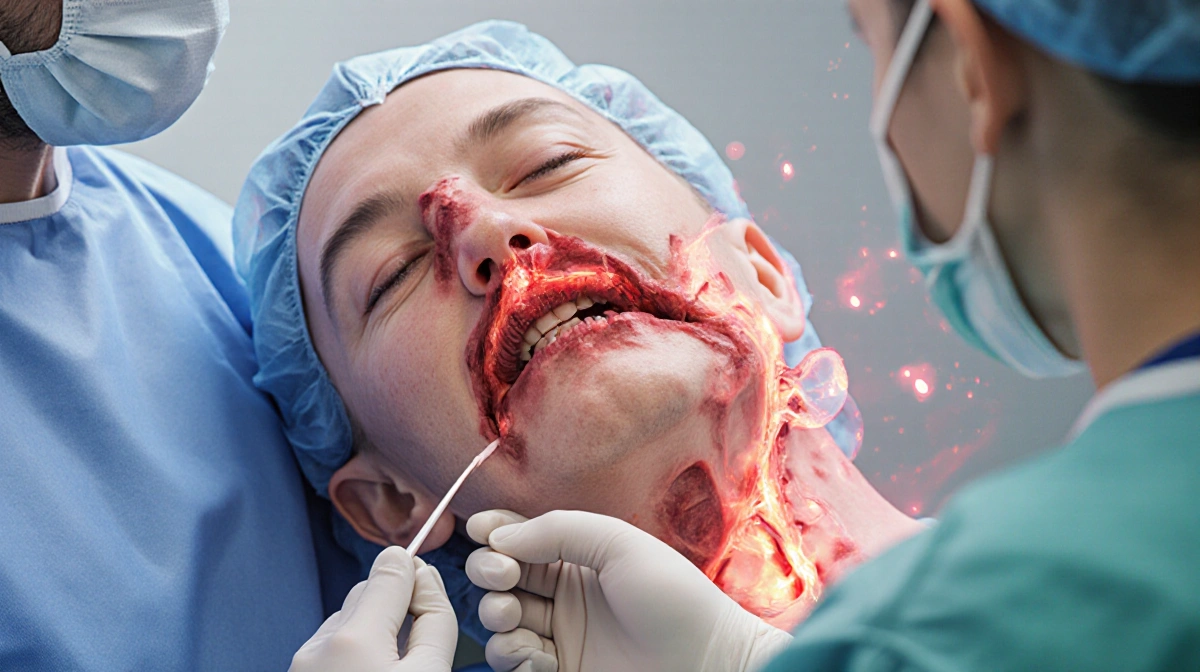
Emily McAllister is a 30-year-old Chicago mother who survived a life-threatening episode of Stevens-Johnson syndrome (SJS), losing 87% of her skin and becoming legally blind in both eyes.
The story began in September 2022 when she started a new anti-seizure medication for epilepsy. Within 16 days, she experienced a cascade of severe symptoms that would ultimately lead to a diagnosis that has haunted her for three years.
—
At a Glance
- Emily McAllister: 30-year-old mother of one, Chicago.
- SJS onset: September 2022, after starting anti-seizure medication.
- Skin loss: 87% of her body.
- Vision: Legally blind in both eyes, with only a contact lens aiding the right eye.
- Surgeries: Over the next three years, she underwent six eye surgeries, three uterine surgeries, eyelid reconstruction, a stem-cell transplant, and a salivary gland transplant.
- Survival: SJS can be fatal; 30% of those who develop toxic epidermal necrolysis (TEN) do not survive.
—
What Is Stevens-Johnson Syndrome?
Stevens-Johnson syndrome is a rare, serious skin disorder triggered by an allergic reaction to medications such as antibiotics or anti-seizure drugs, and sometimes infections. Symptoms can include:
- Fever
- Sore mouth and throat
- Fatigue
- Burning eyes
- Red or purple rashes
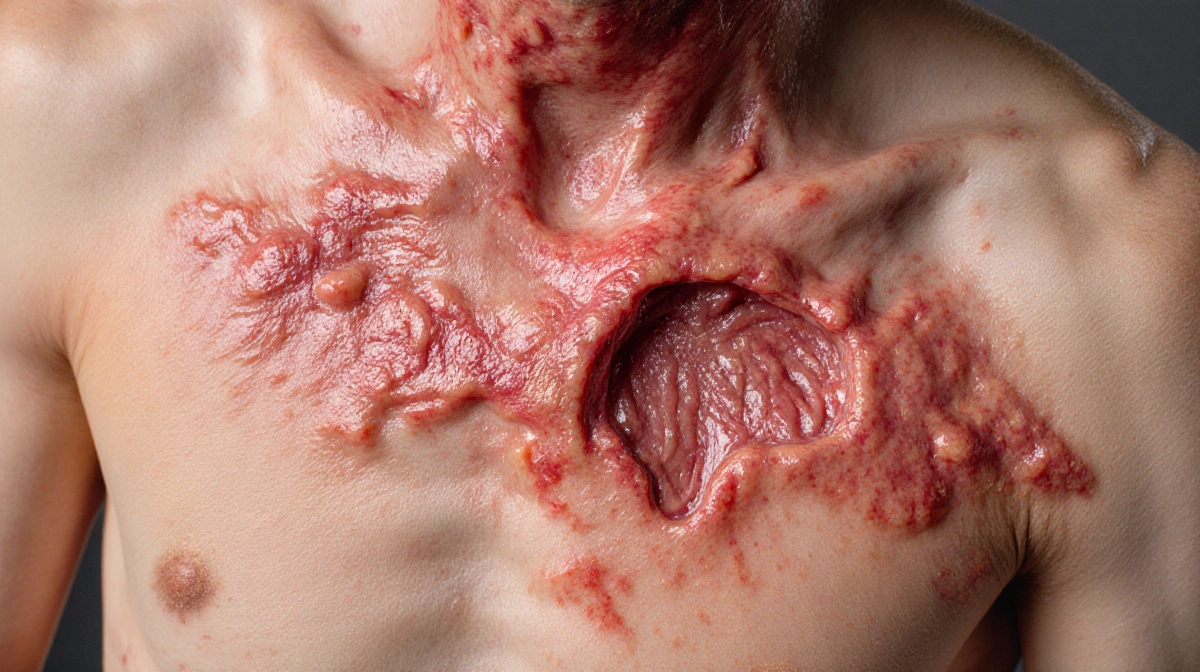
- Blisters that can spread to the eyes, chest, mouth, nose, throat, urinary tract, and genitals
As the top layer of skin dies and sheds, erosions-painful open wounds that resemble burns-develop. If the condition progresses to toxic epidermal necrolysis (TEN), at least 30% of the skin is affected, and the mortality rate rises.
—
Timeline of Emily’s Illness
| Date | Event |
|---|---|
| September 2022 | Started anti-seizure medication |
| October 2022 | First symptoms: red, dry eyes; swollen face and lips |
| October 2022 | Developed rash, difficulty breathing, and disorientation |
| October 2022 | Hospitalized and diagnosed with Stevens-Johnson syndrome |
| Late 2022 – 2025 | Hospitalized in burn unit; underwent multiple surgeries |
| 2025 | Completed three-year battle; now legally blind |
—
Medical Journey and Surgeries
Emily’s treatment spanned three years and involved a series of complex procedures:
- Eyelid reconstruction to address severe eye damage
- Stem-cell transplant to aid skin healing
- Salivary gland transplant to restore saliva production
- Three uterine surgeries for complications related to the disease
- Six eye surgeries to manage vision loss
These operations were performed in the burn unit of a major hospital, where specialists monitored her condition closely. The surgeries were necessary to remove necrotic skin, reconstruct eyelids, and attempt to preserve any remaining vision.
—
Life After SJS
Even after the acute phase, Emily’s life has changed dramatically. She is now legally blind in both eyes. “Now I’m blind in both eyes. In the left eye, I don’t have any vision and in the right eye, I wear a special contact lens that helps a little bit but I’m still considered legally blind,” she explained.
She describes SJS as a condition that “lasts your whole life.” Despite the permanent damage, she remains optimistic. “I do feel lucky to be alive because SJS can be fatal,” she said. “I am lucky to continue to live life and be there while my daughter grows up.”
Her experience underscores the long-term impact of SJS on daily living, vision, and overall health.
—
Key Takeaways
- Early symptoms of SJS can be subtle, such as red, dry eyes and facial swelling, but may rapidly progress.
- Medication triggers are common; patients on anti-seizure drugs should monitor for rash or eye irritation.
- SJS can lead to TEN, where 30% of the skin is affected and mortality rises.
- Survival does not guarantee recovery; many patients, like Emily, endure permanent vision loss and extensive surgeries.
- Awareness and early intervention are critical to improve outcomes for those with SJS.
—
Emily McAllister’s story is a stark reminder of how quickly a seemingly routine prescription can lead to a catastrophic health crisis, and how resilience can shape a survivor’s path forward.