
At a Glance
- Sue LaBella is an 82-year-old who lost her home to the Palisades Fire and will soon move into a new, fire-resistant house.
- The house was built by Gardena-based company Cover using steel, tempered glass, and ignition-resistant wood.
- Cover’s factory-based construction model speeds building while maintaining high quality and disaster resilience.
Why it matters: Residents displaced by wildfires can see a new path to safer, faster home rebuilding.
Sue LaBella, who lost her home to the Palisades Fire last winter, is soon moving into a new house that has been built with fire-resistant materials by a local company.
The new home is located in the exact spot where her former house once stood, allowing her to replant her roots.
The project highlights how innovative construction methods can help communities recover from natural disasters.
Background
The Palisades Fire devastated thousands of homes in the Santa Clarita Valley.
One of the victims was Sue LaBella, an 82-year-old resident.
After the fire, she was left without a permanent place to live.
In the months that followed, she began to plan a return to the neighborhood.
Her journey was made possible by a partnership with Cover, a Gardena-based construction firm.
Cover’s Construction Process
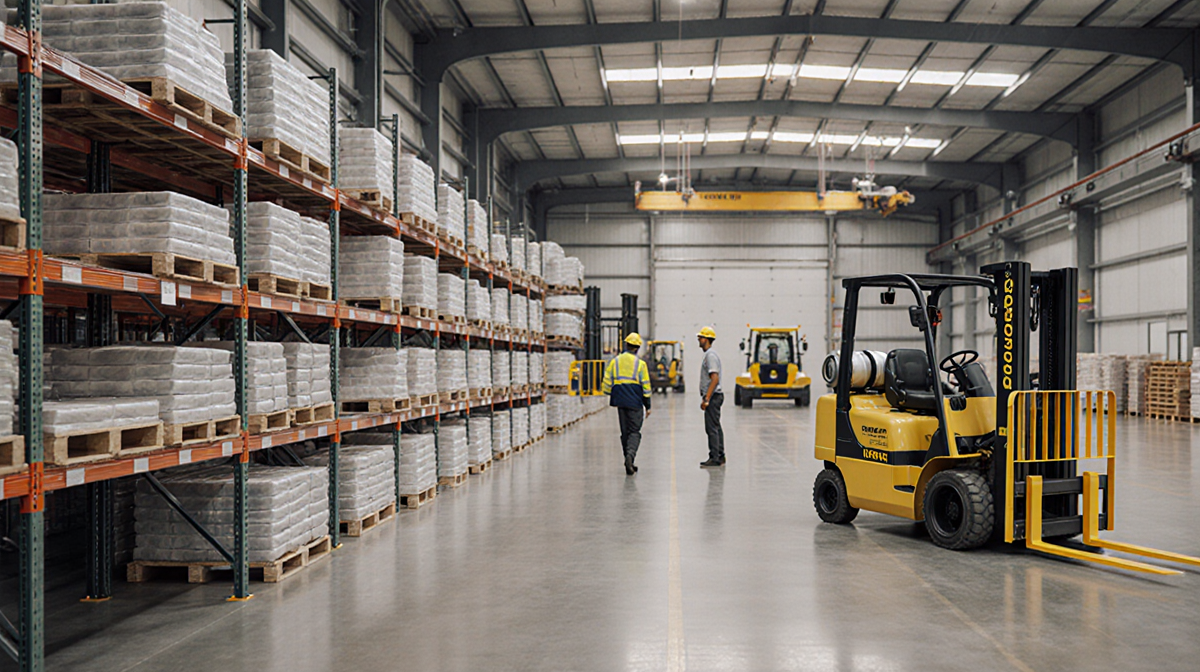
Cover builds its materials in a dedicated warehouse in Gardena.
The company then transports the pre-fabricated components to the property site.
This approach allows for a streamlined assembly that mirrors automotive production lines.
Alexis Rivas, co-founder of Cover, explained the rationale:
> “What we saw was an opportunity to make homes on a production line more like how cars are made and build better homes faster at a higher quality,” he said.
Rivas compared the process to building blocks:
> “It’s like LEGO blocks, right? So, our production line makes the same LEGO blocks and then we use those parts to make homes of all kinds of layouts,” he said.
The company’s design is modular, meaning each home is assembled from the same set of parts.
This modularity enables mass production without sacrificing customization.
Materials and Design
The new home incorporates several fire-resistant features:
- Steel framing provides structural integrity against heat.
- Tempered glass offers safety and energy efficiency.
- Ignition-resistant wood reduces the risk of fire spread.
- Additional insulation and ventilation systems help protect against earthquakes.
The combination of these materials is intended to create a structure that can withstand California’s natural disaster risks.
Table: Material Comparison
| Material | Fire Resistance | Seismic Strength | Typical Use |
|---|---|---|---|
| Steel | High | Very High | Structural frame |
| Tempered glass | Moderate | Moderate | Windows, doors |
| Ignition-resistant wood | High | Moderate | Interior finishes |
| Standard wood | Low | Low | Traditional framing |
The table illustrates how Cover’s material choices differ from conventional construction.
Community Impact
Cover’s approach has broader implications for wildfire-prone areas.
By moving complexity to a factory setting, the company can reduce on-site labor and speed up construction.
One Altadena homeowner noted the benefits:
> “We call LA County for help every day. It’s like LEGO blocks, right? So, our production line makes the same LEGO blocks and then we use those parts to make homes of all kinds of layouts,” the homeowner said.
Buddy Squire, Sue’s son-in-law, praised the new home:
> “It’s about as close as you can get and having something that’s really California-proof,” he said.
The house’s design also allows for future upgrades and maintenance with minimal disruption.
Key Takeaways
- Modular construction can accelerate rebuilding after disasters.
- Fire-resistant materials such as steel, tempered glass, and ignition-resistant wood provide enhanced safety.
- Factory-based production reduces on-site complexity and improves quality control.
- Community resilience is strengthened when residents can return to familiar locations quickly.
Sue LaBella’s experience demonstrates that innovative building practices can restore homes and hope to communities affected by wildfires.
How to Learn More
To find out more about Cover’s technology and services, visit their website or contact their sales team.
—
Note: The information above is based on a recent report detailing the reconstruction of a wildfire-damaged home in Santa Clarita.