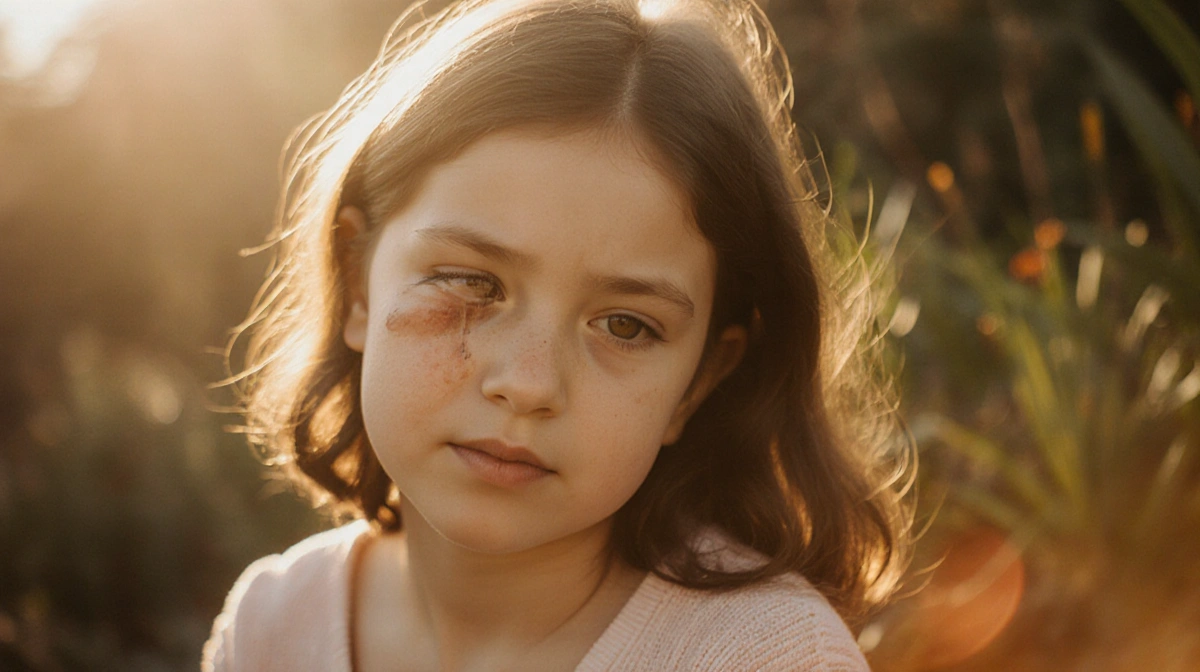
Sabrina Burlando never planned to go viral – she just wanted someone else with congenital ptosis to feel less alone.
At a Glance
- Sabrina Burlando, 19, was born with congenital ptosis, a condition that prevents normal eyelid lifting
- She underwent surgery at age 3 that allowed her to blink using her eyebrow muscle instead
- Years of bullying led her to hide her condition until she shared her story on TikTok
- Why it matters: Her viral post connected others with the rare condition and transformed her self-image
Diagnosed the moment she was born, Burlando inherited the condition from her father, giving doctors immediate answers but little sense of how profoundly it would shape her life. Congenital ptosis affects the muscles that lift the eyelids, according to the Cleveland Clinic.
“When people aren’t familiar with congenital ptosis, I explain that I was born without the muscle in my eye to blink,” Burlando tells News Of Losangeles exclusively.
The Surgery That Changed Everything
At age 3, she underwent surgery to help restore that function – though not in the way most people might expect. “It allowed me to blink, but through my eyebrow muscle,” she explains, noting that it’s why her eyes appear smaller than average.
While she doesn’t remember much about the procedure itself, the fear surrounding it has stayed with her. “When I was that little, I didn’t understand what was going on, why I needed surgery and how I was different from others around me,” she says.
That awareness only deepened as she got older. The Arizona native recalls moments when she forgot she looked any different – until someone stared.
“I got made fun of in elementary school, and because of it, I hated going to school,” she says, noting that the teasing followed her into high school and later into the workplace.
Finding Strength Through Struggle
Over time, those experiences forced her to reckon with how she saw herself. What ultimately helped reshape her confidence wasn’t changing her appearance, but shifting her perspective.
“I realized that there is so much more to a person than the way they look,” she says. “I can’t control the way that I look, but I can control the type of person I am, and to me, that is far more important.”
Still, embracing that mindset didn’t come easily – especially in the age of social media.
For years, Burlando tried to make peace with standing out in a world that often celebrates sameness, particularly online. As beauty standards flooded her feed, she says it became increasingly difficult to feel comfortable in her own skin.
“Picture-perfect girls distorted the way I viewed myself,” Burlando admits. “I craved to be the type of pretty I was exposed to online. I didn’t want to be unique.”
That internal struggle lingered. Burlando says she spent much of her life trying to hide the part of herself that made her different, especially when meeting new people. “I’ve always been scared of the way strangers perceive me,” she says. “Even now, it’s a continuous struggle.”
The TikTok Post That Went Viral
But more recently, something shifted.
Burlando decided to stop hiding her congenital ptosis and talk about it openly on TikTok – not with the goal of going viral, but in hopes of finding someone, anyone, who might understand what she’d lived with her entire life.
“I’ve never met someone outside of my family who has the same condition,” she says. “I also had never seen any videos online talking about it.”
So she shared her story. Almost immediately, the response caught her off guard. Rather than the negativity she feared, Burlando says she was met with overwhelming kindness.
“I prepared myself for a ton of hate comments,” she admits. “But the amount of positivity had me completely blown away… I got countless DMs from people sharing their stories with ptosis.”
One message, in particular, stayed with her. A mother reached out to say that both she and her 13-year-old daughter had ptosis, and had never met anyone else with the condition either. The mom told her she planned to share Burlando’s page with her daughter.
“I immediately took myself back to when I was 13, feeling so insecure about my eyes,” Burlando says.
“That meant everything to me,” she adds. “I realized I could be the person I wished I saw online when I was 13.”
In opening up publicly, Burlando says she’s also changed the way she sees herself. “I feel like I’ve embraced being unique more in these past few days than I have in my whole life,” she says. “I wanted others to feel less alone, and in return, I also feel less alone.”
Now, her hope is simple: that others navigating congenital ptosis – kids, teens and parents alike – feel seen when they come across her story, which she plans to continue sharing.
“I hope they realize they’re not alone,” she says. “Being unique is something to be celebrated.”