Why You Can Trust News Of Los Angeles
Our expert, award-winning staff selects the products we cover and rigorously researches and tests our top picks. If you buy through our links, we may get a commission. Reviews ethics statement.
Introduction
Matcha, the finely ground Japanese green tea powder, has surged in international popularity. Though it is simple to make, its roots stretch back hundreds of years in Chinese and Japanese culture. In this guide, we pull from a conversation with Japanese Tea Master Yoshitsugu Nagano, who shares the traditional ritual and how modern twists are reshaping the drink in the United States.
At a Glance
- Matcha’s origins trace back to the Northern Song Dynasty in China.
- Traditional preparation requires a bamboo whisk, bowl, sifter and precise water temperature.
- Modern lattes add milk, sweeteners, and flavorings while keeping the core ritual intact.
Why it matters: Whether you’re a tea connoisseur or a latte lover, knowing the steps and history gives you respect for the drink and helps you create it authentically.
Matcha’s Journey Through Time
Matcha originated in China during the Northern Song Dynasty about “1,000 years ago”. It then arrived in Japan roughly “800 years ago”, where it quickly gained popularity. Nagano notes, “The United States today is in a similar moment to Japan’s first encounter 800 years ago. It’s conceivable that over the next few centuries, a uniquely American style of matcha ritual will take shape.”
Nagano compares the drink’s reinvention to the California roll, “invented post-World-War-II after sushi was introduced to the US.” He calls this “a superb example of creativity and tradition connecting without contradiction.”
| Era | Origin | Key Event |
|---|---|---|
| 12th c. | China | First cultivation of green tea leaves for matcha |
| 13th c. | Japan | Matcha introduced, samurai adopt it for meditation |
| 21st c. | United States | Global spread, modern lattes and desserts |
The practice dates back hundreds of years in Chinese and Chinese and Japanese culture. The drink’s popularity has surged worldwide, and variations have made their way into cafes, restaurants and even people’s homes.
Essentials for a Traditional Matcha
| Item | Purpose |
|---|---|
| Bamboo whisk (chasen) | Breaks powder into fine strands |
| Small, heat-resistant bowl | Holds water and powder |
| Sifter | Removes clumps |
| Electric kettle | Controls water temperature |
| Milk frother (optional) | Creates latte foam |
| Sweetener (simple syrup, honey, agave) | Adds sweetness |
| Milk (dairy or plant-based) | Adds creaminess |
Nagano advises, “Reserve [the bowl] for matcha only… As you drink daily from the same bowl, you’ll feel your body, the bowl and the tea becoming one.” He also warns against bowls made from metal or porcelain that emit too much heat.
Nagano also mentions that “full matcha kits are available for those who prefer to purchase everything together,” and that “matcha powder is the primary requirement.”
Making Matcha the Traditional Way
Step 1 – Prepare the Bowl and Whisk
“Pour a small amount of warm water from your kettle into the bowl and soak your whisk for about 30 seconds,” Nagano says. “Soaking your whisk will help soften it and prevent it from breaking. When you’re done, discard that water and dry your bowl.”
Step 2 – Sift the Matcha
“Add water along the side of the bowl rather than pouring directly onto the powder to avoid splashing and clumping,” he explains. “Sift half a teaspoon of matcha powder into your bowl and add about four tablespoons of water to the bowl.” He stresses, “For matcha, your water should be right around 80 °C (176 °F). Any temperature above 70 °C (158 °F) could cause your matcha to become bitter or diminish the foam.”
Step 3 – Whisk
Nagano demonstrates: “Move in straight lines and be sure your path passes through the center of the bowl. This creates complex currents whose collisions generate fine foam. Avoid tracing the bowl’s inner wall in circles; that method won’t produce satisfying foam.” He recommends, “Aim to go back and forth with your wrist about 50 times.”
Step 4 – Enjoy
“After the powder is fully dissolved and you have a thick, deep green liquid, it’s ready.” He adds, “Before drinking, settle your posture and your breathing and clear your mind. Lift the bowl gently with both hands and bow in gratitude and respect to the matcha and to nature. Then sip slowly.” “Pay attention to the warmth of the drink as it goes through your body, and your attention will turn ‘inward to body and mind,’ he said.”
Nagano notes, “Foam matters because it greatly affects flavor perception. Drinks with foam-champagne, beer, lattes and matcha-release aromatic compounds when bubbles burst in the mouth.”
Modern Twist: Matcha Lattes and Beyond
Nagano supports drinking matcha however you please. “If you want to make matcha lattes instead of drinking it in the traditional sense, you can add extra ingredients,” he says. “Although he practices the traditional matcha ritual detailed above, he believes the ‘classics and modern styles elevate each other’s existence and value.'”
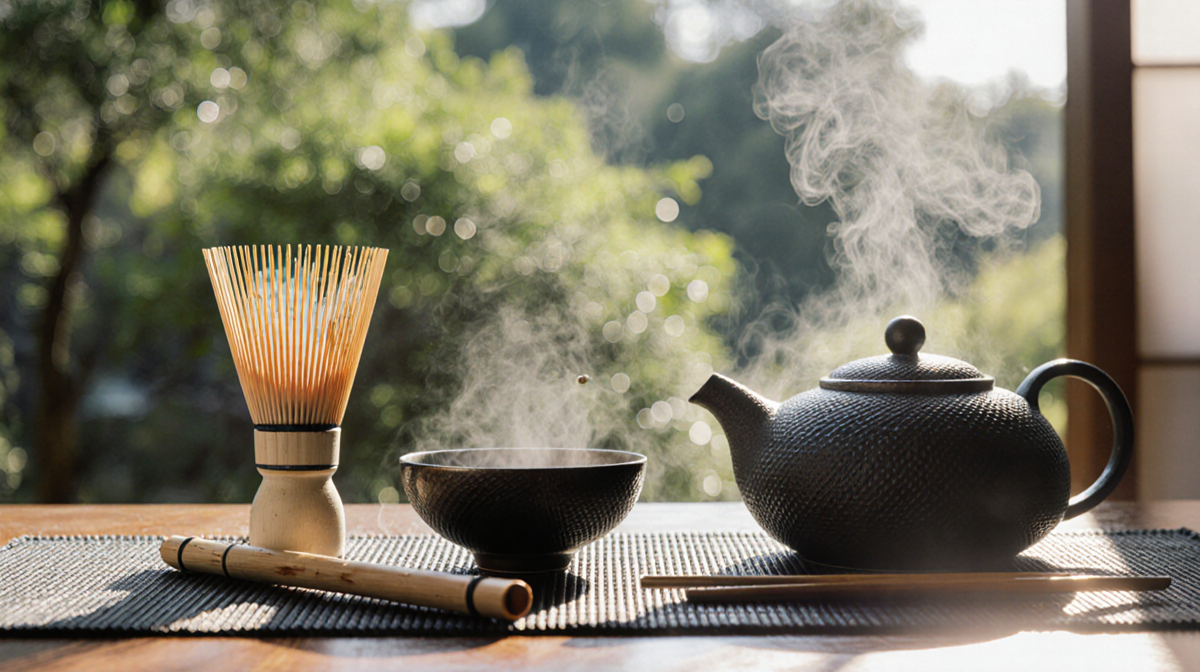
For lattes, a milk frother will be your friend if you want to make lattes. If you don’t plan on purchasing a bamboo whisk, a handheld frother can whisk your matcha as well. Sweeteners such as simple syrup, honey, or agave pair with milk to create a balanced flavor profile.
Today, matcha lattes are served over ice with flavors like strawberry and mango. Matcha desserts-such as his favorite cookies-and matcha cocktails are also gaining popularity. Nagano muses, “Baking with matcha may be my new favorite hobby.” He sees the ongoing diversification of the tea-based drink as positive, adding, “It’s wonderful when different cultures meet and something new emerges.”
Key Takeaways
- Matcha’s history spans 1,000 years across China and Japan.
- Traditional brewing requires a bamboo whisk, bowl, sifter and 80 °C water.
- Modern lattes add milk, sweeteners, and flavorings without losing the ritual.
- The drink’s evolution mirrors sushi’s journey to the U.S.
- Respecting the tradition enhances the experience, whether sipping or sipping with milk.