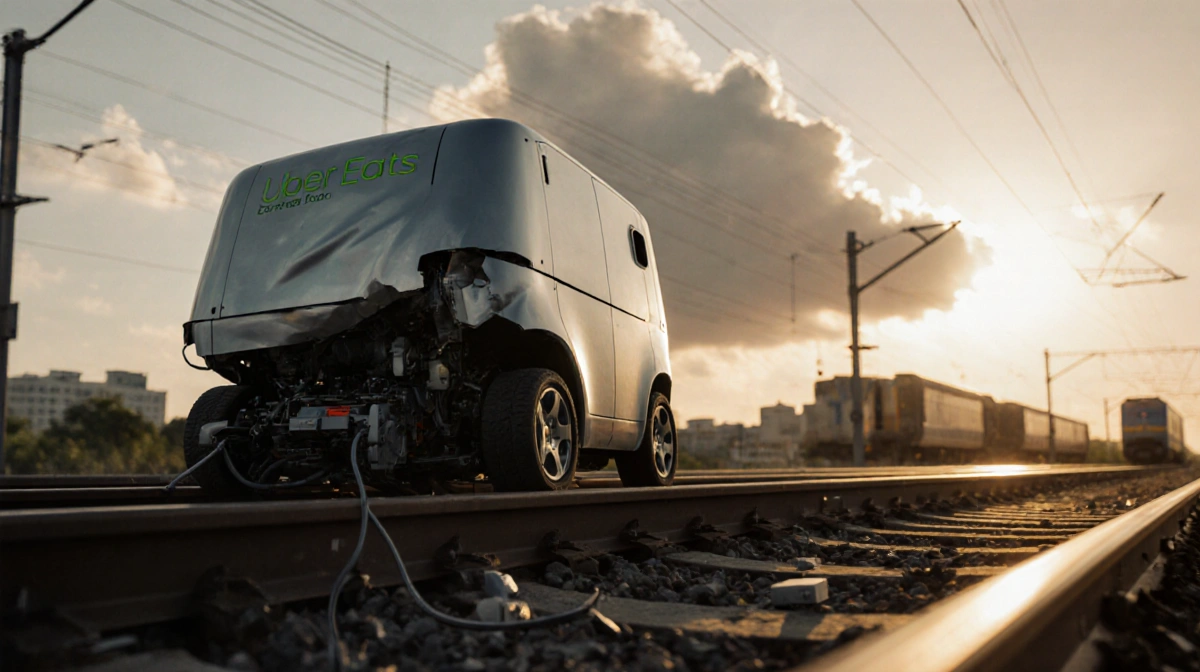
An Uber Eats delivery robot was crushed by a speeding train in Miami on January 15 after the device became stranded on the tracks for roughly 15 minutes, according to video footage released by News Of Los Angeles.
At a Glance
- The autonomous robot sat motionless on the tracks for about 15 minutes
- A freight train struck the device at full speed, destroying it on impact
- No injuries were reported, but the incident raises safety questions about autonomous robots in urban areas
- Why it matters: The crash highlights potential hazards as delivery robots become more common in cities with complex infrastructure
The incident, filmed by local resident Guillermo Dapelo around 8 p.m., shows the small delivery robot stuck on the railroad crossing as the train approaches. Dapelo can be heard in the video realizing the impending collision.
“Oh it’s gonna crash it,” he says moments before the train barrels through, obliterating the robot.
Dapelo told Storyful he first noticed the robot while walking his dogs. He said an Uber Eats delivery driver had contacted the robot’s operating company to alert them of its location before the train arrived.
“To let them know where it was standing and within a matter of minutes the train approached and everything else is captured on the video,” Dapelo explained.
Ethan R. Coleman reported that News Of Los Angeles reached out to Uber Eats for comment but did not receive an immediate response.
Safety Concerns for Autonomous Delivery
The brief but dramatic video underscores growing safety concerns as delivery robots increasingly navigate urban environments. Rail crossings present unique challenges for autonomous machines that rely on pre-mapped routes and sensors to avoid obstacles.
Key risks include:
- Long stopping distances: Freight trains traveling at speed can require more than a mile to stop, even with emergency braking
- Terrain challenges: Unusual surfaces like railroad tracks can confuse robot navigation systems
- Communication gaps: Limited coordination between robot operators and local infrastructure managers
Delivery robots typically follow programmed routes and use sensors to detect obstacles. However, mechanical errors, signal misinterpretation, or unfamiliar terrain can leave them stranded in dangerous locations like active railroad crossings.
Infrastructure and Oversight Questions
The Miami incident raises questions about how autonomous delivery services coordinate with urban infrastructure and emergency response systems.
Current challenges include:
- Limited fail-safe systems for when robots become immobilized
- Minimal oversight when robots enter potentially hazardous areas
- Lack of standardized protocols for alerting authorities about stranded devices
Rail safety organizations consistently warn that any object on tracks – whether vehicles, debris, or in this case, a robot – can cause dangerous situations for train operators and potentially lead to derailments or other emergencies.

While no people were injured in this particular incident, the outcome could have been more severe if the robot had caused the train to derail or if people had been nearby during the collision.
The video’s widespread circulation online has sparked discussions about the need for better safety protocols as companies expand automated delivery services in cities across the country.
Key Takeaways
- An autonomous Uber Eats robot sat on Miami railroad tracks for 15 minutes before being destroyed by a train
- The January 15 incident was captured on video by a local resident walking his dogs
- No injuries occurred, but the crash highlights safety gaps in autonomous robot deployment
- Freight trains require extensive stopping distances, making track obstructions particularly dangerous
- The incident raises questions about infrastructure coordination and emergency protocols for autonomous delivery services