
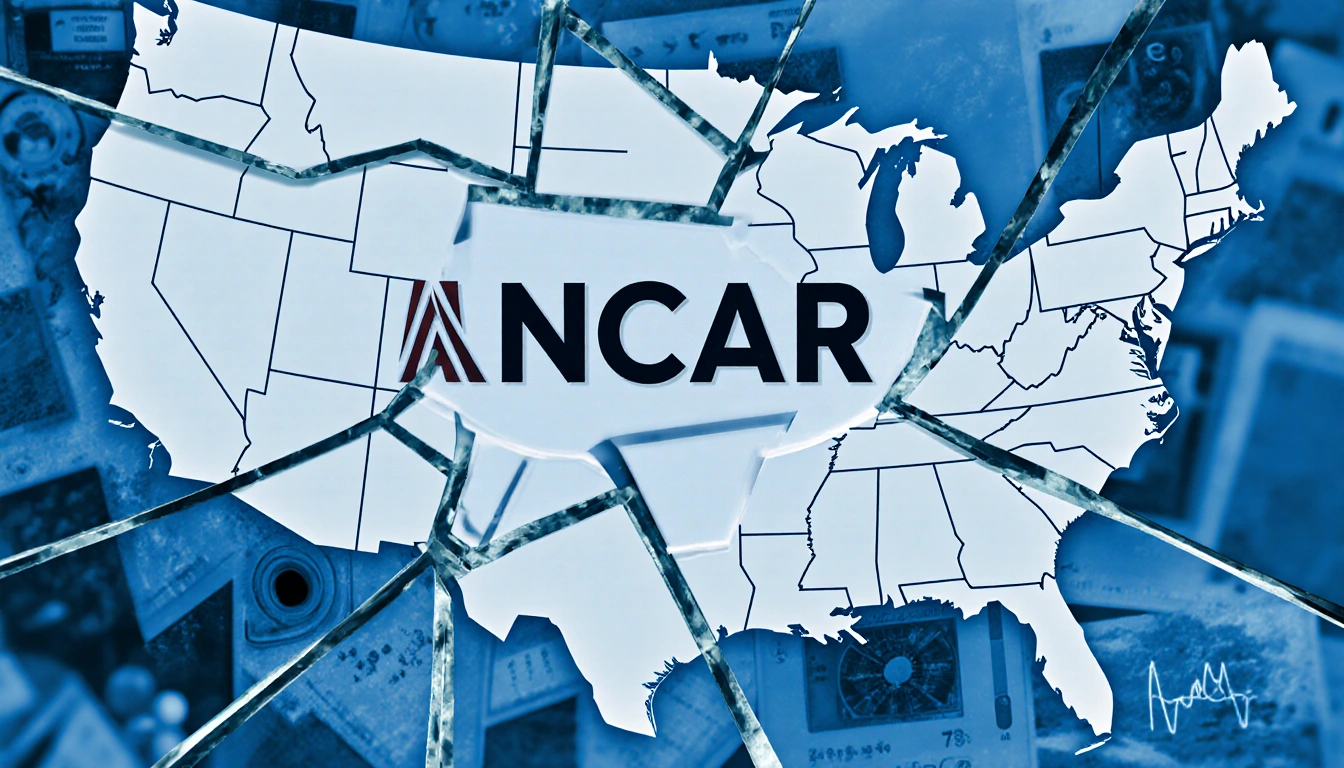
On Tuesday, the Trump administration announced a plan that could dismantle the nation’s largest climate research laboratory, sparking immediate backlash from scientists and state officials alike.
The announcement was made by Russ Vought, director of the White House Office of Management and Budget, via a statement on X.
He linked to a USA Today story that first reported the administration’s effort.
Vought’s statement declared, “The National Science Foundation will be breaking up the National Center for Atmospheric Research (NCAR) in Boulder, Colorado,” and added, “This facility is one of the largest sources of climate alarmism in the country. A comprehensive review is underway & any vital activities such as weather research will be moved to another entity or location.”
The plan would move vital activities such as weather research to another entity or location.
NCAR’s parent organization, the University Corporation for Atmospheric Research (UCAR), issued a statement acknowledging awareness of reports but claiming no information about a shutdown.
In the statement, UCAR president Antonio Busalacchi said, “We look forward to working with the administration to continue our focus on safeguarding the safety and prosperity of our nation.”
The organization emphasized its ongoing commitment to climate science.
An NBC News inquiry prompted a senior White House official to criticize Colorado Governor Jared Polis.
The official remarked, “Maybe if Colorado had a governor who actually wanted to work with President Trump, his constituents would be better served.”
The comment was aimed at Polis’s perceived opposition to the plan.
The same official described NCAR as “the premier research stronghold for left‑wing climate lunacy” and claimed that breaking it up would “eliminate Green New Scam research activities.”
He also suggested that the move would remove a key source of climate data for the United States.
Governor Polis responded with a statement that Colorado had not received any official notice of a dismantlement plan.
He said, “Climate change is real, but the work of NCAR goes far beyond climate science.”
Polis added, “NCAR delivers data around severe weather events like fires and floods that help our country save lives and property, and prevent devastation for families. If these cuts move forward we will lose our competitive advantage against foreign powers and adversaries in the pursuit of scientific discovery.”
Climate scientist Daniel Swain, a UCLA researcher, posted on X that the plan would be “a terrible blow to American science, writ large.”
Swain argued that the dismantlement would decimate weather, wildfire, and disaster research that has supported half a century of progress in prediction and early warning.
He noted NCAR’s role as the greatest contributor to weather prediction and atmospheric modeling worldwide.
Atmospheric scientist and chief scientist at The Nature Conservancy, Katharine Hayhoe, expressed similar concerns.
She said dismantling NCAR would be “like taking a sledgehammer to the keystone holding up our scientific understanding of the planet.”
Hayhoe added that nearly every researcher in the U.S. and abroad has benefited from NCAR’s resources.
Associate scientist Andy Hazelton of the University of Miami Cooperative Institute for Marine and Atmospheric Studies called the move “extremely short‑sighted.”
Hazelton warned that the decision would undermine decades of investment in atmospheric science.
He urged the administration to reconsider the plan.
Representative Joe Neguse, a Democrat from Colorado, condemned the directive on X.
He wrote, “A deeply dangerous & blatantly retaliatory action by the Trump administration.”
Neguse added, “NCAR is one of the most renowned scientific facilities in the WORLD — where scientists perform cutting‑edge research everyday. We will fight this reckless directive with every legal tool we have.”
Amid the controversy, the Trump administration has been cutting budgets for agencies like the National Science Foundation.
These cuts have raised concerns about funding for climate research nationwide.
The administration’s fiscal approach contrasts with global calls for increased climate action.
Public opinion data indicates that 74% of Americans want leaders to do more to address climate change.
This statistic underscores the disconnect between the administration’s agenda and voter priorities.
The backlash from scientists may further highlight this divide.
Meteorologist Chase Cain traveled to Antarctica to explore how ecotourism could persuade climate skeptics and support critical research.
Cain’s journey reflects a growing trend of scientists seeking alternative funding sources.
The move toward private tours could become more common if federal support declines.
Proponents of the plan argue that breaking up NCAR would reduce what they see as excessive climate alarmism.
Critics counter that the center’s research is essential for national safety and scientific leadership.
The debate centers on balancing ideological goals with practical needs.
Scientists warn that the dismantlement would jeopardize U.S. leadership in atmospheric modeling.
They point to NCAR’s role in developing early warning systems for extreme weather.
The loss of this capability could increase vulnerability to climate‑related disasters.
Policy analysts suggest that the administration’s approach could set a precedent for future cuts to scientific research.
They caution that dismantling a major facility may discourage investment in climate science worldwide.
The international community may respond with increased collaboration outside the United States.
The scientific community’s unified response highlights the perceived value of NCAR’s work.
Researchers emphasize that the center’s data underpins critical infrastructure planning and emergency response.
The backlash reflects a broader concern about the future of climate research funding.
Political leaders across the spectrum are weighing the implications of the plan.
Some view it as an opportunity to reduce federal spending, while others see it as a threat to national security.
The debate is likely to intensify as legal challenges and public pressure mount.
While the Trump administration moves forward with its review, the scientific community remains poised to defend NCAR’s mission.
The outcome of this conflict will shape the trajectory of U.S. climate research for years to come.
The stakes are high for both science and public safety.
Key Takeaways
- The Trump administration plans to break up NCAR, the nation’s largest climate research lab.
- Scientists and state officials have condemned the move as a blow to U.S. climate science.
- Public opinion shows strong support for increased climate action, contrasting with the administration’s agenda.