At a Glance
- US military captured Venezuelan President Nicolás Maduro.
- President Donald Trump announced the U.S. will temporarily run Venezuela and boost its oil industry.
- The move marks a shift toward a more interventionist foreign policy after a decade of anti-intervention rhetoric.
- Why it matters: The change signals a dramatic shift in U.S. foreign policy that could reshape domestic politics and international relations.
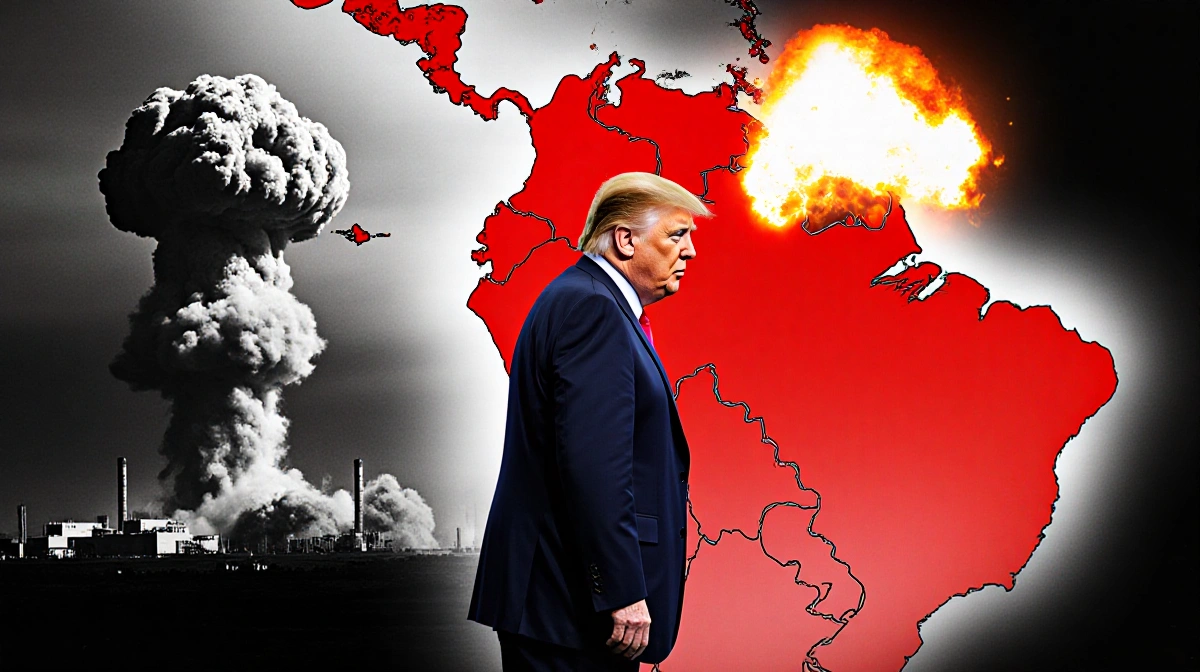
President Donald Trump’s overnight raid on Caracas captured Nicolás Maduro and prompted a bold announcement that the United States would take temporary control of Venezuela’s government and oil sector. The operation, which followed a September air campaign against drug-smuggling vessels, was not authorized by Congress and has already resulted in at least 114 deaths. Trump’s comments signal a departure from his 2016 and 2024 campaign promises of limiting regime-change actions.
Operation in Venezuela
The strike on Caracas involved a U.S. military team that seized Maduro and his wife, and Trump declared that the U.S. would run the country for a short period while expanding oil production.
Key aspects of the operation include:
- Capture of Nicolás Maduro and his wife.
- Temporary U.S. administration of Venezuelan governance.
- Planned expansion of the oil industry by U.S. companies.
President Donald Trump stated:
> “We will measure our success not only by the battles we win, but also by the wars that we end and, perhaps most importantly, the wars we never get into.”
Secretary of State Marco Rubio added:
> “Look, if I lived in Havana and I was in the government, I’d be concerned at least a little bit.”
> “We’ll talk and meet with anybody, but don’t play games. Don’t play games while this president’s in office. It’s not going to turn out well.”
Shift in Foreign Policy
Trump’s campaign rhetoric promised to fire “warmongers” and avoid overseas conflicts, yet his first year in office has seen strikes in Yemen, Syria, Iraq, Somalia, Nigeria, Iran, and now Venezuela.
The U.S. has also launched airstrikes on Iran’s nuclear sites in June, using a massive bunker-busting bomb.
Trump has threatened further action against Iran unless its leaders cease violence against protesters, declaring:
> “We are locked and loaded and ready to go.”
Former Defense Department official Seth Jones warned:
> “This is theirs. If this goes south, there is no one else you can blame.”
White House press secretary Karoline Leavitt highlighted the operation as proof of Trump’s “America First” agenda:
> “President Trump is a decisive and strong leader who does EXACTLY what he says he’s going to do.”
> “During his historic campaign in 2024, President Trump explicitly promised that he would work to ‘demolish foreign drug cartels’ to keep our citizens safe and that’s exactly what he did today through an unprecedented display of speed, precision, and power.”
Defense Secretary Pete Hegseth praised the forces:
> “Our adversaries remain on notice: America can project our will anywhere, anytime.”
Former Secretary of State Colin Powell warned Bush about Iraq:
> “Once you break it, you are going to own it, and we’re going to be responsible for 26 million people standing there looking at us.”
Domestic and International Reactions
The operation drew mixed reactions. Most Republican lawmakers endorsed the move, while Democrats and some GOP members questioned its legal basis and the risk of a prolonged U.S. presence in Venezuela.
Pollster Mark Mitchell noted that voters overwhelmingly believe the U.S. should focus on domestic issues, warning that foreign-policy focus could hurt Trump’s approval ratings.
Republican Rep. Marjorie Taylor-Greene said:
> “This is what many in MAGA thought they voted to end. Boy were we wrong.”
Trump also criticized Mexican President Claudia Sheinbaum, saying “Something’s going to have to be done with Mexico,” and called Cuba a “failing nation right now.”
He emphasized that the U.S. would boost Venezuela’s oil output, with a U.S. official confirming plans to work with oil executives to expand production.
Key Takeaways
- The capture of Maduro marks a significant shift from Trump’s earlier anti-intervention stance.
- Trump’s foreign-policy actions include strikes in multiple countries and a new doctrine of rapid intervention.
- Domestic backlash and legal concerns highlight the political risk of continued overseas military involvement.
The operation underscores the tension between Trump’s campaign promises and his current foreign-policy agenda, raising questions about the future of U.S. engagement abroad and its impact at home.