At a Glance
- U.S. claims to “run” Venezuela after seizing President Maduro and his wife.
- Trump vows a safe, proper and judicious transition and warns of future strikes.
- The operation was carried out without congressional approval.
- Why it matters: It signals a dramatic shift in U.S. policy toward Venezuela and raises legal and diplomatic questions.
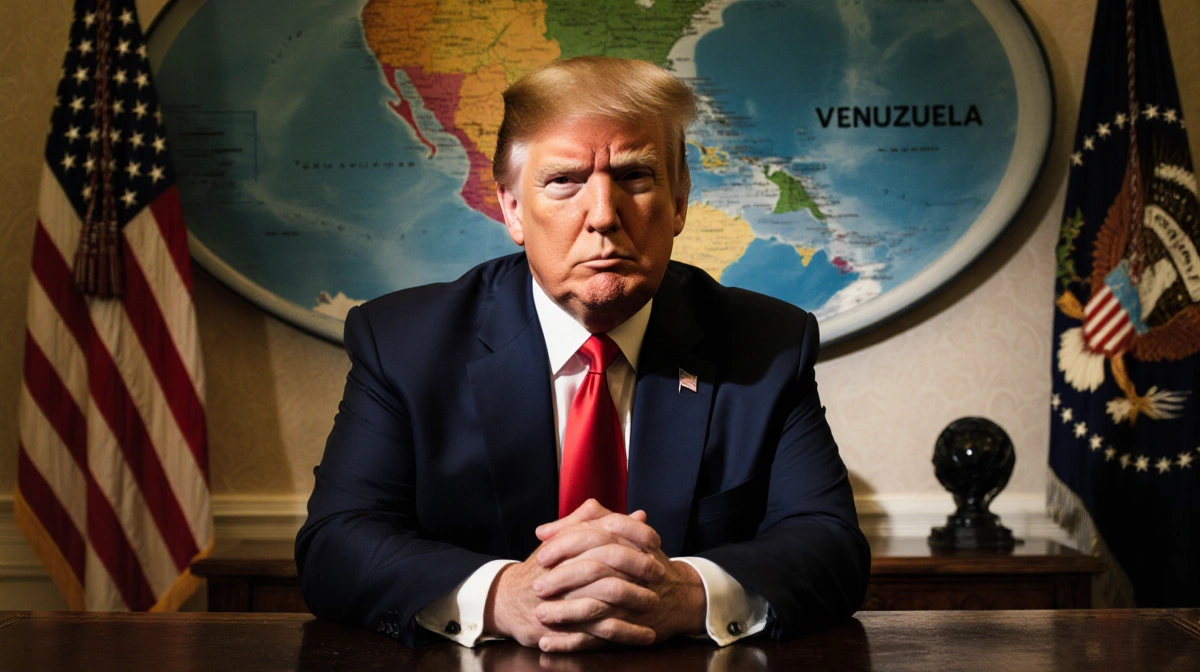
President Donald Trump announced on Saturday that the United States will “run” Venezuela following a military operation that seized President Nicolás Maduro and his wife, Cilia Flores. The move, made without congressional approval, has sparked debate over its legality and potential regional impact.
Trump Announces U.S. ‘Run’ of Venezuela
During a Florida press conference, Trump said the U.S. would manage Venezuela until a “safe, proper and judicious transition” could be arranged. He emphasized that no new leader should take power without ensuring the Venezuelan people’s interests. Trump also warned that the U.S. would be ready for additional strikes if necessary.
President Trump announced:
> “We’re going to run the country until such time as we can do a safe, proper and judicious transition.”
President Trump added:
> “We’re ready to stage a second and much larger attack if we need to do so.”
President Trump said:
> “We’re not afraid of boots on the ground.”
- “We’re going to run the country until such time as we can do a safe, proper and judicious transition.” – Trump
- “We’re ready to stage a second and much larger attack if we need to do so.” – Trump
- “We’re not afraid of boots on the ground.” – Trump
Operation Details and Legal Charges
The operation began after weather cleared, with U.S. forces arriving at Maduro’s compound by 1:01 a.m. ET on Saturday. Maduro and Flores were flown to New York, where Trump said they faced indictment on multiple charges, including narco-terrorism conspiracy and possession of machine guns. The indictment alleges the Venezuelan regime facilitated drug trafficking for Mexican cartels.
| Charge | Allegation | Evidence |
|---|---|---|
| Narco-terrorism conspiracy | Transporting thousands of tons of cocaine to the U.S. | Indictment |
| Cocaine importation conspiracy | Importing cocaine into the U.S. | Indictment |
| Possession of machine guns | Illegal possession of firearms | Indictment |
| Conspiracy to possess machine guns | Facilitating weapons for drug cartels | Indictment |
Chief of Staff Dan Caine said:
> “Weather in Venezuela is always a factor this time of the year, and over the weeks through Christmas and New Year’s, the men and women of the United States military sat ready, patiently waiting for the right triggers to be met and the president to order us into action.”
Senate Majority Leader John Thune said:
> “I spoke to Secretary Rubio early this morning, and I am expecting further briefings next week when the Senate returns from the holiday recess.”
Attorney General Pam Bondi said:
> “The Venezuelan leader will face the full wrath of the U.S. justice system.”
The U.S. action followed months of threats and a blockade of Venezuelan oil tankers. Congressional leaders criticized the move as unconstitutional, while some Republicans defended it as protecting American lives.
Key Takeaways
- Trump claims the U.S. will “run” Venezuela until a safe transition can be achieved.
- Maduro and Flores face indictment on narco-terrorism and weapons charges.
- The operation was carried out without congressional approval, sparking legal debate.
The announcement marks a bold, unprecedented shift in U.S. engagement with Venezuela, raising questions about legality and regional stability.