At a Glance
- U.S. forces captured Venezuelan President Nicolás Maduro and his wife.
- Trump says U.S. oil giants will overhaul Venezuela’s broken infrastructure.
- Venezuela holds ~300 billion barrels, the world’s largest reserves.
- Why it matters: The move could reshape global oil supply and U.S.-Latin America relations.
A sudden U.S. raid on Caracas on Saturday toppled Venezuelan President Nicolás Maduro, sparking a flurry of statements from Washington. President Trump promised that U.S. oil companies would invest billions to restore Venezuela’s crumbling oil industry. The country’s enormous reserves could shift the balance of global energy markets.
U.S. Raid and Trump’s Vision
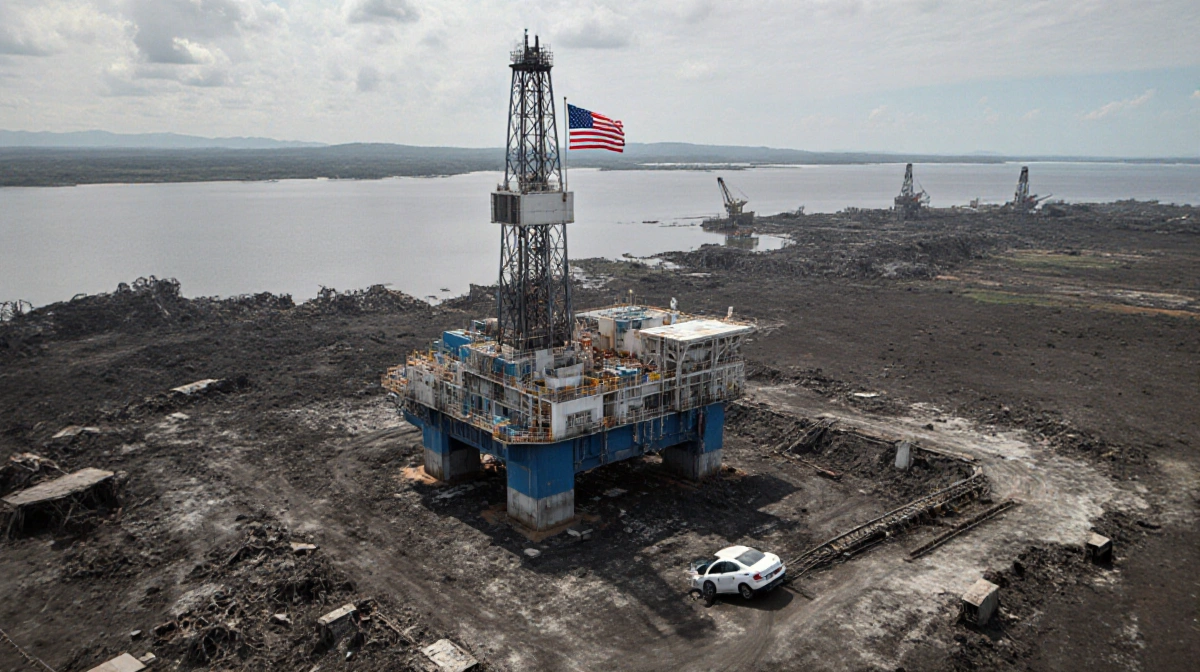
The overnight operation seized Maduro and struck parts of Caracas, according to U.S. officials. Trump declared that U.S. oil firms would spend billions to repair infrastructure and begin profitable production. He also accused the socialist regime of stealing American-built oil assets.
President Trump announced:
> “We’re going to have our very large United States oil companies, the biggest anywhere in the world, go in, spend billions of dollars, fix the badly broken infrastructure and start making money for the country.”
President Trump added:
> “They were pumping almost nothing by comparison to what they could have been.”
President Trump said:
> “We built Venezuela’s oil industry with American talent, drive, skill, and the socialist regime stole it from us.”
Defense Secretary Pete Hegseth said:
> “Our adversaries remain on notice: America can project our will anywhere, anytime.”
Oil Reserves and Investment Needs
Venezuela’s reserves are about 300 billion barrels, surpassing Saudi Arabia’s. Restoring 1990s production levels would require over $8 billion in investment, according to the EIA. Extra-heavy crude extraction demands technical expertise that U.S. companies possess but have been limited by sanctions.
- Reserves: ~300 billion barrels
- Investment needed: >$8 billion
- Pipelines: many over 50 years old
| Country | Proven Reserves (billion barrels) | Notes |
|---|---|---|
| Venezuela | ~300 | Largest in world |
| Saudi Arabia | <300 | Largest OPEC producer |
The EIA notes that most Venezuelan oil is extra-heavy, requiring higher technical expertise. PDVSA’s budget constraints and lack of qualified personnel have stalled development. John Kilduff said the industry’s bones are there and a small output bump is possible in six months.
John Kilduff said:
> “The bones of a terrific oil industry are certainly there.”
John Kilduff added:
> “There could be a small bump in their output over the next six months.”
International Reactions
China condemned the U.S. action as a violation of international law and Venezuela’s sovereignty. Chevron remains focused on employee safety and asset integrity under its limited license. The U.S. embargo on Venezuelan oil remains in full effect.
- China’s Ministry of Foreign Affairs: “Such hegemonic acts… threaten peace and security.”
- Chevron spokesperson: “We remain focused on the safety and wellbeing of our employees, as well as the integrity of our assets.”
- U.S. embargo: still in full effect
China’s Ministry of Foreign Affairs said:
> “Such hegemonic acts of the U.S. seriously violate international law and Venezuela’s sovereignty, and threaten peace and security in Latin America and the Caribbean region.”
Chevron spokesperson said:
> “Chevron remains focused on the safety and wellbeing of our employees, as well as the integrity of our assets.”
Key Takeaways
- U.S. forces captured Maduro, prompting Trump to promise oil industry overhaul.
- Venezuela holds the world’s largest oil reserves but needs >$8 billion to restore output.
- China and Chevron have publicly criticized the U.S. move, while the embargo remains unchanged.
The raid and Trump’s statements set the stage for a potentially transformative but complex U.S. involvement in Venezuela’s oil sector.