At a Glance
- President Trump will impose a 10% tariff on eight EU nations starting February 1, 2026
- Tariffs jump to 25% if no Greenland purchase deal is reached by June 1, 2026
- Affected countries: Denmark, Norway, Sweden, France, Germany, the UK, Netherlands, and Finland
- $1.2 trillion in annual bilateral trade could be impacted
Why it matters: The escalating trade war threatens to disrupt trans-Atlantic commerce and has previously sent Bitcoin tumbling from $110,000 to under $75,000.
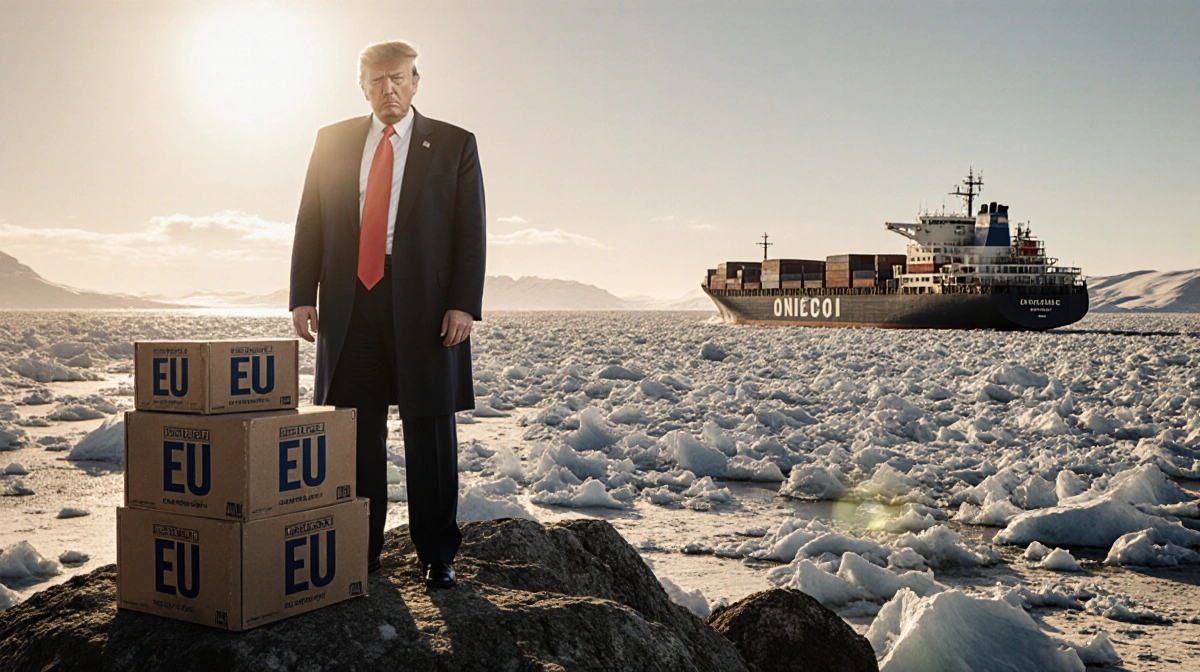
President Donald Trump has announced sweeping new tariffs against eight European nations in retaliation for their military presence in Greenland, intensifying his push for the United States to acquire the Arctic territory.
The president unveiled the measures on his TruthSocial platform, targeting Denmark, Norway, Sweden, France, Germany, the United Kingdom, the Netherlands, and Finland. The initial 10% tariff on all goods exported to the United States takes effect February 1, 2026, but escalates to 25% if negotiations for Greenland’s acquisition stall beyond June 1.
Tariff Timeline and Targets
| Phase | Date | Tariff Rate | Trigger |
|---|---|---|---|
| Phase 1 | February 1, 2026 | 10% | Immediate implementation |
| Phase 2 | June 1, 2026 | 25% | No Greenland purchase agreement |
Trump framed the move as essential to national security, insisting on a “complete and total purchase of Greenland” in his social media statement. The announcement comes as EU military personnel conduct what officials term reconnaissance missions on the island.
Trade War Escalation
Analysts from the Kobeissi Letter estimate the tariffs will impact $1.2 trillion worth of annual bilateral trade between the United States and affected European nations. They project the potential Greenland acquisition could cost approximately $700 billion.
In a post on X, the research group declared the US-EU trade war has “escalated to a whole new level,” noting that Greenland has become the president’s “top strategic focus.” The conflict began shortly after Trump’s inauguration last year when initial tariff waves targeted numerous countries.
Bitcoin’s Previous Reaction
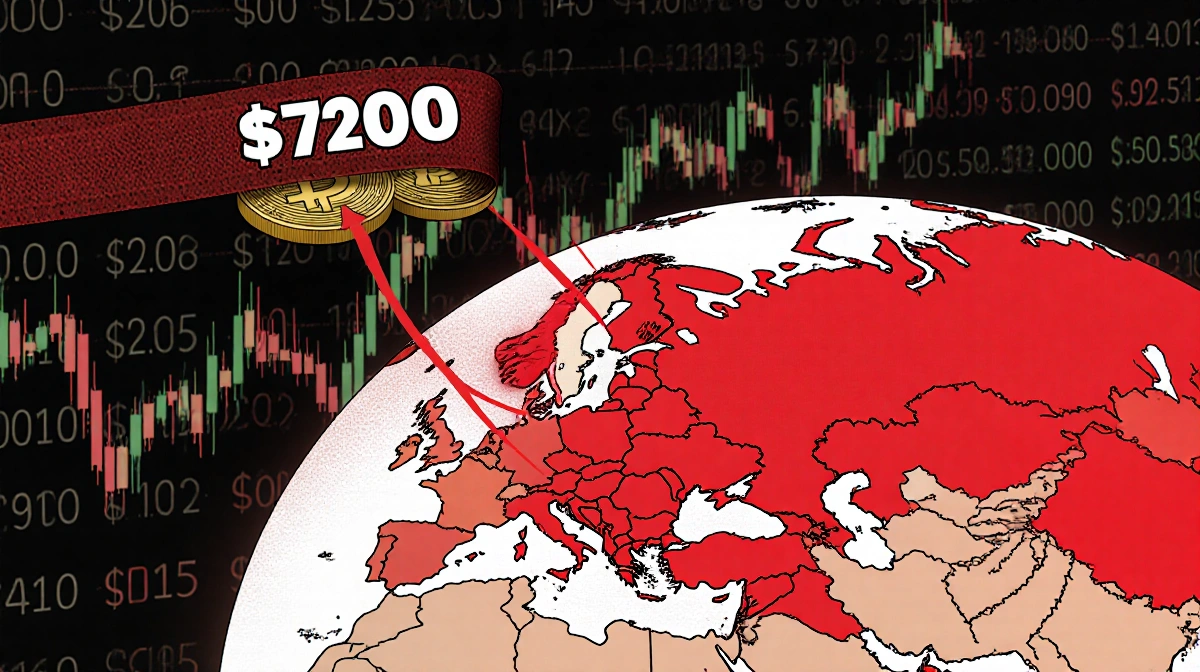
Cryptocurrency markets have proven sensitive to trade war developments. When Trump announced his first round of tariffs, Bitcoin plummeted from its then-all-time high of $110,000 to under $75,000 within months, making it among the worst-performing assets during that period.
So far, the latest announcement has not triggered a similar sell-off. Bitcoin trades slightly above $95,000, showing minimal movement over the past 24 hours according to TradingView data.
Greenland’s Strategic Importance
The president has consistently argued that US control of Greenland is vital for national security interests. The Arctic territory hosts strategic military installations and sits along increasingly important shipping routes as climate change reduces ice coverage.
European nations have maintained their military presence on the island despite Trump’s demands, leading to the current tariff escalation. The dispute represents one of several flashpoints in deteriorating US-EU relations under the Trump administration.
Economic Impact Projections
The affected European economies export hundreds of billions in goods to the United States annually. Key sectors likely to face immediate pressure include:
- Automotive manufacturing
- Machinery and industrial equipment
- Pharmaceuticals and medical devices
- Agricultural products
- Luxury goods
The 10% baseline tariff matches previous Trump administration measures, but the threatened 25% rate would represent among the highest duties imposed on allied nations in modern US history.
Key Takeaways
- Trump links tariffs directly to Greenland acquisition talks, setting a June 1 deadline for negotiations
- Eight EU nations face escalating trade barriers, with rates doubling if no agreement reached
- Previous trade war actions triggered significant Bitcoin price declines, though current market reaction remains muted
- The dispute adds another dimension to already strained US-European relations under the current administration
- $1.2 trillion in annual trade flows hang in the balance as diplomatic and economic tensions rise