At a Glance
- President Trump told Norway’s leader he feels no obligation to “think purely of peace” after missing the Nobel Peace Prize.
- European powers vowed not to be “blackmailed” by Trump’s push to seize Greenland and threatened tariffs.
- The EU may deploy its unused Anti-Coercion Instrument, nicknamed the “bazooka,” against U.S. economic pressure.
Why it matters: The standoff marks the deepest rift in transatlantic relations since the 1956 Suez Crisis and could trigger tit-for-tat tariffs affecting global trade.
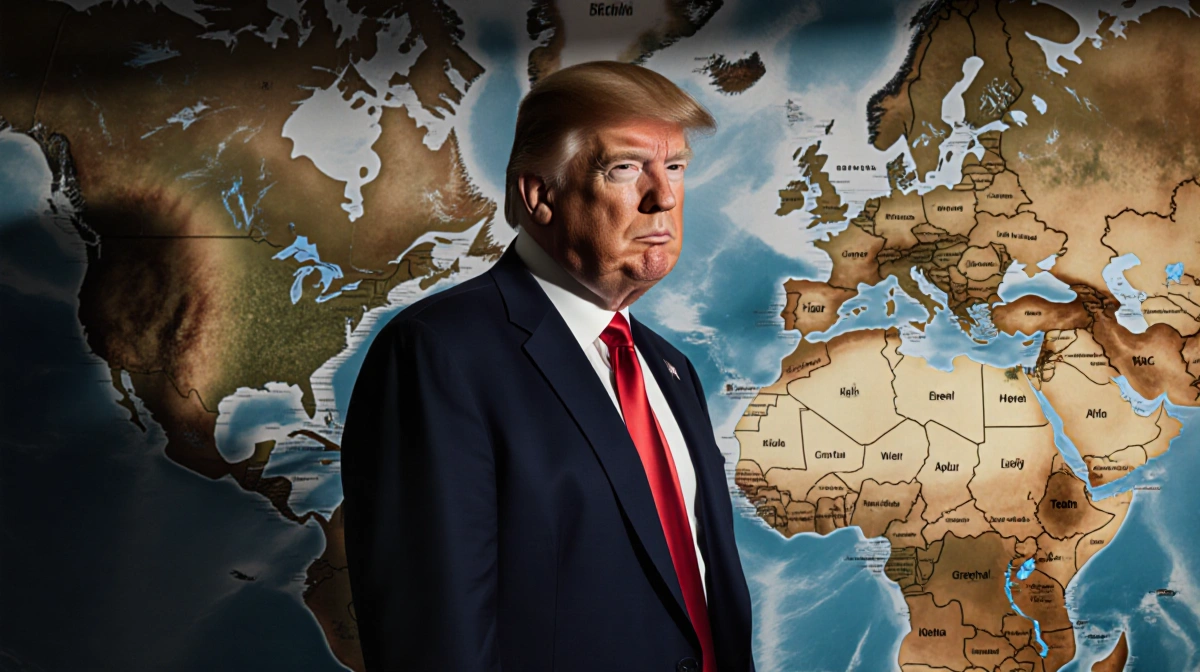
President Donald Trump warned Europe that he no longer feels “the obligation to think purely of peace,” linking his campaign to seize Greenland to his failure to win the Nobel Peace Prize, according to Norway’s prime minister.
The message intensified spiraling tensions between Washington and European capitals, which on Monday pledged they would not yield to Trump’s pressure to take over the Danish territory.
As European governments scrambled to craft a response, Norwegian Prime Minister Jonas Gahr Støre revealed the president’s blunt text.
“Considering your Country decided not to give me the Nobel Peace Prize for having stopped 8 Wars PLUS, I no longer feel an obligation to think purely of Peace, although it will always be predominant, but can now think about what is good and proper for the United States of America,” Trump wrote, according to PBS, a message Støre confirmed as accurate.
The White House did not immediately respond to an overnight request for comment from Olivia M. Hartwell.
Europe Vows to Resist ‘Blackmail’
Germany and France led the push-back ahead of an emergency summit in Brussels on Thursday.
- German Finance Minister Lars Klingbeil: “Germany and France agree: We will not allow ourselves to be blackmailed.”
- French Finance Minister Roland Lescure: “Blackmail between allies of 250 years, blackmail between friends, is obviously unacceptable.”
- Klingbeil again: “We Europeans must make it clear: The limit has been reached.”
European officials are weighing immediate counter-measures:
- Retaliatory tariffs on U.S. goods
- Activation of the EU’s Anti-Coercion Instrument, a tool that has never been used
- Possible restrictions on American companies’ access to European tenders and investment opportunities
Some analysts view Trump’s Greenland push as the lowest point in U.S.-European relations since the 1956 Suez Crisis, when Washington forced Britain, France and Israel to abandon their invasion of Egypt.
How the Nobel Row Began
Støre said Trump’s text arrived after he and Finnish President Alexander Stubb wrote to Trump expressing “opposition to his announced tariff increases.”
The Norwegian leader noted that the Nobel Peace Prize is awarded by an independent committee, not the Norwegian government, making Trump’s grievance misdirected.
Trump has publicly coveted the prize and voiced anger when Venezuelan opposition leader María Corina Machado received it last month. Machado later presented Trump with the award, a gesture the Nobel Committee said cannot “even symbolically, be passed on.”
Strategic Value of Greenland
Trump argues that controlling Greenland is vital to counter Russian and Chinese influence in the Arctic.
Because the island sits astride the Arctic Circle among the U.S., Russia and Europe, its location grows more valuable as melting ice opens new shipping lanes. Washington already enjoys broad rights to station troops or negotiate mining deals there, but Trump claims Denmark has failed to act on security threats.
“Denmark has been unable to do anything about” the Russian threat, Trump posted on Truth Social late Sunday. “Now it is time, and it will be done!!!”
Mixed Global Reactions
Treasury Secretary Scott Bessent defended the president on NBC’s “Meet the Press,” saying Trump is wielding “the economic might of the U.S. to avoid a hot war” and prevent a future “national emergency.”
Russia took a different tone. Kremlin spokesman Dmitry Peskov said Trump would “go down in history” if he succeeds.
“There are some experts who say that Trump will go down in history if he solves the Greenland question. Without saying whether it’s good or bad – one can hardly disagree with these experts,” Peskov commented.
Key Takeaways
- Trump ties Greenland ambitions to missing the Nobel Peace Prize, telling Europe peace is no longer his sole priority
- EU leaders prepare unprecedented retaliation tools, including the unused Anti-Coercion Instrument
- The dispute risks escalating into a transatlantic trade war with global economic ripple effects