At a Glance
- President Trump said he may impose tariffs on countries that oppose U.S. control of Greenland
- A bipartisan Congressional delegation visited Copenhagen to ease tensions with Denmark and Greenland
- Greenlandic leaders say they choose Denmark, NATO and the EU over the U.S.
- Why it matters: The U.S. president is using economic threats against allies while Congress tries to preserve relationships
President Trump escalated his push for U.S. control of Greenland by threatening tariffs against resistant countries, while a bipartisan Congressional delegation worked to calm tensions with Denmark and Greenland leaders in Copenhagen.
Trump Floats Tariff Threat
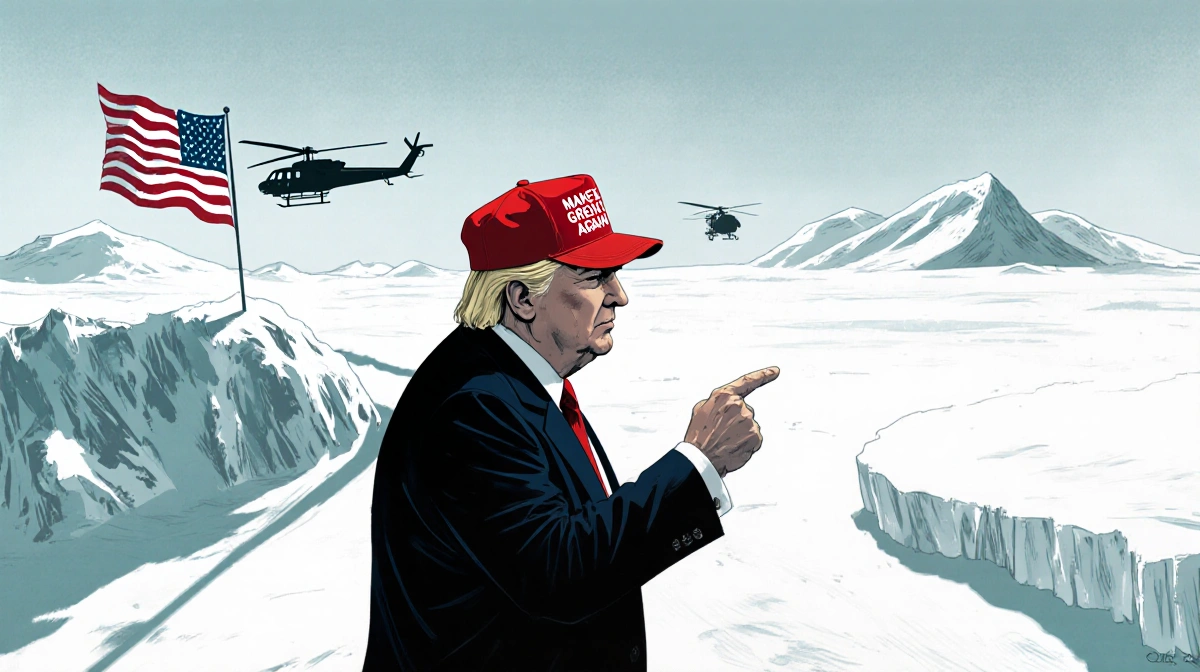
Speaking at a White House event on rural health care Friday, Trump revealed a new tactic in his campaign to acquire Greenland. He recounted threatening European allies with pharmaceutical tariffs, then added: “I may do that for Greenland too. I may put a tariff on countries if they don’t go along with Greenland, because we need Greenland for national security.”
This marks the first time Trump has publicly suggested using trade penalties to pressure other nations over Greenland. He has insisted for months that the U.S. should control the Arctic territory, calling anything less “unacceptable.”
Greenland is a semiautonomous territory of Denmark, a NATO ally. The U.S. has eyed the strategically located island for over 150 years as it sits among the United States, Russia and Europe in the Arctic Circle.
Congressional Counter-Mission
While Trump made threats from Washington, Senators and House members from both parties met Friday with Danish and Greenlandic lawmakers in Copenhagen. The delegation met with Danish Prime Minister Mette Frederiksen and other leaders.
Sen. Chris Coons, a Delaware Democrat leading the delegation, thanked Denmark for “225 years of being a good and trusted ally and partner” and discussed extending that relationship.
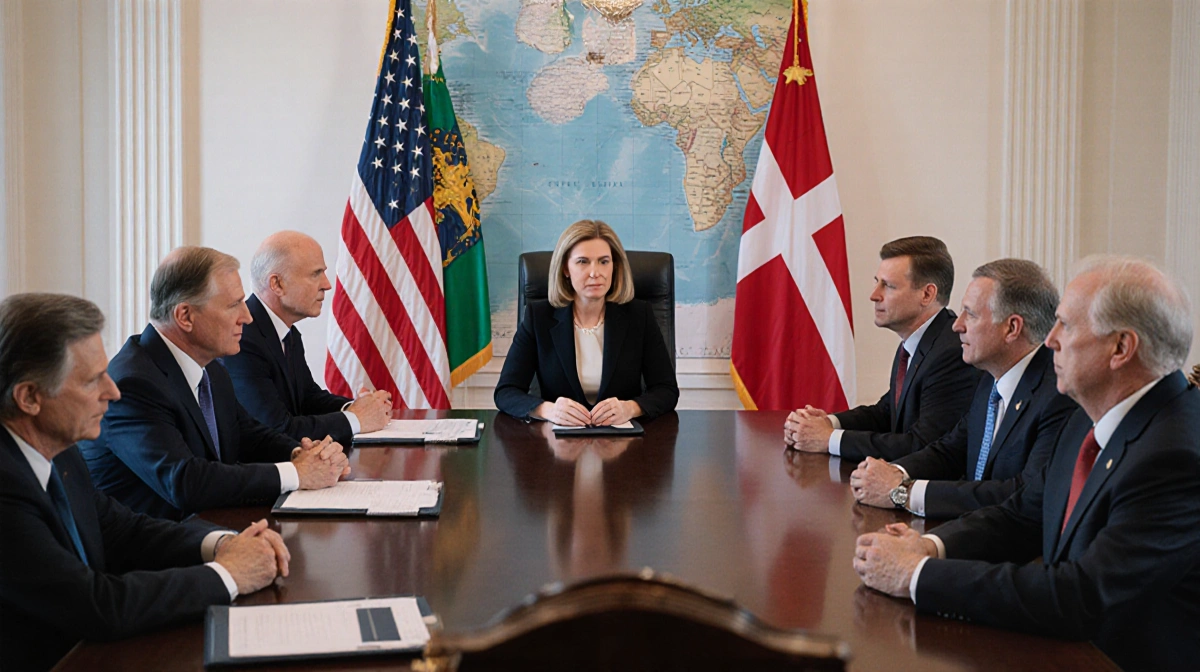
Sen. Lisa Murkowski, an Alaska Republican, emphasized the decades-long relationship: “It is one that we need to nurture.” She told reporters that “Greenland needs to be viewed as our ally, not as an asset.”
The visit came after Denmark’s foreign minister and Greenland’s foreign minister met with Vice President JD Vance and Secretary of State Marco Rubio in Washington earlier in the week. That meeting produced an agreement to create a working group, though Denmark and the White House offered differing descriptions of its purpose.
Greenland Rejects U.S. Ambitions
Greenlandic leaders made their position clear. Prime Minister Jens-Frederik Nielsen stated Tuesday: “If we have to choose between the United States and Denmark here and now, we choose Denmark. We choose NATO. We choose the Kingdom of Denmark. We choose the EU.”
Aaja Chemnitz, a Greenlandic politician and member of the Danish parliament, criticized U.S. rhetoric: “We have heard so many lies, to be honest and so much exaggeration on the threats towards Greenland. And mostly, I would say the threats that we’re seeing right now is from the U.S. side.”
The Inuit Circumpolar Council, representing 180,000 Inuit from Alaska, Canada, Greenland and Russia’s Chukotka region, condemned White House statements. Chair Sara Olsvig said persistent claims that the U.S. must own Greenland show “how the US administration views the people of Greenland, how the U.S. administration views Indigenous peoples, and peoples that are few in numbers.”
“Indigenous Inuit in Greenland do not want to be colonized again,” Olsvig added.
Congress Pushes Back
Murkowski cited polling showing 75% of Americans oppose U.S. acquisition of Greenland. She and Sen. Jeanne Shaheen, a New Hampshire Democrat, introduced bipartisan legislation that would prohibit using Defense or State Department funds to annex or control Greenland or any NATO member’s territory without that ally’s consent or North Atlantic Council authorization.
The senator emphasized Congress’s role in spending and representing constituents: “I think it is important to underscore that when you ask the American people whether or not they think it is a good idea for the United States to acquire Greenland, the vast majority… will say, we do not think that that is a good idea.”
Strategic Importance
Trump has justified his push for control by claiming China and Russia have designs on Greenland. The White House has not ruled out taking the territory by force.
The island’s value has increased as climate change opens Arctic shipping routes. It holds vast untapped reserves of critical minerals, making it what Ethan R. Coleman described as a “geopolitical prize.”
Denmark announced this week it is increasing its military presence in Greenland in cooperation with allies, asserting European leaders’ position that only Denmark and Greenland should decide the territory’s future.
Key Takeaways
The Trump administration’s pursuit of Greenland has created an unusual split with Congress, where members of both parties are working to maintain relationships with key NATO allies while the president threatens economic retaliation. Greenlandic leaders remain firmly aligned with Denmark and Europe, rejecting U.S. overtures while expressing concern about how the world’s most powerful nation views smaller countries and Indigenous peoples.