At a Glance
- President Trump’s raid on Venezuela’s oil industry keeps prices flat.
- Venezuela’s infrastructure needs years and $100 billion to reach historic output.
- International firms are watching political stability before investing.
- Why it matters: The move could shape global oil supply and influence U.S. energy policy.
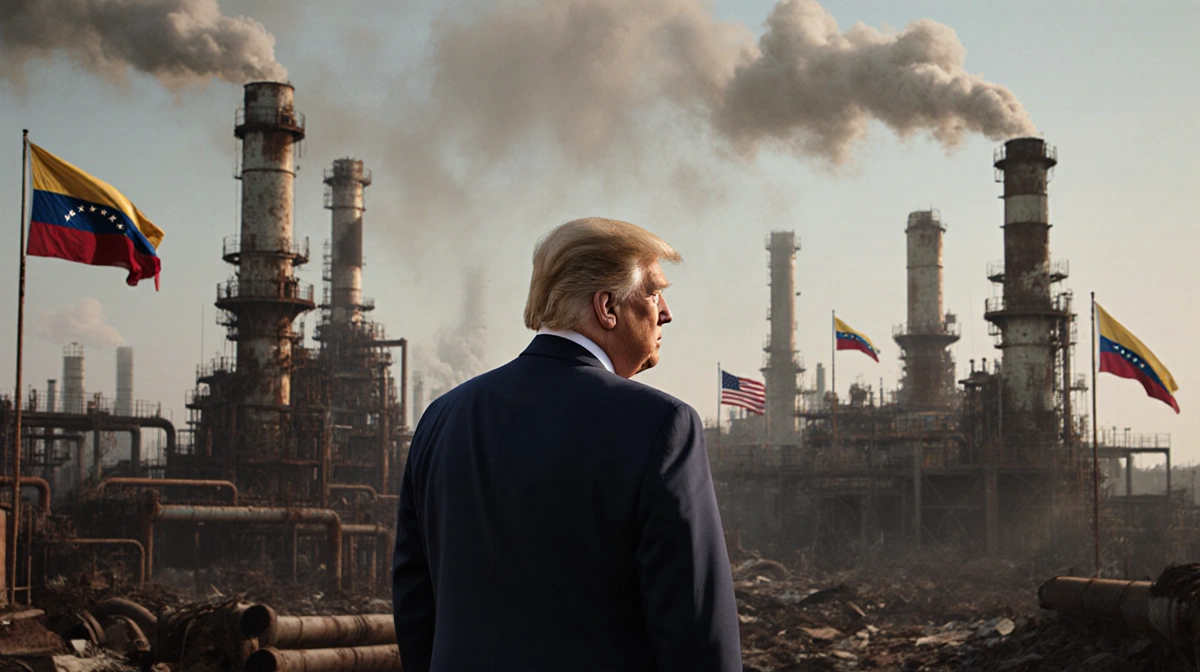
President Donald Trump’s recent raid on Venezuela’s oil industry has left world markets largely unchanged, as the country’s decaying infrastructure and political uncertainty keep production low. While the U.S. government has signaled a plan to revitalize the sector, experts say it will take years and massive investment before output rises significantly.
Short-Term Impact on Oil Prices
Oil prices did not shift during the weekend because markets closed and the global supply remains in surplus. Analysts note that Venezuela’s output is less than 1 % of world supply, so a temporary U.S. takeover has limited effect.
- Oil trading paused over the weekend.
- Venezuela’s share of global production is minimal.
- Surplus inventory keeps prices steady.
Infrastructure and Investment Needs
Venezuela’s oil infrastructure has been deteriorating for decades, and experts estimate that boosting production from 1.1 million barrels per day to 4 million barrels per day will require about a decade and $100 billion in investment.
Patrick De Haan stated:
> “While many are reporting Venezuela’s oil infrastructure was unharmed by U.S. military actions, it has been decaying for many many years and will take time to rebuild,”
Phil Flynn said:
> “But if it seems like the U.S. is successful in running the country for the next 24 hours, I would say there would be a lot of optimism that U.S. energy companies could come in and revitalize the Venezuelan oil industry fairly quickly,”
Francisco Monaldi said:
> “The issue is not just that the infrastructure is in bad shape, but it’s mostly about how do you get foreign companies to start pouring money in before they have a clear perspective on the political stability, the contract situation and the like,”
and
> “The estimate is that in order for Venezuela to increase from one million barrels per day – that is what it produces today – to four million barrels, it will take about a decade and about a hundred billion dollars of investment,”
International Company Interest
Despite the challenges, companies like Exxon Mobil, ConocoPhillips, and Chevron remain interested. Chevron, the only major firm with significant operations, currently produces about 250,000 barrels per day through joint ventures with PDVSA.
Bill Turenne said:
> “Chevron remains focused on the safety and wellbeing of our employees, as well as the integrity of our assets. We continue to operate in full compliance with all relevant laws and regulations,”
Dennis Nuss said:
> “We are monitoring developments in Venezuela and their potential implications for global energy supply and stability. It would be premature to speculate on any future business activities or investments,”
| Metric | Current | Potential |
|---|---|---|
| Proven reserves | 303 billion barrels | – |
| Current production | 1.1 million barrels per day | – |
| Potential production | – | 4 million barrels per day |
Venezuela is a member of OPEC, and its production is already accounted for in that organization.
Legal and Market Implications
The U.S. takeover raises legal questions about ownership of Venezuela’s oil assets, as noted by Columbia law professor Matthew Waxman. Analysts also see potential pressure on Russia if Venezuela’s heavy crude supply increases.
Matthew Waxman said:
> “For example, a big issue will be who really owns Venezuela’s oil? An occupying military power can’t enrich itself by taking another state’s resources, but the Trump administration will probably claim that the Venezuelan government never rightfully held them,”
Phil Flynn also said:
> “That could cement lower prices for the longer term and put more pressure on Russia.”
Key Takeaways
- Trump’s raid did not move oil prices immediately.
- Venezuela’s infrastructure and investment needs are massive.
- International interest remains, but political stability is key.
The raid signals a potential shift in U.S. energy strategy, but the road to higher output is long and uncertain.