At a Glance
- President Donald Trump ordered a large-scale strike on Caracas, capturing President Nicolás Maduro and his wife Cilia Flores.
- The U.S. has carried out over 22 lethal strikes on alleged drug-smuggling boats since September 2025.
- Venezuela’s government brands the campaign an imperialist attack and has mobilized troops for a two-day exercise.
- Why it matters: The action escalates U.S.-Venezuela tensions, challenges international norms, and raises questions about presidential war powers.
On January 3, 2026, the United States launched a large-scale strike across Caracas, capturing Venezuelan President Nicolás Maduro and his wife Cilia Flores. The operation, announced by President Donald Trump on social media hours after the attack, followed a campaign of more than twenty-two strikes on alleged drug-smuggling vessels in international waters.
The Caracas Strike
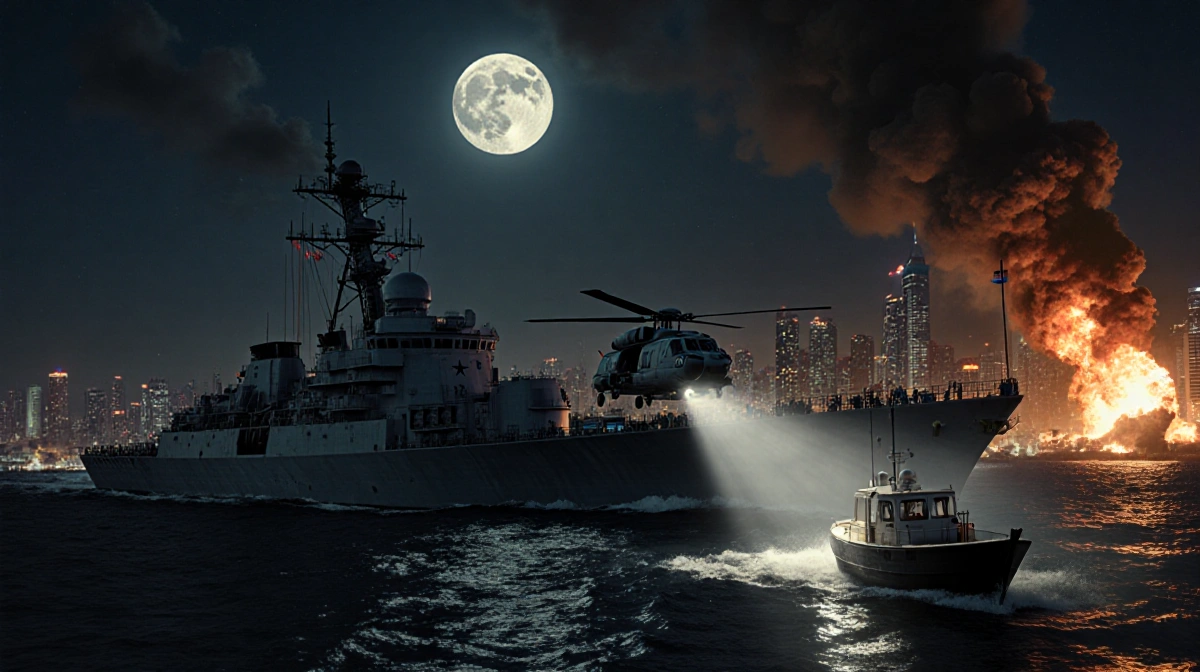
The strike involved air and naval assets that destroyed targets in the capital and then seized Maduro and Flores, who were flown out of the country. President Donald Trump announced the operation on social media hours after the attack, declaring that the two leaders would face charges in New York. Attorney General Pam Bondi said the pair would be indicted for their alleged involvement in drug trafficking.
U.S. Naval Campaign
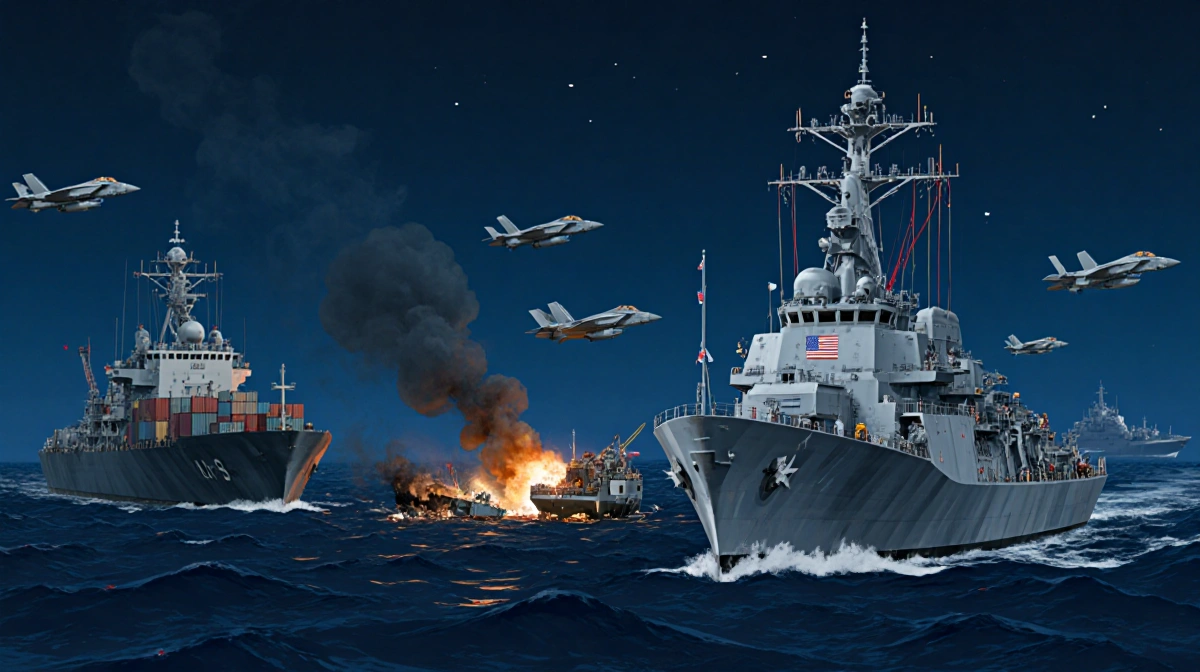
Since early September, the U.S. has deployed a fleet of warships to the Caribbean, the largest buildup in decades. The campaign has included 35 known strikes on alleged drug boats, killing at least 115 people. The U.S. Navy has used guided-missile destroyers, amphibious assault ships, and F-35 fighters, and has operated a submarine with cruise missiles off South America.
- Sept 2 – First strike on a vessel claimed to carry drugs.
- Oct 2 – Trump declares drug cartels unlawful combatants.
- Oct 24 – USS Gerald R. Ford arrives in the region.
- Dec 10 – U.S. seizes an oil tanker off Venezuela.
- Jan 3 – Caracas strike captures Maduro and Flores.
| Date | Event |
|---|---|
| Sept 2 | First strike on alleged drug boat |
| Oct 2 | Cartels declared unlawful combatants |
| Oct 24 | USS Gerald R. Ford deployed |
| Dec 10 | Oil tanker seized |
| Jan 3 | Caracas strike captures Maduro and Flores |
The campaign has been criticized by Senators, UN officials, and human rights groups.
Venezuelan Response and International Reaction
Venezuelan President Nicolás Maduro called the U.S. operations an imperialist attack and urged citizens to protest. The U.N. human rights chief Volker Türk called for an investigation into the strikes, warning of extrajudicial killings. U.S. sanctions were expanded to include four oil companies and four tankers, and the CIA was reported to have carried out a drone strike on a dock area believed to be used by Venezuelan drug cartels.
Key Takeaways
- The U.S. has used military force to target alleged drug traffickers and Venezuelan leadership.
- The campaign has drawn international condemnation and legal challenges.
- The outcome of the Caracas strike may reshape U.S.-Venezuela relations and set a precedent for executive war powers.
The capture of Maduro and Flores marks a dramatic escalation in the U.S. campaign against drug trafficking, raising legal and diplomatic questions that will reverberate for months.