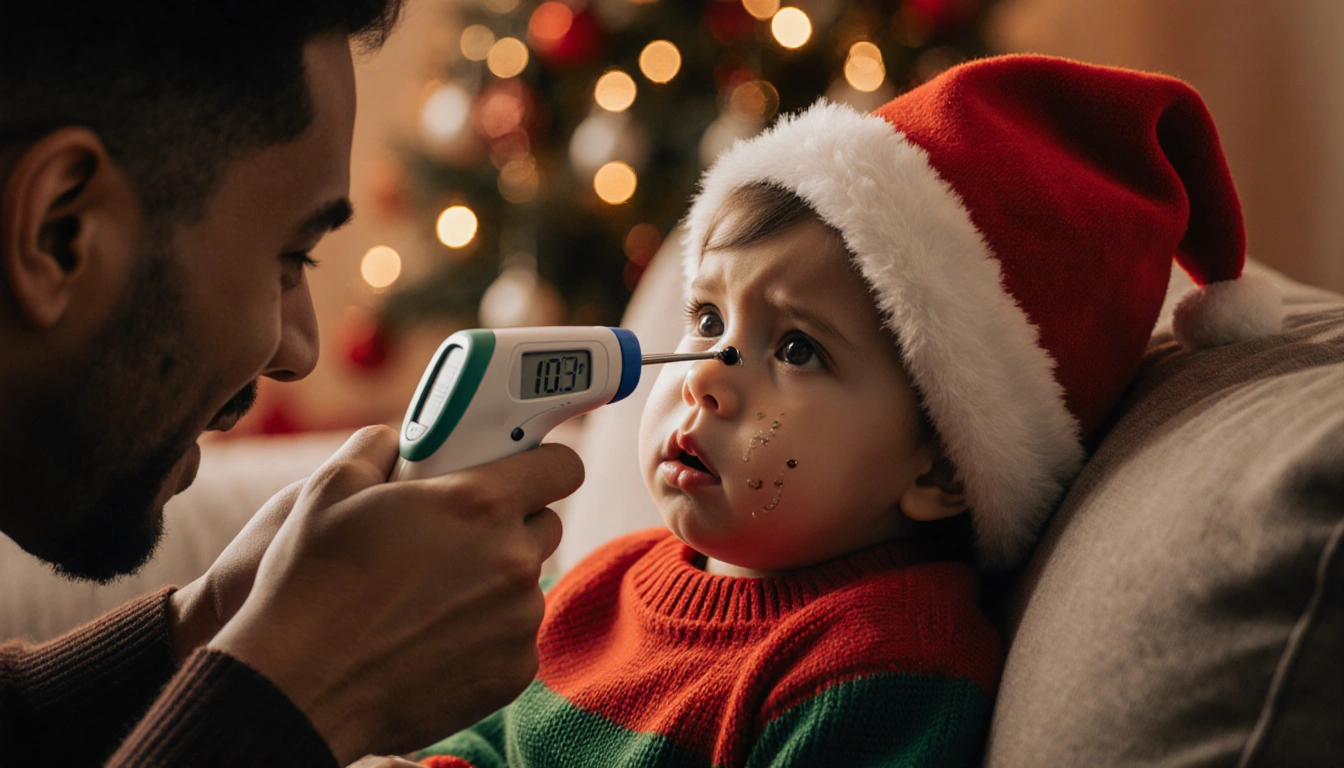
You’ve already pulled the holiday outfits, baked the cookies, and wrapped the presents. The big party is just around the corner, but your little one wakes up with a runny nose. The question is simple: can you still head to the party?
How to Decide
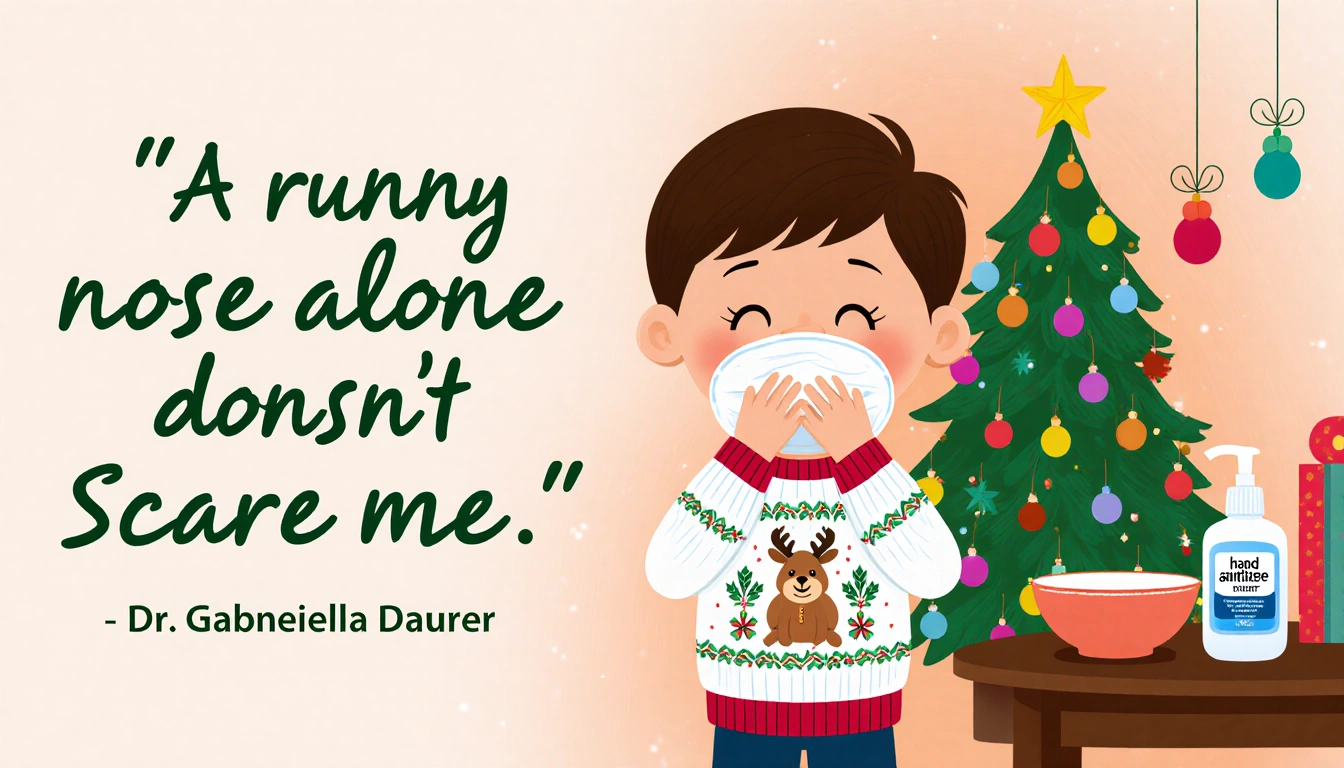
South Florida pediatrician Dr. Gabriella Dauer offers a clear framework. “A runny nose alone doesn’t scare me,” she says to TODAY.com. “A lot of kids are going to have runny watery noses in the winter season. It can be from the cold weather, or it can be from allergies in the fall. A sniffle is not going to do much damage, especially with good hand hygiene.”
She stresses that the presence of a runny nose by itself is not a decisive factor. Instead, the focus should be on other, more serious symptoms. “You should absolutely stay home if you wake up and you have a fever, if you wake up and you’re vomiting or have diarrhea — even if you had that yesterday,” Dauer advises. “I want 24 hours symptom‑free before we are going to a party because when you have a fever, you are at your highest contagion point.”
Fever and Other Red Flags
A fever is the most significant warning sign. For children older than two months, Dauer recommends using a standard in‑ear thermometer to get an accurate reading. “A fever in that age group is a medical emergency,” she adds, underscoring the urgency.
For infants younger than two months, a rectal temperature check is advised. The same caution applies: a fever in this age group signals a medical emergency.
Other symptoms that warrant staying home include:
- Vomiting more than twice in the preceding 24 hours
- Diarrhea or more frequent bowel movements than usual
- Skin sores that are draining
- Respiratory virus symptoms that are not improving
These red flags align with the U.S. Centers for Disease Control and Prevention’s (CDC) guidance on when to stay home.
Temperature Checking Tips
Dauer dismisses the need for a “fancy scanner” to check a child’s temperature. A reliable in‑ear thermometer is sufficient for kids over two months. For those younger than two months, a rectal thermometer is the safest method.
She also notes that a single momentary fever that disappears after medication does not reset the contagion risk. “If your kid had a fever this morning and you gave him Motrin and it went away, that doesn’t count,” she clarifies. In such cases, it is better to stay home and keep germs to yourself.
CDC Guidelines
The CDC’s recommendations match Dauer’s approach. According to the agency, you should stay home if:
- You have a fever
- You vomit more than twice in the last 24 hours
- You experience diarrhea or more frequent bowel movements
- You have draining skin sores
- Your respiratory virus symptoms are not improving
These guidelines help protect not only the sick child but also other attendees who may be more vulnerable.
Protecting Vulnerable Guests
One of Dauer’s key points is the unseen risk of bringing a sick child to a party. “You don’t know who has a newborn at home. You don’t know which one of these kids is immunocompromised or recently had cancer. You don’t know who has an immunocompromised person in their home,” she explains.
She believes that, when attending a gathering, everyone should act with respect and decency. “When we go to a party, we anticipate and expect that others are going to have the respect and the decency to not come if they’re sick, just in case we have someone who is extraordinarily vulnerable,” she says.
Bottom Line
The decision to attend a holiday party with a sniffling child boils down to a few clear rules: a runny nose alone is not enough to cancel plans; a fever, vomiting, diarrhea, draining sores, or worsening respiratory symptoms are serious red flags; and a child’s temperature should be checked with an appropriate thermometer. If any of these conditions are present, staying home is the safest choice.
By following these guidelines, parents can protect their families and the wider community while still enjoying the holiday season.
Key Takeaways
- A runny nose alone is usually harmless; focus on fever, vomiting, diarrhea, draining sores, or worsening respiratory symptoms.
- Use a standard in‑ear thermometer for kids over 2 months; use a rectal thermometer for infants under 2 months.
- Even a brief fever that resolves after medication still warrants staying home.
This story first appeared on TODAY.com.