At a Glance
- XRP has dropped to $1.93 after failing to hold above the crucial $2 level
- Weekly MACD shows tightening that often precedes momentum shifts
- Market analyst Dom warns no strong buyer support appeared during the recent rally
- Why it matters: A break below $1.80 could trigger deeper losses for the cross-border token
XRP has fallen back below the $2 mark after a brief surge, with technical indicators flashing mixed signals about the token’s next move. The price action has shifted to the downside, creating uncertainty about whether bulls can regain control.
Price Action Flips Bearish
The token lost momentum immediately after touching above $2, with sellers quickly stepping in to erase recent gains. The former support level at $2 has now transformed into resistance, effectively capping any upward movement.
XRP currently trades around $1.93, with $1.90 serving as the immediate support level. A failure to hold this area could open the door for additional losses. For bulls to regain confidence, the asset would need to reclaim and stabilize above $2.05.
The weekly MACD chart reveals a tightening pattern that traders closely monitor. Histogram bars are fading while the two lines converge, a configuration that often appears before a crossover event. Technical analyst ChartNerd highlighted this development, stating:
“$XRP could be a few weeks away from forming a bullish cross on its weekly MACD and breaking its descending resistance.”
Historical data indicates that similar MACD crossovers have previously led to strong upward moves. However, XRP continues trading below its long-term descending trendline that has remained intact for months. The price has yet to achieve a confirmed close above this resistance level, which would be necessary for any meaningful push toward the $2.50 zone.
Rally Lacked Strong Foundation
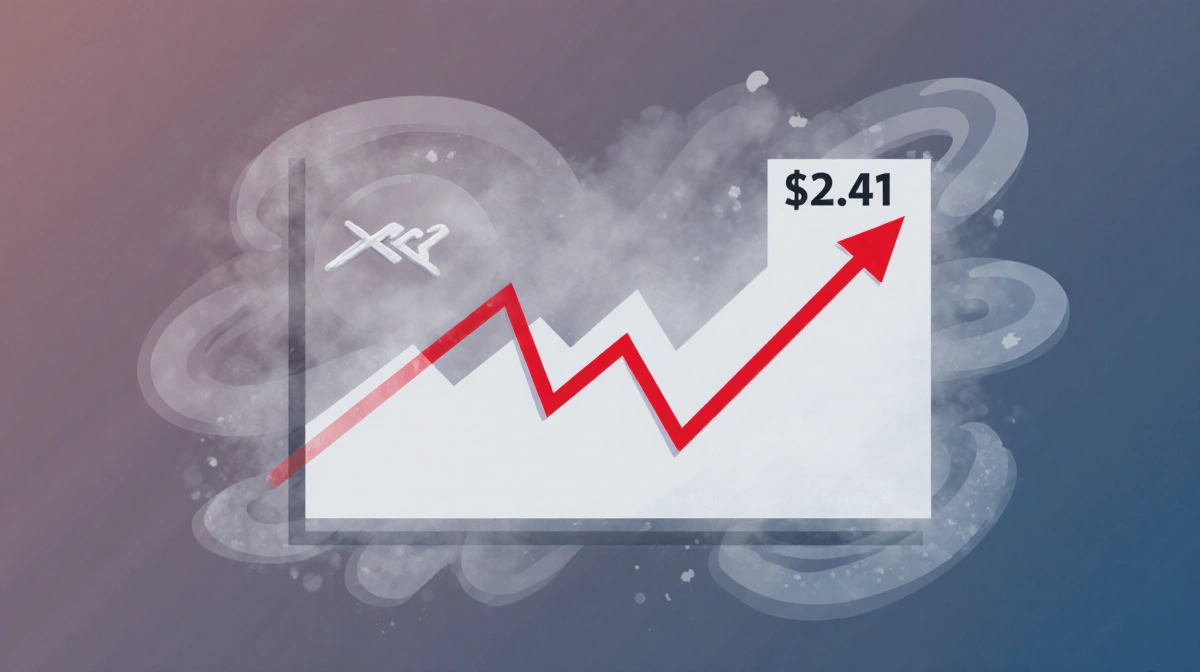
Earlier this month, XRP reached a two-month peak of $2.41, representing a 30% gain from the year’s start. Despite this impressive move, market analyst Dom identified concerning underlying weakness in the rally.
“The orderflow analysis showed no strong buyer support and rather a push that was possible due to low liquidity,” Dom explained.
Since reaching that peak, XRP has declined 18%. Dom emphasized that the token has tested the $1.80 area on three separate occasions, describing it as potentially the final support structure. A decisive move below this critical zone could trigger more significant losses.
To establish a stable foundation for recovery, XRP must rise and maintain levels above $2.05. This threshold represents more than just a psychological level – it would signal a shift in market structure that could attract renewed buying interest.
Broader Market Pressures
The cryptocurrency market faces additional headwinds from geopolitical tensions. Growing conflict between the United States and European Union over military activity in Greenland has created ripple effects across risk assets.
The US responded to EU military involvement in Greenland by imposing tariffs, adding pressure to already-stressed digital currency markets. This development has affected not just XRP but other crypto assets as investors reassess their risk exposure in an increasingly complex geopolitical landscape.
Technical Outlook
The current technical setup presents a critical juncture for XRP. The convergence of multiple factors creates a narrow path forward:
- Immediate support at $1.90 must hold to prevent further decline
- $1.80 has been tested multiple times and could serve as final support
- $2.05 represents the key level bulls need to reclaim
- Weekly MACD tightening suggests potential momentum shift ahead
The descending trendline that has contained price action for months remains the primary obstacle for any sustained rally. Until XRP achieves a confirmed breakout above this technical barrier, upside potential remains limited regardless of any short-term MACD signals.
Key Takeaways
- XRP’s failure to hold above $2 has turned the technical picture bearish
- The $1.90 support level faces its most critical test yet
- Previous rallies have shown weak underlying support, raising sustainability questions
- Geopolitical tensions add another layer of uncertainty to near-term price action