Zelensky arrives in Berlin, ready to drop NATO bid for security guarantees
Zelensky’s Berlin Arrival and Talks with US Envoys
Ukrainian President Volodymyr Zelenskyy arrived at the Chancellery on Sunday, just before talks with U.S. President Donald Trump’s special envoy Steve Witkoff and Trump’s son-in-law Jared Kushner. The meeting is part of a series of discussions in Berlin between Ukrainian, U.S. and European officials.
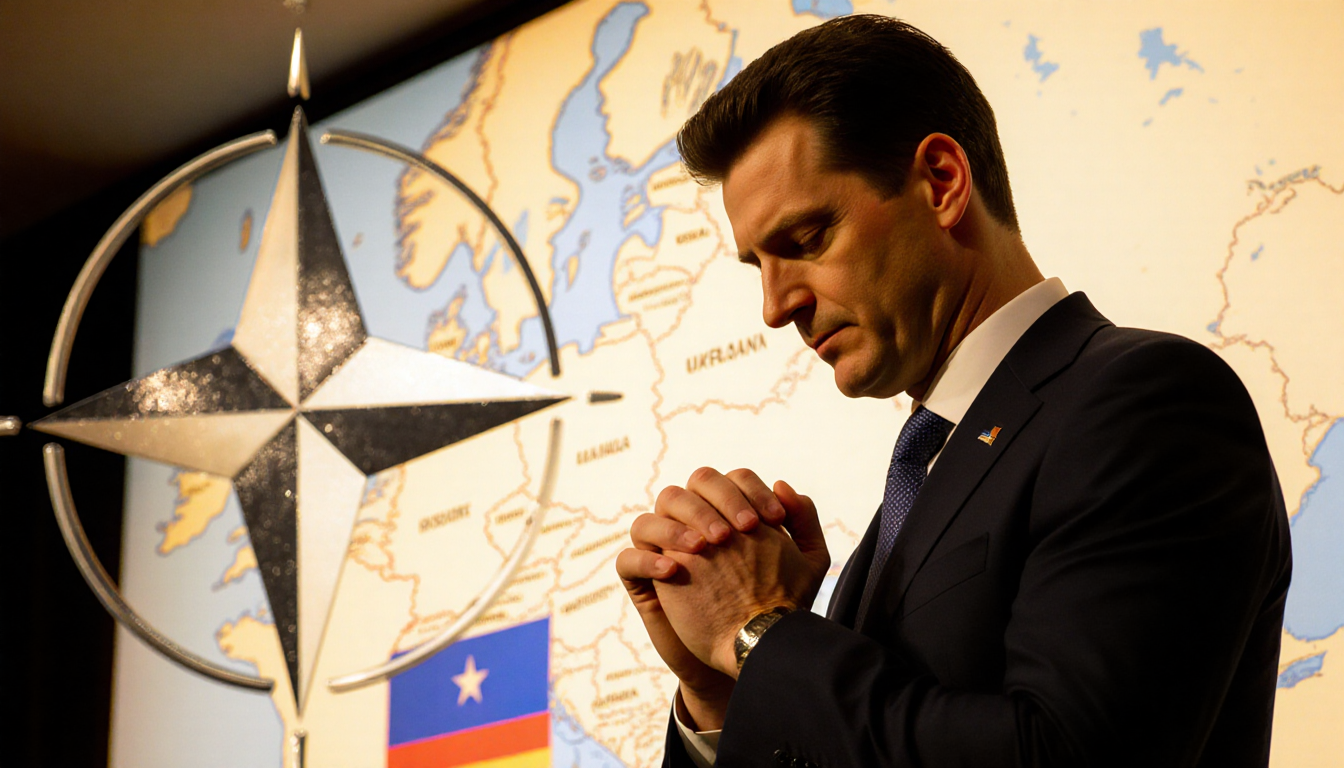
In audio clips shared on a WhatsApp group chat, Zelenskyy explained that because the U.S. and some European nations had rejected Ukraine’s push to join NATO, Kyiv now expects the West to offer a set of guarantees similar to those given to alliance members. ”These security guarantees are an opportunity to prevent another wave of Russian aggression,” he said. ”And this is already a compromise on our part.”
He stressed that any assurances must be legally binding and backed by the U.S. Congress. Zelenskyy added that he would receive an update from his team after a meeting between Ukrainian and U.S. military officials in Stuttgart, Germany.
He also said he would meet separately with German Chancellor Friedrich Merz and possibly other European leaders later that evening.
Security Guarantees Versus a NATO Bid
Zelenskyy’s willingness to abandon the NATO membership bid was a clear signal that Ukraine is willing to trade a long-term alliance for immediate, enforceable security commitments. The president framed the guarantees as a ”compromise” that could halt further Russian aggression.
However, the U.S. has pushed for Ukraine to cede territory to Russia as part of any peace arrangement. Zelenskyy rejected that line of thinking. He said the U.S. had floated a proposal for Ukraine to withdraw from the Donetsk region and create a demilitarized free-economic zone there. He dismissed the idea as unworkable, stating, ”I do not consider this fair, because who will manage this economic zone?”
He questioned the logic of a buffer zone if Ukrainian troops were to pull back 5-10 kilometers: ”If Ukrainian troops withdraw 5-10 kilometers, for example, then why do Russian troops not withdraw deeper into the occupied territories by the same distance?”
Zelenskyy described the issue as ”very sensitive” and insisted on a freeze along the line of contact, adding that ”today a fair possible option is we stand where we stand.”
Donetsk Dispute and Russian Demands
Russia’s President Vladimir Putin wants Ukraine to pull its forces from the part of Donetsk that remains under its control as a key condition for peace-an demand Kyiv has rejected. Putin’s foreign-affairs adviser Yuri Ushakov told the business daily Kommersant that Russian police and national guard would stay in parts of the Donetsk region even if it became a demilitarized zone under a prospective peace plan.
Ushakov warned that a search for compromise could take a long time. He said U.S. proposals that took into account Russian demands had been ”worsened” by alterations proposed by Ukraine and its European allies. Speaking to Russian state TV, Ushakov added that the ”contribution of Ukrainians and Europeans to these documents is unlikely to be constructive,” and that Moscow would have ”very strong objections.”
He noted that the territorial issue was actively discussed in Moscow when Witkoff and Kushner met with Putin earlier this month, and that ”the Americans know and understand our position.”
European Leadership and Merz’s Comments
German Chancellor Friedrich Merz, who has led European efforts to support Ukraine alongside French President Emmanuel Macron and U.K. Prime Minister Keir Starmer, said on Saturday that ”the decades of the ‘Pax Americana’ are largely over for us in Europe and for us in Germany as well.” He warned that Putin’s aim is ”a fundamental change to the borders in Europe, the restoration of the old Soviet Union within its borders.”
Merz warned during a party conference in Munich that ”If Ukraine falls, he won’t stop.” He also emphasized that the West must stand firm against any attempt to redraw Europe’s borders.
Ongoing Aerial Attacks and Ukraine’s Response
Ukraine’s air force reported that Russia overnight launched ballistic missiles and 138 attack drones at Ukraine. The air force said 110 had been intercepted or downed, but missile and drone hits were recorded at six locations.
Zelenskyy said Sunday that hundreds of thousands of families were still without power in the south, east and northeast regions. Work was continuing to restore electricity, heat and water to multiple regions after a large-scale attack the previous night.
He added that in the past week Russia had launched over 1,500 strike drones, nearly 900 guided aerial bombs and 46 missiles of various types at Ukraine. ”Ukraine needs peace on decent terms, and we are ready to work as constructively as possible,” Zelenskyy said. ”These days will be filled with diplomacy. It’s very important that it brings results.”
Russia’s Defense Ministry said that air defenses downed 235 Ukrainian drones late Saturday and early Sunday.
In the Belgorod region, a drone injured a man and set his house ablaze in the village of Yasnye Zori, regional Gov. Vyacheslav Gladkov said. Ukrainian drones struck an oil depot in Uryupinsk in the Volgograd region, triggering a fire, according to regional Gov. Andrei Bocharov. In the Krasnodar region, the Ukrainian drones attacked the town of Afipsky, where an oil refinery is located. Authorities said that explosions shattered windows in residential buildings, but didn’t report any damage to the refinery.
Trump said in his remarks that the U.S. and Russia ”haven’t quite gotten there” in the summit, but said he and Putin ”made some headway.”
Key Takeaways
- Zelenskyy is willing to abandon a NATO bid for legally binding security guarantees.
- He rejects U.S. pressure to cede territory and dismisses a demilitarized Donetsk zone as unworkable.
- Russian officials insist on a freeze along the contact line, while European leaders warn against border changes.
Zelenskyy’s Berlin visit underscores the urgent need for a clear, enforceable security framework amid relentless Russian attacks and a stalled peace process. The outcome of the talks will shape Ukraine’s future and the stability of the region.